A “21st Century Constitutional Monarchy” woven into spaces and costumes. A work that imagines a time that never was.
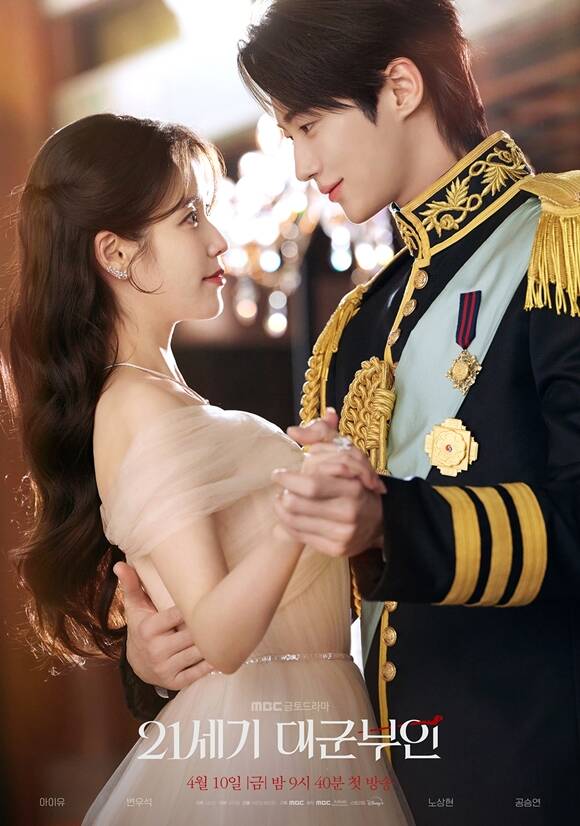
Art Director Kim So-yeon and Costume Director Cho Sang-kyung of the MBC Friday-Saturday drama ’21st Century Grand Prince’s Wife’ (Written by Yoo Ji-won, Directed by Park Jun-hwa) recently sat down for a written interview with The Fact. They shared their honest thoughts on how they visually realized the unique setting of a “21st-century constitutional monarchy in South Korea.”
’21st Century Grand Prince’s Wife’ is a romance drama set in a 21st-century constitutional monarchy. It tells the story of Seong Hee-joo (played by IU), a woman who has everything as a chaebol but is frustrated by her commoner status, and Grand Prince Ian (played by Byeon Woo-seok), a man who is the son of a king but is sad because he can possess nothing. The 12-episode series has aired up to episode 10.
Previous works like ‘Princess Hours’, ‘My Princess’, ‘The King 2 Hearts’, and ‘The King: Eternal Monarch’ have explored constitutional monarchies. However, ’21st Century Grand Prince’s Wife’ focuses specifically on the 21st century, depicting a more concrete and realistic royal family. Therefore, beyond simply creating a lavish palace, the most important task was convincingly completing the timeline that had been severed.
Art Director Kim So-yeon also identified the flow of time as the first point of concern. She explained, “I thought most about how to connect and show a time that doesn’t exist. Since the time of the palaces we know actually stopped at the end of the Joseon Dynasty, I felt that creating a royal space that continues into the 21st century was a task of imagining what came after that break.”
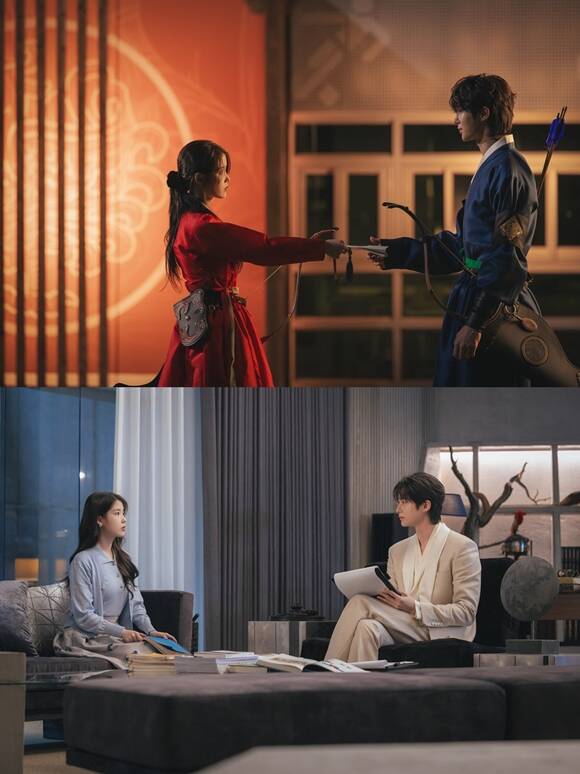
In this process, adjusting the ratio of tradition and modernity for each space was crucial. Kim So-yeon explained, “If the traditional structure was the center, I kept the finish modern, and conversely, in modern structures, I added traditional elements to the details. Since people perceive spaces based on elements they are already familiar with, I thought it would be clearer if one side was the focal point.”
She picked Grand Prince Ian’s private residence as the most memorable space. She stated, “While traditional spaces like Gangnyeongjeon, the Main Hall, and the Queen Dowager’s Hall maintained the structure and finish of a Hanok as much as possible, the private residence was composed by compromising some traditional elements like roof tiles, eaves, and walls within a modern structure.”
“I wanted to visually express the state of Grand Prince Ian, who has lived under the rules of the palace, revealing a more 21st-century side in his private space, yet still unable to completely escape his status as royalty. The traditional elements left here and there are devices to reveal the rules and limitations he still carries.”
She also put effort into details that are naturally felt rather than obvious splendor. She shared, “In traditional spaces, I kept the texture of long-used wood and the depth of the finish, and as it transitioned to modern spaces, I configured it to change into smoother and more artificial materials. I hoped that even if these changes weren’t prominent, the flow of time would be felt.”
While the art direction built the persuasiveness of the overall world, Costume Director Cho Sang-kyung expressed the emotions and positions of individual characters through their clothing. Since the work sits on the boundary between a modern drama and a historical one, it was important to maintain both royal dignity and modern sensibility.
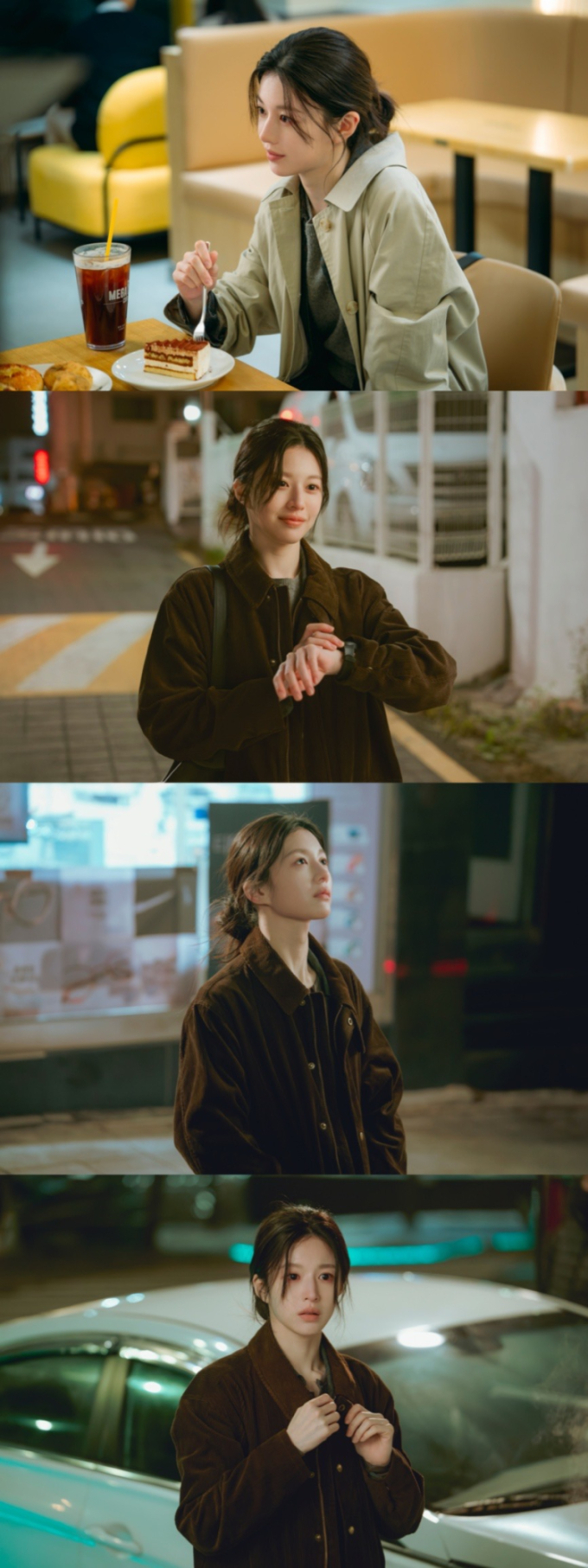
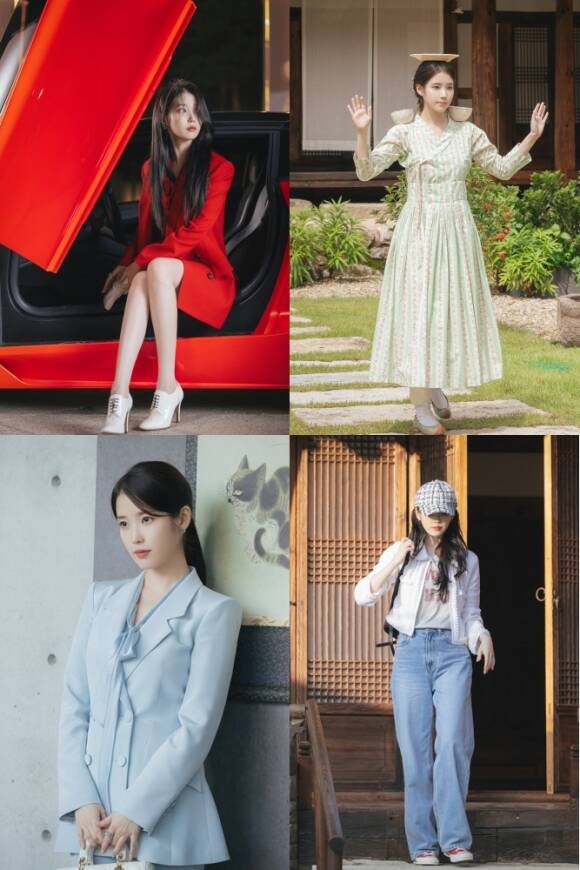
For the character of Seong Hee-joo, an energy different from that of the royal family was captured. Cho Sang-kyung explained, “There was an opinion to go with a slightly stronger style than a typical chaebol character. I created a point of contrast with the royal family by mixing vivid colors, prints, and trendy styles.”
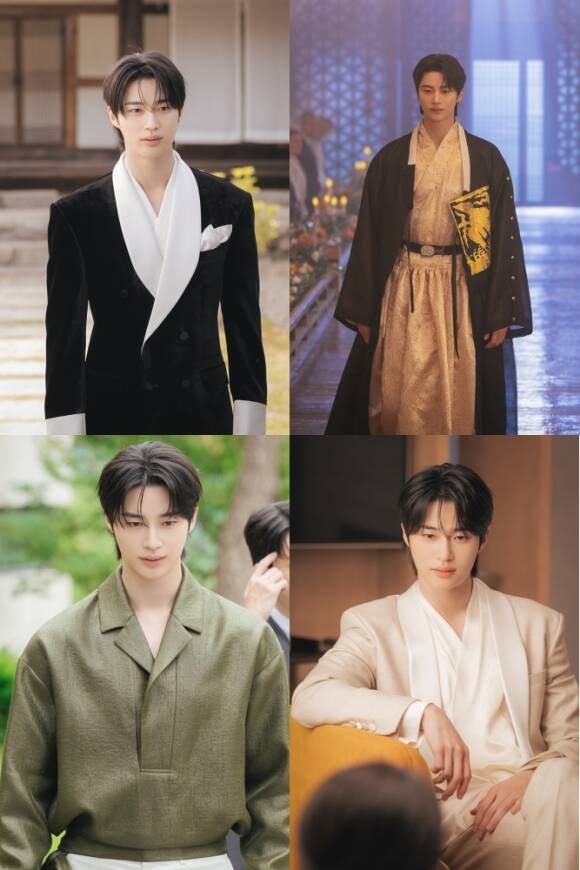
On the other hand, Grand Prince Ian’s lack and loneliness were expressed through restrained colors and soft silhouettes. Cho Sang-kyung stated, “I expressed his wounded void through shirt designs that evoke the collar or dongjeong [neckband] of a Hanbok, without wearing a tie. I used soft, silky materials in achromatic tones along with lines that highlight the actor’s physique.”
She added, “Min Jung-woo has a sharp, ideal, and cold image, so I produced very classic suits in a traditional manner. For Yoon Yi-rang, who is a character with hidden desires and trained stillness, I thought the symbolism of the royal family was important. Even in daily wear inside the palace, I kept the lines of traditional Hanbok.”
Close communication with the actors was the background for these detailed costumes. Cho Sang-kyung expressed satisfaction, saying, “After setting the initial concept and consulting with the actors, we go into filming after fittings and tests. Afterward, the actors’ opinions were heavily reflected in which costumes to wear in which scenes. If the costumes looked good, it’s ultimately thanks to the actors’ charm.”
Cho Sang-kyung emphasized, “I paid attention to the harmony of the overall mise-en-scène so that viewers could accept the work visually without discomfort by designing the verisimilitude within the genre. I tried to naturally arrange color schemes that emphasize Korea’s traditional colors, the modernized appearance of the palace, and the people who protect the palace.”
In this way, ’21st Century Grand Prince’s Wife’ did not consume art and costumes as mere spectacles. By imagining a royal timeline that didn’t exist and delicately constructing the emotions and status of the characters living within it, it added persuasiveness to the setting of a ’21st-century constitutional monarchy.’ While it looks like a lavish fantasy, it was densely packed with fierce deliberation and realistic details to bridge the gap in time.
“I wanted to explore through space and art what it would look like if the time that had stopped in the palaces of Joseon were to be connected again in the imagination and expanded to the 21st century. I hope this work remains a world where viewers can newly imagine the disconnected time and memories beyond just a simple background.” (Art Director Kim So-yeon)
“I hope this is a work that makes people smile for a moment while watching it on the weekend after a hard and tiring day. The caste system in the work is just a hurdle for each person. Looking at the assertive Hee-joo, I thought that hurdles are meant to be jumped over. It would be better to hold hands and jump together. I hope everyone watching this drama gets joy and pleasant stimulation through the lovely actors.” (Costume Director Cho Sang-kyung)