From acting skill controversies to Northeast Project suspicions, the lead actors have apologized, but MBC and the writer remain silent.
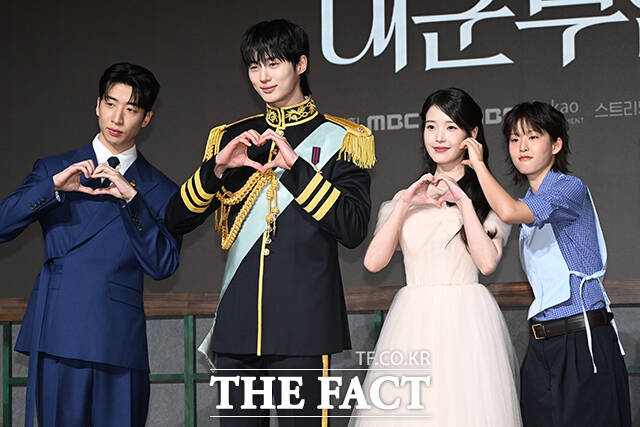
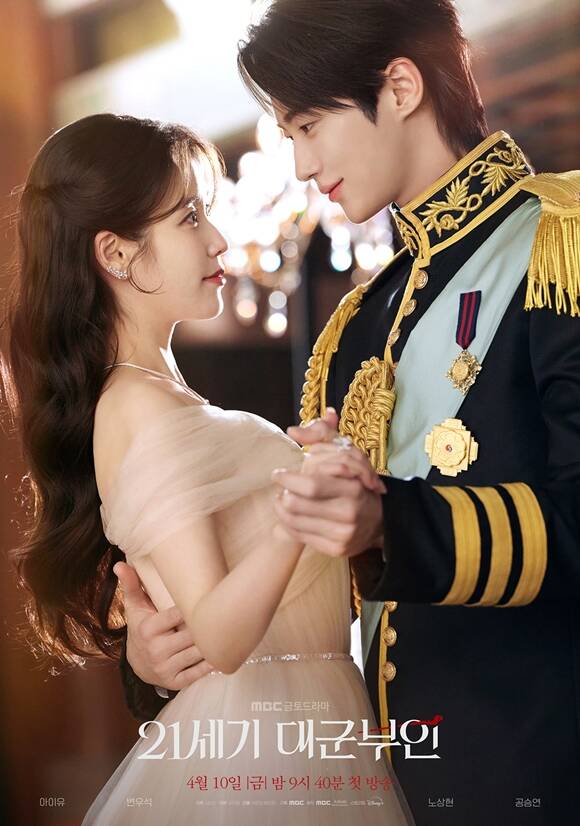
The MBC Friday-Saturday drama ’21st Century Grand Prince’s Consort’ (written by Yu Ji-won, directed by Park Jun-hwa) came to an end on the 16th. Set in a 21st-century constitutional monarchy in Korea, the story follows Seong Hee-joo (played by IU), a wealthy chaebol who is frustrated by her commoner status, and Prince Ian (played by Byeon Woo-seok), a royal who is saddened by the fact that he can possess nothing. The series aired for a total of 12 episodes.
The show gathered massive anticipation even before its release. The pairing of IU, who proved her global popularity with the Netflix series ‘When Life Gives You Tangerines,’ and Byeon Woo-seok, who created a syndrome with tvN’s ‘Lovely Runner,’ was a huge talking point. Additionally, since MBC had previously introduced a constitutional monarchy setting in the 2007 drama ‘Princess Hours’ (Goong), expectations for ’21st Century Grand Prince’s Consort’ were incredibly high.
That excitement translated into numbers. According to data released by the K-content competitiveness analysis agency Good Data Corporation’s Fundex, ’21st Century Grand Prince’s Consort’ ranked #1 in TV and OTT drama buzzworthiness. Notably, it was the first time in the history of the survey that a drama reached #1 on the chart before it even aired.
The ratings also responded. Starting with a first-episode rating of 7.8% (Nielsen Korea, based on nationwide paid households), the show saw a steady increase every episode. The final episode aired on the 16th hit 13.8%, breaking its own record and ending on a high note. This figure ranks it as the 3rd highest-rated MBC Friday-Saturday drama of all time.
While the achievements were significant for such a highly anticipated project, controversies surrounded the work from the beginning until the end. It could have been evaluated as a successful work that set new records, but it left a lingering sense of regret due to the constant noise behind the scenes.
The first issue to emerge was the controversy over the lead actors’ acting skills. Since the work was based on a fictional world of a constitutional monarchy, the actors needed to blend convincingly into the era’s atmosphere and their characters. However, some viewers consistently pointed out that the performances hindered immersion. From the early episodes, there were disappointments regarding character interpretation, vocalization, and tone, which led to evaluations that the overall immersion of the work was lowered.
The thinness of the story was also cited as a problem. As a winner of the MBC drama script contest, expectations for a solid narrative were very high. However, as the story progressed toward the end, the narrative lost persuasiveness due to a lack of probability and abrupt developments. Examples include repeated palace fires, a scene where the Queen Dowager kneels in apology before the Prince, and the sudden abolition of the monarchy.
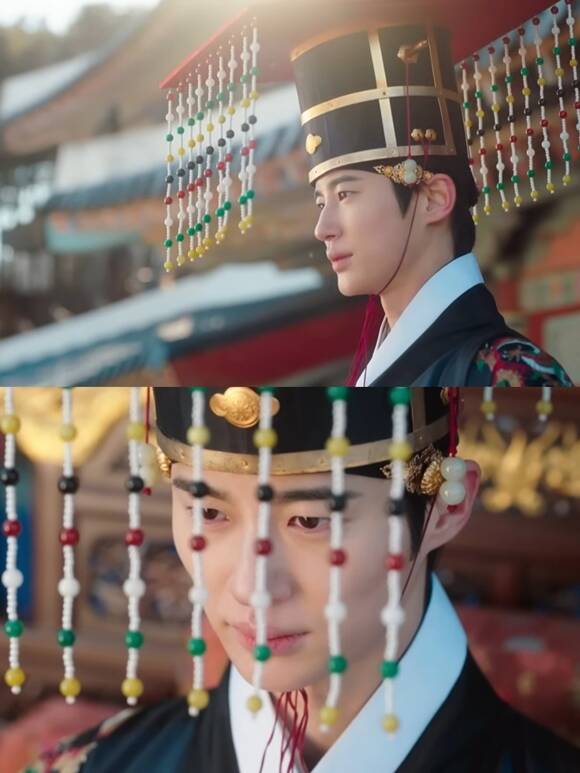
Furthermore, the 11th episode fueled the fire by sparking allegations of historical distortion. The controversy evolved into a ‘Northeast Project’ (cultural appropriation) issue when Prince Ian, after ascending the throne, wore a Guryu-myeonryugwan (a crown worn by Chinese officials), and officials shouted ‘Cheonse’ (used by vassal states) instead of ‘Manse’ (a term symbolizing the monarch of a sovereign state).
O-Fan House, the publisher of the script book, also stated, “We are taking this matter seriously,” and added, “We will provide a separate notice to readers who pre-ordered the first edition and will correct and reflect these expressions in subsequent productions.”
IU also apologized with tears in her eyes during a group viewing event for the final episode with fans at CGV Yongsan I-Park Mall, saying, “It is truly my fault if I disappointed anyone or showed any shortcomings. I should have done better.”
Following this, IU and Byeon Woo-seok posted further apologies on social media on the 18th. IU wrote, “I feel very sorry and my heart is heavy for not showing a responsible side as a lead actor and causing great disappointment. Since this was a work that needed to capture the imagination based on our unique history and the traditional beauty of Korea, I am ashamed that I didn’t study more as an actor.”
Byeon Woo-seok also stated, “I lacked consideration for the historical context and meaning within the work, and how it would be perceived by viewers. I’ve deeply realized that as an actor, I need to be more responsible in examining not just the acting, but the message and context of the work.”
Due to this, Lee Jae-won, the only actor among the cast who was scheduled for a finale interview, canceled it. His agency explained, “The actor is watching the situation with a heavy heart as a member of the production. We felt that conducting a personal interview in this situation would be cautious and could be a burden to the overall work and the viewers.”
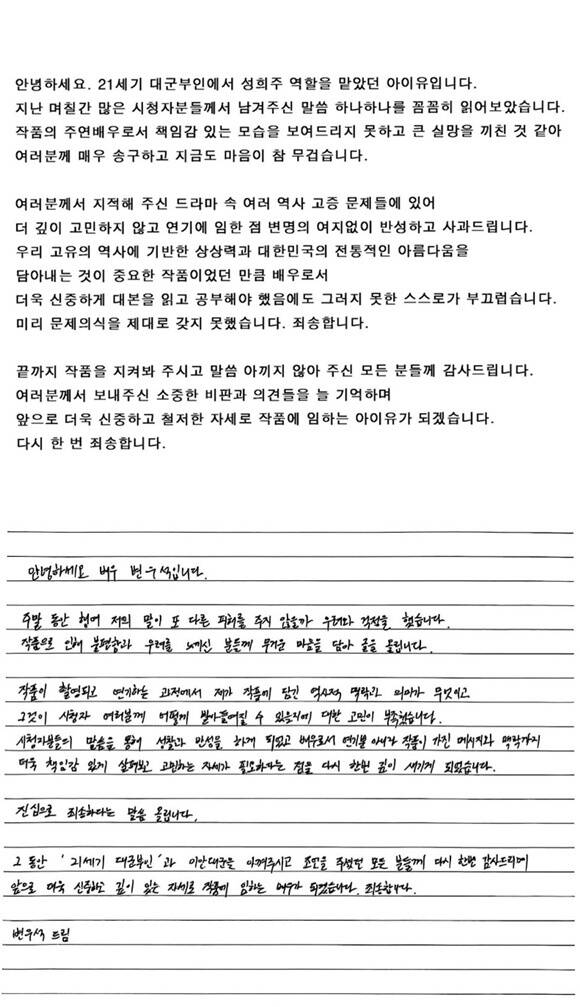
However, unlike the actors who bowed their heads one after another, there has been no separate position from MBC, which scheduled and aired the work, or writer Yu Ji-won, who wrote the script. Although a production team apology was released, critics point out that a clearer explanation and a responsible attitude from those in charge of the overall planning and creation were necessary.
K-dramas are no longer content consumed only by domestic viewers. They are spreading worldwide through global OTT platforms, and the influence is inevitably greater when actors with strong international fandoms, like IU and Byeon Woo-seok, appear. Even in a fictional world, if historical symbols and contexts are borrowed, a more meticulous review is absolutely necessary.
Therefore, some voices are saying that this is not a problem that can be solved simply with an apology. Now, it is not just about recording high ratings or achieving a lot of watch time, but the responsibility for what the work showed and how it showed it must also be evaluated. This is why the criticism toward ’21st Century Grand Prince’s Consort’ needs to remain as a warning to ensure the same problems are not repeated, rather than being consumed as a simple happening.