While watching this film, I pondered how to pursue the “truth beyond the facts” and what methods should be chosen to reveal it. The restoration of honor and a retrial for Kim Jae-gyu, who was executed immediately after the final verdict, is a necessary step.
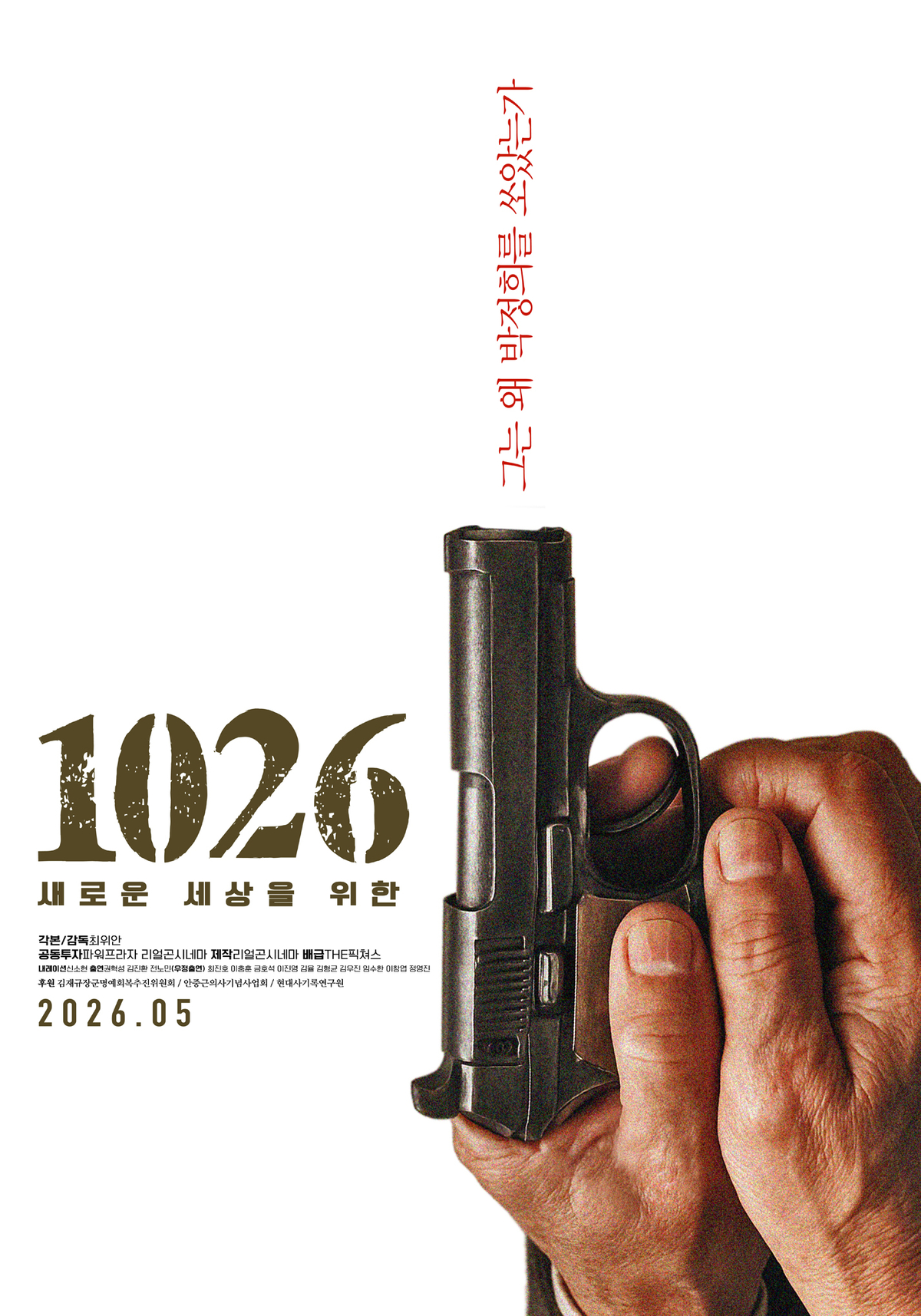
Title: 1026: For a New World
Release Year: 2026
Country: South Korea
Runtime: 113 minutes
Genre: Documentary, Drama
Director: Choi Wi-an
Cast: Kwon Hyuk-sung, Kim Jin-hwan, Jeon No-min, Choi Jin-ho, Lee Chung-hoon, and others
Release Date: May 20, 2026
Rating: 15+
Production: Real Gone Cinema
Distribution: Big Brothers Co., Ltd.
Why release it now? The “act” took place on October 26, so why this timing? After thinking about it, the answer becomes clear. The execution of Kim Jae-gyu, the “assassin” of President Park Chung-hee, took place on May 24, 1980. This happened while the massacre of civilians was occurring in Gwangju. For the New Military Junta, including Chun Doo-hwan, it was a move to eliminate any potential unstable elements.
The execution carried out during the May 1980 Gwangju People’s Uprising.
The events at the Gungjeong-dong safe house in Seoul on October 26 have been dramatized several times. Films like Director Im Sang-soo’s “The President’s Last Bang” (2005) had scenes deleted after Park Ji-man, the son of Park Chung-hee, filed a lawsuit for damages and an injunction to ban the screening, claiming his father’s honor was defamed. Looking back, some scenes in those movies do not align with the actual facts of that day. According to trial records, Sim Soo-bong, who was present, did not sing enka (in the movie, Kim Yuna, the leader of Jaurim playing Sim Soo-bong, sings the enka “From a Northern Inn”). As mentioned in Director Choi Wi-an’s “hybrid docu-essay” film, there is no confirmation that Kim Jae-gyu met with U.S. Ambassador Glystein or the head of the CIA’s Korea branch for discussions on October 26, yet past films have dramatized this as a given fact.
The real point of contemplation while watching this film was how to pursue the “truth beyond the facts” and what methods to use to reveal it. The opening scene is like this: in a wasteland of another world where the boundary between land and water is blurred, CRT TVs are floating. Strangely, this reminded me of TV commercials from the 1990s, specifically Daewoo Electronics’ ads emphasizing “tank-like” durability. A panorama of deja vu follows. Indeed, these are AI-generated images. A few months ago, while reviewing a buddy movie about an AI judge and a detective falsely accused of murdering his wife, I wrote, “It likely won’t be long before AI replaces actual actors in independent or experimental films with low budgets,” and that future has already arrived. It’s not that real actors don’t appear in the movie. To avoid comparisons of physical resemblance, the actors playing Park Chung-hee, Kim Jae-gyu, Cha Ji-cheol, and Kim Kye-won perform against consistently dark backgrounds. However, in many parts, AI-generated scenes are mixed with actual archival footage. The only sequence explicitly labeled as “AI reenactment” is the scene where Kim Jae-gyu, then director of the Korean Central Intelligence Agency, is desperately trying to save a child who has been knocked unconscious by tear gas during the Pu-Ma Democratic Uprising. Wondering if the director had spent money on CG and I just mistook it for AI, I asked the director after the preview. The director answered that he used AI because he “had no money.”
Between Kim Jae-gyu’s “Revolution” and the New Military’s claim of “Insurrection.”
While using AI, some historical inaccuracies were noticeable, but what I was most curious about was the director’s words in the final epilogue: “In April 2025, General Kim Jae-gyu told me, ‘I am neither left-wing nor right-wing. I simply carried out a revolution according to my convictions.'” April 2025? I asked during the press conference if he had a dream. The director confirmed he had. He said he heard several things from Kim Jae-gyu in his dream, and the word “revolution” was what remained in his memory. Revolution. During his lifetime, Kim Jae-gyu once testified to his lawyer that the “October 26 Revolution” would one day be included in the preamble of the Constitution along with the April 19 Revolution. While discussions on constitutional amendment are ongoing, there is no talk yet of including the “October 26 act” in the preamble. That might be asking too much. It has been 47 years since the incident, nearly half a century. The restoration of honor and a retrial for him, who vanished like dew on the execution ground immediately after the final verdict, is a necessary task.
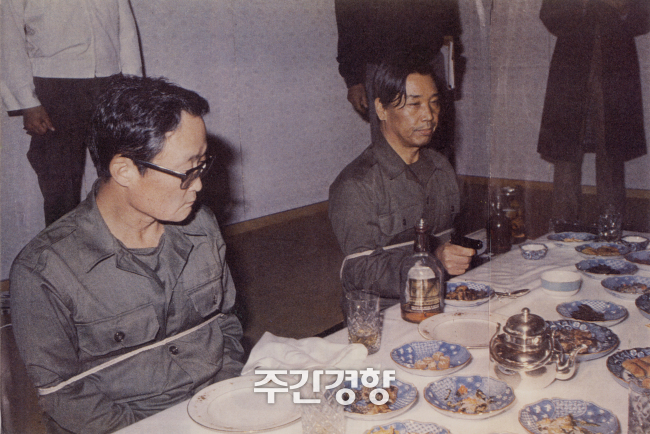
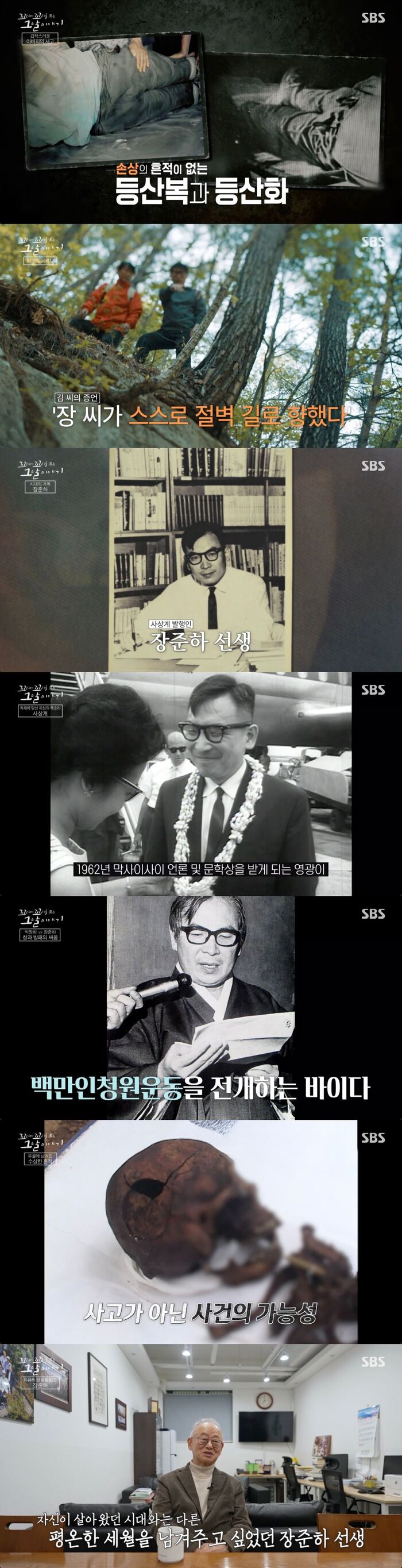
Why did Kim Jae-gyu shoot Park Chung-hee? The director seems to have tried to find the answer by retracing the lives of Kim Jae-gyu and Park Chung-hee. I learned for the first time through this movie that Kim Jae-gyu did not participate in Park Chung-hee’s May 16 coup. I was also previously unaware of the claim that Kim Jae-gyu’s Central Intelligence Agency was involved in the founding of the Christian Democratic Party in the 1970s. However, the “hints” the movie provides—such as the idea that Jang Jun-ha and Kim Jae-gyu were secretly aligned to “overthrow Park Chung-hee’s dictatorship,” or that a separate line of command from Park Chung-hee’s direct circle was moving regarding Kim Hyung-wook’s “disappearance”—feel like a precarious tightrope walk to paint “General” Kim Jae-gyu as a righteous person. I am also unsure if the movie’s depiction of Park Chung-hee singing Naniwabushi (a traditional Japanese song) about the loyalty of sworn brothers during a private meeting with Kim Jae-gyu can be dismissed as “cinematic imagination,” as the director claims.
In reality, contrary to Kim Jae-gyu’s own claims, the “act” he carried out that day feels too clumsy to be called a revolution, yet also different from the “insurrection” claimed by the New Military. The director speculates that Park Chung-hee, who had no younger brother, and Kim Jae-gyu, the eldest son of a wealthy family from the same hometown who had no older brother, shared a “mutual, brotherly love-hate relationship,” which explains why Park kept the critical Kim Jae-gyu in a position of power. However, the film barely mentions Park Sang-hee, Park Chung-hee’s older brother, who had the greatest influence on Park’s thoughts regarding “revolution.” The question of why General Jeong Seung-hwa, the Army Chief of Staff at the time, was called to the Gungjeong-dong safe house on the day of the act is the core evidence the New Military uses to claim Kim Jae-gyu plotted an insurrection. The movie’s answer—that it was “out of courtesy”—feels like a rushed attempt to gloss over the issue without providing a proper answer. In many ways, it is disappointing.
![Park Kyung-rim Rocks a Sporty Look as “MC Queen” at ‘Wild Thing’ Press Event! [Spot the Difference]](https://t1.daumcdn.net/news/202605/17/mksports/20260517061802386ebod.jpg "Park Kyung-rim Rocks a Sporty Look as \"MC Queen\" at 'Wild Thing' Press Event! [Spot the Difference] 3")