“6.6 billion won in sales, but all that’s left is about 380 million won in debt.”
KBS1’s ‘Tracking 60 Minutes’ (Episode 1456) will air on the 15th at 10 PM, featuring an episode titled “No Franchise for the Store Owner,” which looks into the harsh realities of franchise owners.
A 35% profit margin and 1% royalty—that’s the rosy future franchises promise. But the reality is far from it. From disappointing sales and one-sided management by headquarters to various cost burdens, many store owners are struggling with unexpected problems.
In an era of 300,000 franchise owners, the system is supposed to be a partnership where the headquarters’ brand and know-how combine with the owner’s capital and labor for mutual growth. However, while headquarters grow their external scale by increasing the number of stores, owners are drowning in deficits. Why is the loss only borne by the owners in a structure where profits and risks should be shared? Is coexistence even possible in the franchise business?
‘Tracking 60 Minutes’ highlights the reality of store owners pushed to their limits by unfair practices from headquarters. The program investigates the little-known profit structures of franchise headquarters and the despair of owners who haven’t been properly compensated despite their losses.
■ The Dream of Being a Director, Now an Escapeless Prison
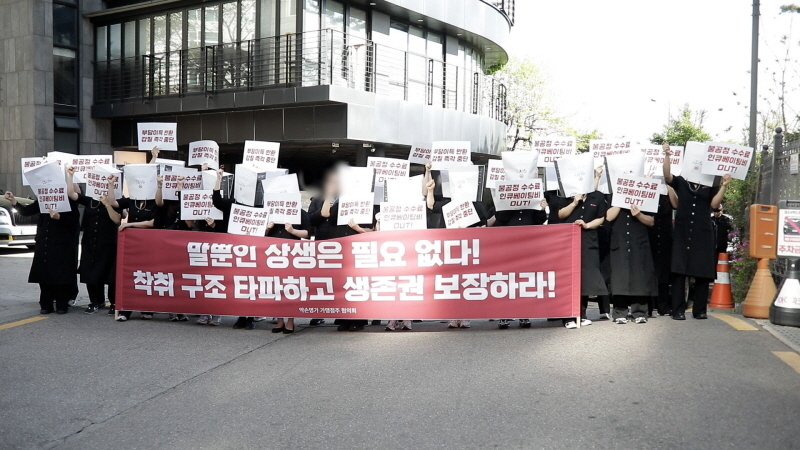
Kim Yu-min (pseudonym) has been running a franchise of the famous beauty management brand Yakson House for nine years. With about 130 stores nationwide, Yakson House is a leading franchise in the domestic beauty management industry.
After graduating from college, Kim joined Yakson House and became the director she always dreamed of. She did her best to increase sales, but for some reason, the more she worked, the more debt piled up. The problem was the profit structure.
Even with monthly sales exceeding 50 million won, the various costs paid to headquarters reached 30% of total sales. Kim stated, “After deducting operating costs like rent and labor, I had a monthly deficit of over 10 million won.” These deficits accumulated as unpaid balances (debt). Under the guise of increasing sales, headquarters called directors for various training sessions, for which they had to pay significant monthly fees. Headquarters even made them solve elementary school Korean language tests or write book reports, claiming it was training for employees. Eventually, about 30 Yakson House directors filed a lawsuit against the headquarters for approximately 17 billion won.
“I found out that I had generated 6.6 billion won in sales during my time as a director. But to think all I have left is about 380 million won in debt… it was devastating.”
“I became a director by attending training day and night and taking promotion exams, but in reality, I’m no different from a slave making money for the company. Because of the accumulated unpaid balances, I can’t even quit being a director even if I want to.” – From an interview with Yakson House director Kim Yu-min (pseudonym).
■ Same Ingredients, Different Prices: The Reality of Difference Franchise Fees
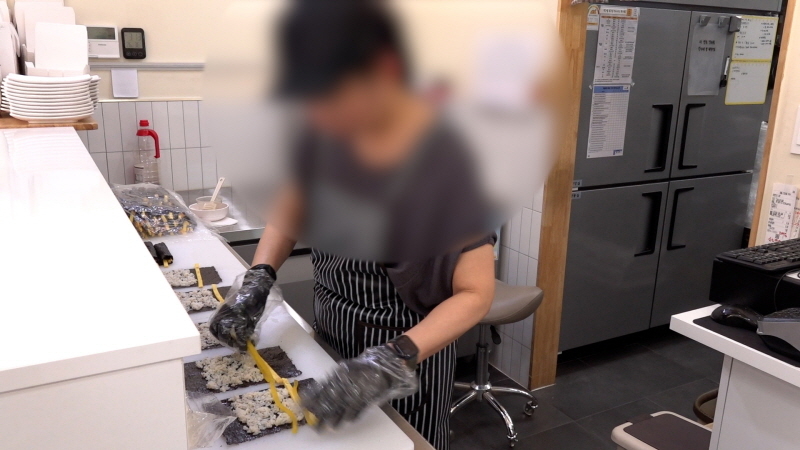
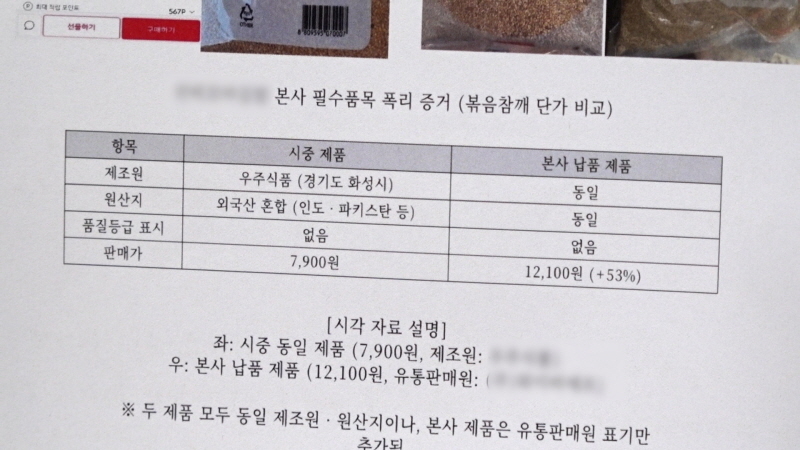
Franchise owners point to “difference franchise fees” as one of the reasons why profits don’t increase even when sales do. Difference franchise fees refer to the profit headquarters makes by supplying necessary items to stores at a price higher than the purchase price.
Kim Yeon-ju (pseudonym) operated a gimbap franchise in Seoul. When she was preparing to start her business, the headquarters explained that she could take home more than 30% of sales as profit. They also emphasized low interior costs and a stable operating structure. After opening, sales doubled compared to the previous year. However, she didn’t have a single cent in profit. Instead, she had to bear a loss of 8 million won. This was because the prices of essential items supplied by headquarters, such as seaweed and sesame, rose by up to 30% in a year, leaving no profit no matter how much gimbap she sold. Some items supplied by headquarters were more than twice as expensive as market prices.
“I can’t buy supplies from elsewhere just because they are expensive. There are huge penalties for ‘private purchasing.’ Coexistence? I feel like I’m just someone who buys things for the headquarters.” – From an interview with gimbap franchise owner Kim Yeon-ju (pseudonym).
Although the Franchise Act was revised in July 2024 to strengthen the obligation to disclose difference franchise fees, the information disclosed by headquarters remains opaque. Burdened by high material costs, Kim eventually filed a lawsuit for contract termination against the headquarters.
■ Headquarters Above the Law: Planned Bankruptcy and ‘Eat-and-Run’ Controversy
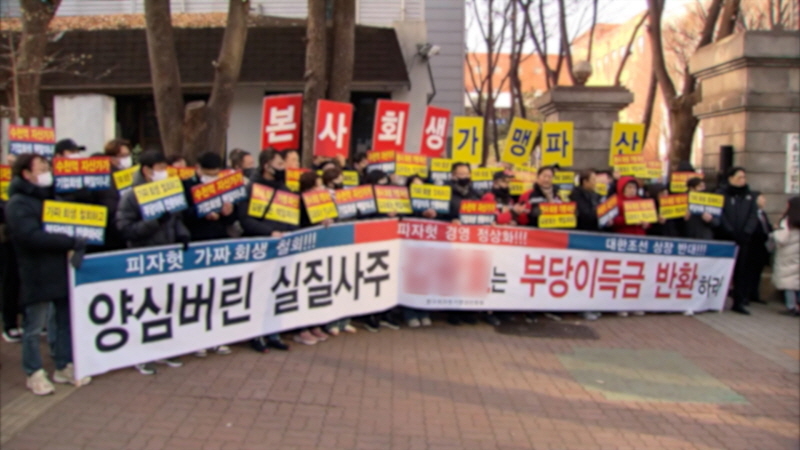
The opaque profit structure that drives store owners into debt eventually led to legal battles. In late 2020, Pizza Hut franchise owners filed a class-action lawsuit, claiming that the headquarters had unfairly collected difference franchise fees not specified in the contract. After a six-year battle, the Supreme Court ruled that Pizza Hut headquarters must return approximately 21.5 billion won to the owners. However, two months after the ruling, the headquarters abruptly entered corporate rehabilitation proceedings, and compensation for the owners is not being made.
Yoon Mi-hyun (pseudonym), who has operated a Pizza Hut store for 12 years, saw her sales drop from 80 million won to 40 million won after COVID-19. She has accumulated 500 million won in debt and planned to pay it off with the difference franchise fees she would receive through the lawsuit. However, with the headquarters’ corporate rehabilitation, the path to receiving compensation has become bleak. The 500 million won debt remains solely Yoon’s burden.
“The headquarters took hundreds of millions of won in difference franchise fees without the owners knowing. Once the Supreme Court ordered the return, they chose rehabilitation. If this isn’t cutting off the tail to save the head, what is it?” – From an interview with a Pizza Hut franchise owner.
Excessive difference franchise fees, power trips, and repeated evasion of responsibility. While they recruit store owners by promising coexistence, the reality is a franchise industry focused solely on maximizing headquarters’ profits. Episode 1456 of ‘Tracking 60 Minutes,’ titled “No Franchise for the Store Owner,” will be broadcast on KBS 1 this Friday, May 15, 2026, at 10 PM.