“Father, what does your father do? Tell me, what does your father do!” In the movie “Friend” (2001), there is a scene where a teacher slaps a student. Even the toughest bullies among classmates could only offer timid resistance in the face of corporal punishment, simply taking the hit.
“You amoebas, do you think you’ll even get into a community college like this?” In the movie “Once Upon a Time in High School” (2004), the “merciless classroom” is on full display, from scenes where a teacher hits students on the back of the head with a stick while they solve problems at the chalkboard to corporal punishment with mop handles.
“My Boss, My Teacher, My Father” (2001), which twists the phrase “The boss, the teacher, and the father are one,” also highlighted the ruthless violence of teacher authority.
Pop culture content from 20 to 30 years ago used the suppression of student human rights by teachers as a primary theme. However, as time passed, by 2026, content depicting the “collapse of teacher rights” has begun to appear in a dramatic shift.
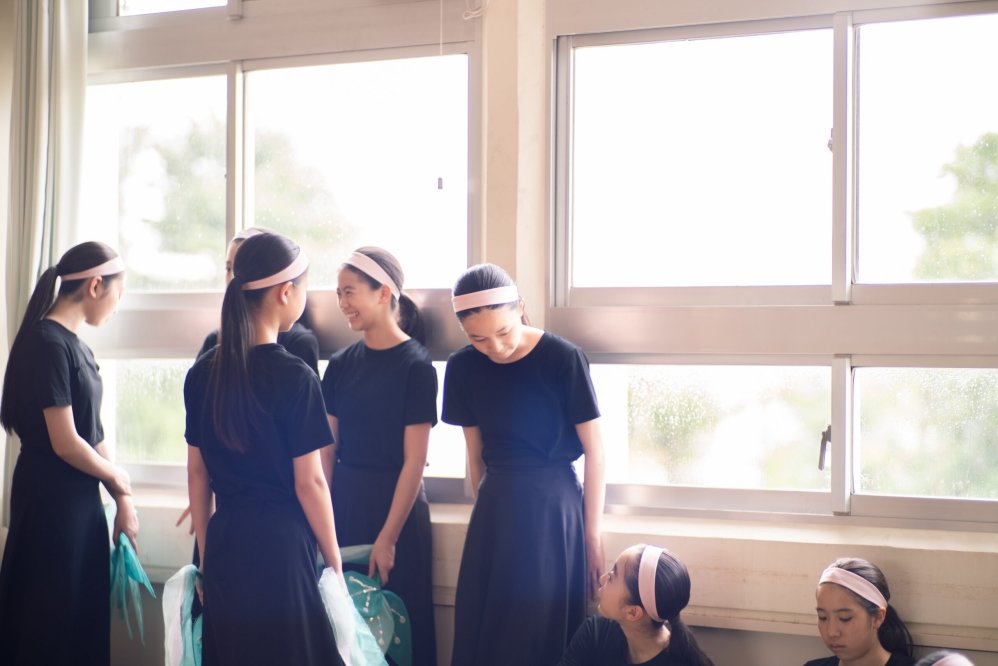
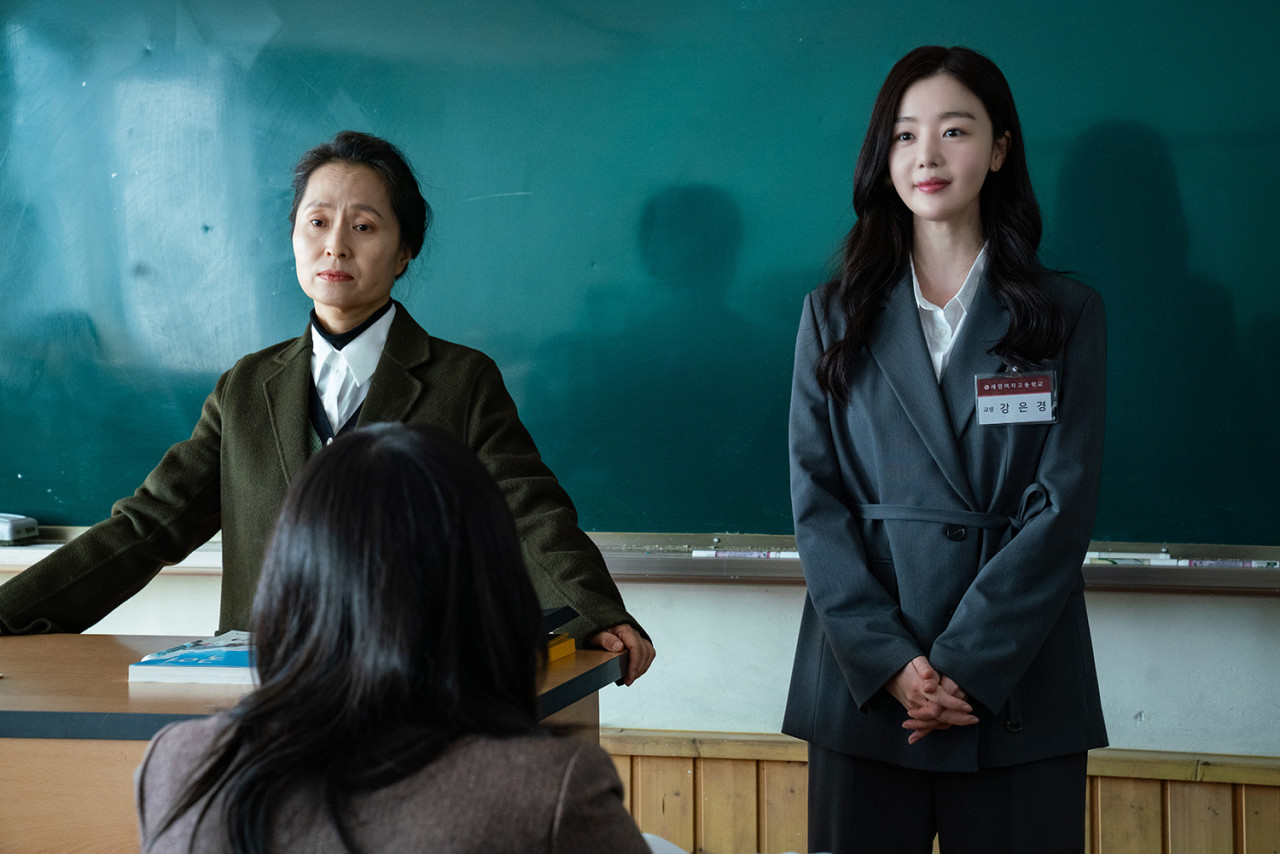
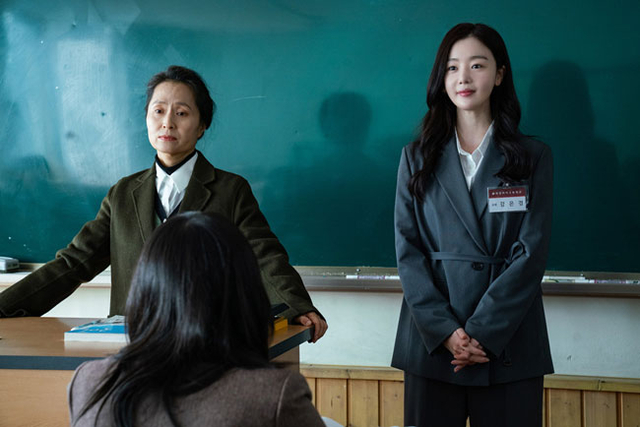
The movie “Teaching Practicum” (Director Kim Min-ha), opening on the 13th, wears the skin of a B-movie horror film aimed at Gen Z, with a lively poster and a survival game-like direction. However, it consistently addresses the crumbling authority of teachers and the lost direction of public education through realistic dialogue and situations.
On the first day student teacher Eun-kyung (Han Sun-hwa) is assigned to a girls’ high school, the vice principal gives her a desperate plea: do not do anything to upset the students and just quietly finish the term and leave. But Eun-kyung aspires to be a “true teacher.” After catching a student doing academy homework during class, she discovers that Aoi (Hong Ye-ji), Riko (Lee Yeo-reum), and Haruka (Lee Hwa-won)—who are active in the school’s black magic club and consistently rank first in national mock exams—have actually sold their souls to the Japanese yokai Idainashi (Yoo Sun-ho) in exchange for their grades. To save the students, Eun-kyung willingly leaps into Idainashi’s colosseum.
While the movie adopts an intentionally light tone, the motivation behind it is incredibly heavy. Director Kim revealed that the starting point for this work was the 2023 Seo-i Elementary School teacher’s death. He stated, “Watching the protest videos for the teacher’s 49th-day memorial, I thought that ‘collapsed teacher rights’ are the ‘sorrow of this generation.'” He also confessed that while taking an evening walk with those thoughts, he witnessed the “collapse of public education” seeing students pouring out of nearby private academies.
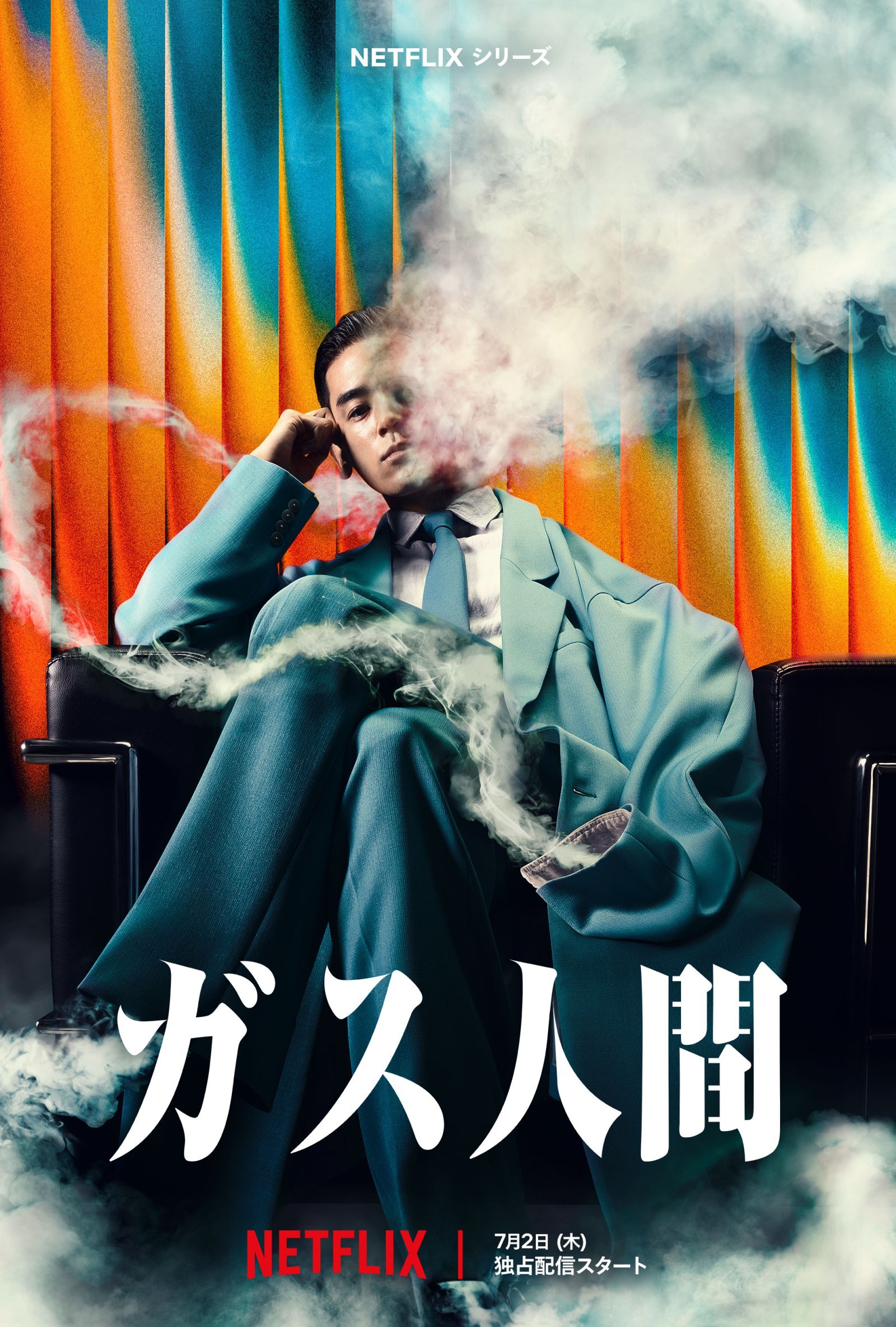
The Netflix series “True Education,” set to be released next month, is straightforward right from the title. Based on a fictional government agency called the “Teacher Rights Protection Bureau,” it is a social critique that resolves absurdities in the educational field. It is expected to reveal the raw reality of education, where classroom disruptions and school violence by students, as well as gambling, drugs, and the formation of violent gangs, are spreading uncontrollably.
Social critique content regarding the “gapjil” (abuse of power) by some parents, starting from daycare centers and kindergartens before public education, is also gaining a huge response. The YouTube video “Kindergarten Teacher Lee Min-ji’s Endless 24 Hours [Human Documentary: Real Extreme Job],” uploaded by comedian Lee Su-ji on the 7th, has reached 6.33 million views.
After watching the vlog depicting a teacher’s day filled with physical labor from dawn until the next dawn, combined with extreme emotional labor, those in the field reacted self-deprecatingly, saying it is “milder than reality.” This subsequently triggered a broad social discourse on the need for self-reflection within the educational field.
Pop culture critic Park Ji-jong analyzed, “An increasing number of people in Korean society feel a sense of injustice regarding crimes committed by students, including those protected by juvenile laws. Since the public has consistently responded to works dealing with the collapse of teacher rights and parent abuse, related content continues to be produced.”