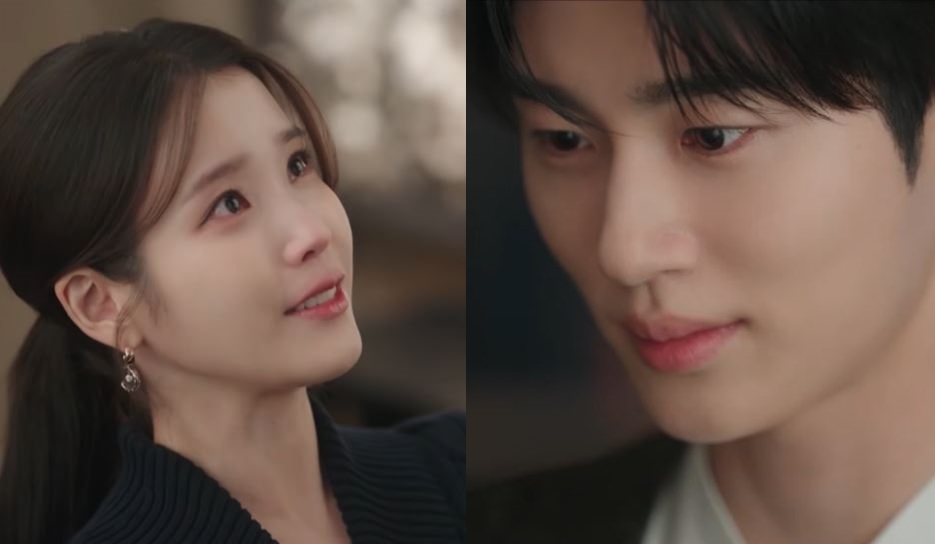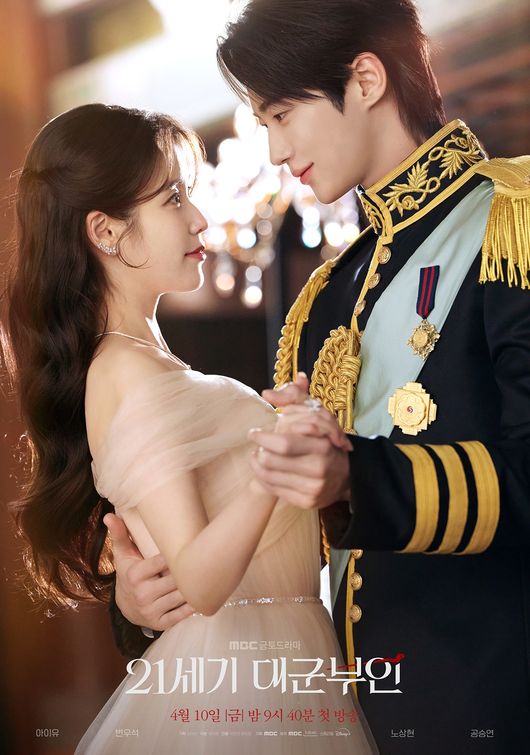
In ’21st Century Grand Prince’s Wife,’ Byeon Woo-seok and IU finally abolished the monarchy. However, rather than a story of pure love after the end of the class system, the rushed conclusion of a chaebol heiress and her “keyring man” left a lingering sense of disappointment.
The MBC Friday-Saturday drama ’21st Century Grand Prince’s Wife’ came to an end with its 12th episode on the 16th. Prince Ian (played by Byeon Woo-seok), who had become king, successfully abolished the monarchy with the help of Seong Hee-joo (played by IU) and stepped down as the final monarch. Their happy daily life, with Hee-joo calling him by his new commoner name, ‘Lee Wan,’ showed the conclusion of the “Wan-seong” couple.
Despite the successful romance, the feeling of dissatisfaction outweighed the relief. This is because the image of a meeting between wealthy elites, who had nothing to lose, left a stronger impression than the pure meaning of a love that transcends social status.
While Lee Wan stepped down from the throne, he kept his wealth, managing royal assets through a foundation. He was free from responsibility, enjoying a normal life—cooking while waiting for his former aide Choi Hyun (played by Yoo Su-bin) and Seong Hee-joo, or enjoying “kiss time” during baseball dates, something he couldn’t do before due to royal dignity. The former king essentially became a “keyring man,” a term previously used to describe the ex-boyfriends of Seong Hee-joo, who once dreamed of being chaebol successors.
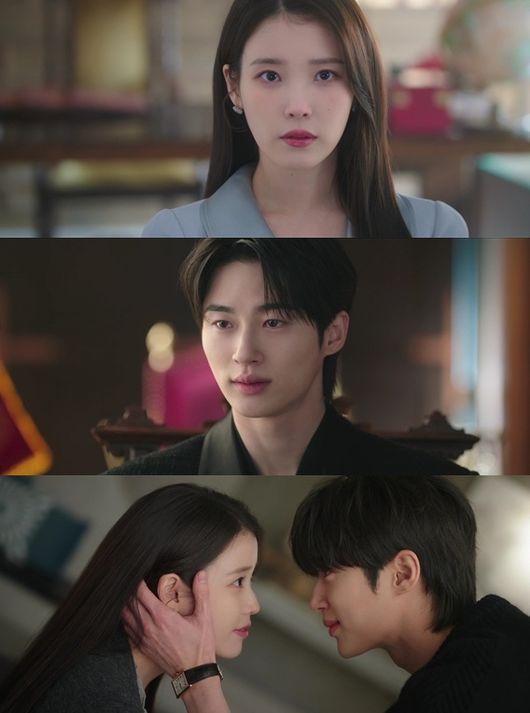
Seong Hee-joo literally had nothing to lose. She returned as the capable heiress of the top business group, Castle Group, and the only obstacle—her social status—was removed by Lee Wan’s abolition of the monarchy. Now without any hindrances, she returned as a powerful chaebol, living a life of happiness as a successful career woman who achieved both work and love.
While the ending of ’21st Century Grand Prince’s Wife’ follows the typical happy ending of a romantic comedy, viewers felt it was rushed. The romance was wrapped up just in time for the 12-episode limit, but that was it. While it claimed to dismantle the class system, the economic power of “chaebols” remained not only present but even more solidified. It seems viewers couldn’t fully immerse themselves in a growth story that forced the transcendence of a fictional status that doesn’t even exist in reality.
From the beginning, controversies over acting skills arose, with Byeon Woo-seok’s stiff performance contrasted with IU’s overly expressive delivery. However, the real issue remaining at the end was the looseness of the story rather than the actors’ skills. For a female lead who was an illegitimate child, the reality of being a chaebol was far too affluent for the class system to be a genuine hardship.
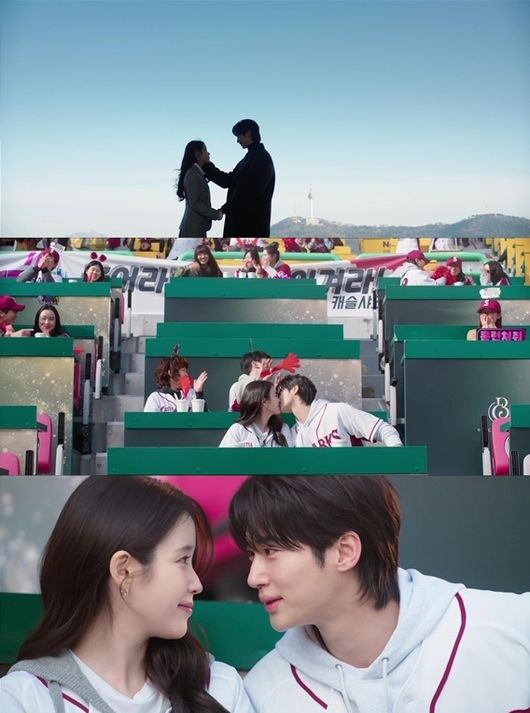
Even the “capability” portrayed as refreshing was merely a result of bloodline, as the title of chaebol heiress was an innate qualification. The male lead, who seemed trapped by the limitations of being a second son despite his royal demeanor, pretended to give up his privileges through a decision that blurred the line between treason and revolution. However, he ended up as a “keyring man,” piggybacking on the real-life class system of the female lead’s chaebol status.
The lavish palace culture and etiquette, which are rarely seen nowadays, sparked debate due to the limitations of virtual reality and forced settings resulting from poor historical research. While it had some visual appeal, it remained a superficial beauty—like “licking the outside of a watermelon”—without deep meaning. Furthermore, in a reality where K-content is under scrutiny due to China’s Northeast Project, ’21st Century Grand Prince’s Wife’ unfortunately provided more ammunition for cultural origin disputes.
It is true that visual romantic comedies pursuing luxury in appearance and environment are released and loved every year. However, viewers are not captivated by mere outward splendor when it comes with unbelievable settings and acting controversies. Ultimately, ’21st Century Grand Prince’s Wife’ left behind a visually flashy palace and a “palace-chaebol” collusion romance that forced the dismantling of a manufactured class system. For Korean viewers in 2026, who have seen two presidents impeached, it was simply a suit that didn’t fit.