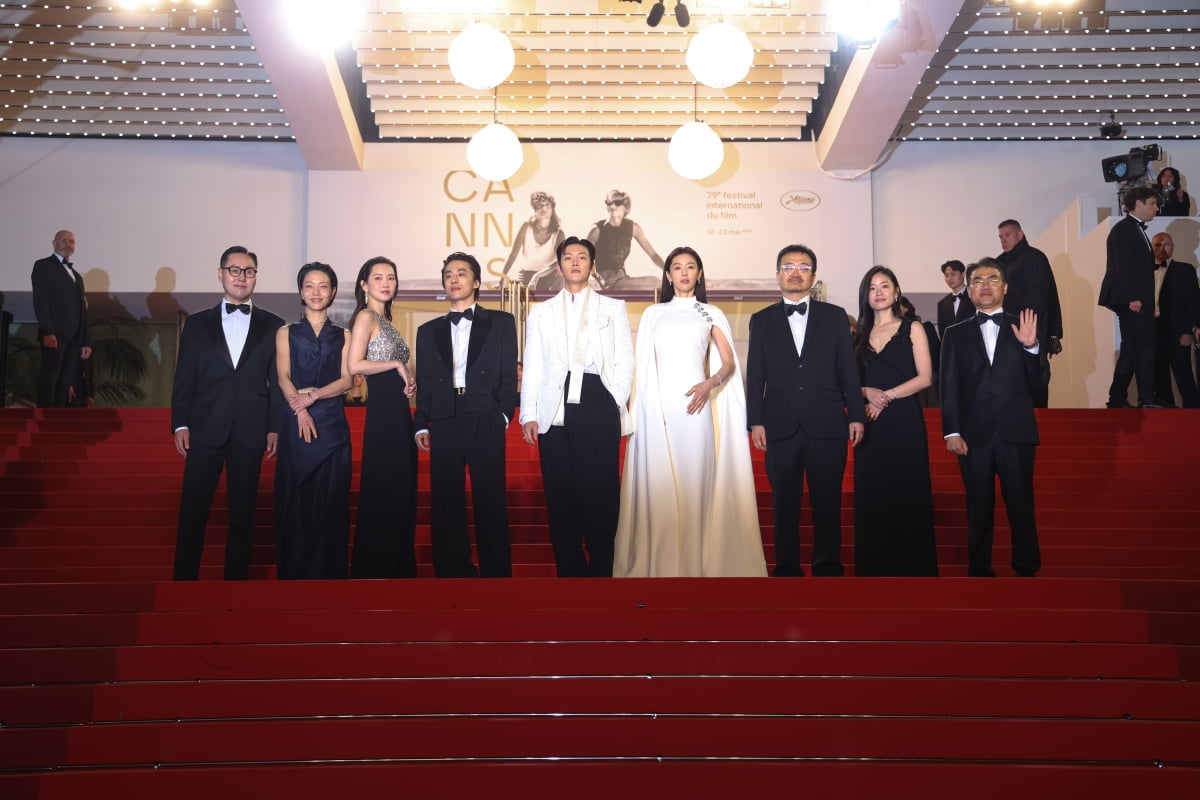
On the 16th (local time), Director Yeon Sang-ho shared the background of the creation of “Swarm” after the world premiere at the Midnight Screening of the 79th Cannes Film Festival.
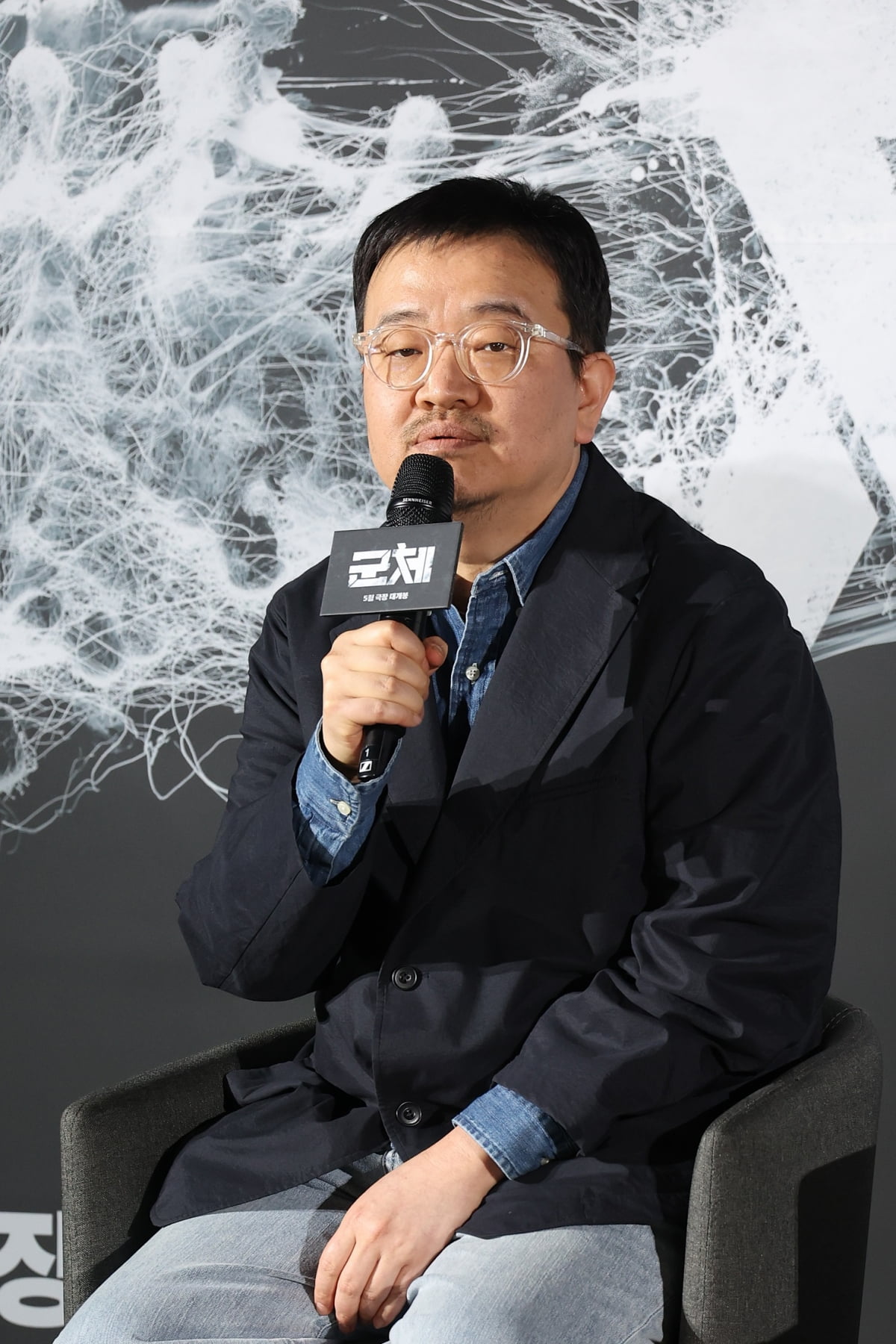
The director pointed to a question about artificial intelligence (AI) as the starting point for the film. “When I looked into how AI works, it was ultimately the sum of universal thinking. However, if you are only clumped together by universal thinking, you cannot express minority opinions.”
That strange discomfort became the seed of the movie. A society where you aren’t supposed to eat alone, and where people ask why you’re alone if you are. The director captured what happens when that universality is pushed to the extreme within the zombie genre.
The infected in this movie aren’t just creatures that bite and pounce. They mimic each other, synchronize collectively, and move like a single network. While the concept of infection in previous zombie movies was closer to biological transmission, the infection in “Swarm” is closer to information sharing and collective consciousness. The unique movements of the infected also started from this concept of an “update.”
Director Yeon Sang-ho says this work is less of a simple horror movie and more of a question about the collective sense of the current era. “When universal things are continuously reinforced, individuality is eventually pushed out.”
This question didn’t first appear in “Swarm.” Through “Train to Busan” and “Peninsula,” the director has varied the cross-section of Korean society through the format of zombies. He found the seed of “Swarm” in conversations with writer Choi Kyu-seok, with whom he co-wrote “Hellbound”.
“I’ve continued to worry about why our society is heading this way, and looking into AI made something become clear.” The question piercing through his zombie trilogy is ultimately one: How does an individual survive within a group?
Regarding the villain Seo Young-cheol in “Swarm,” he explained, “He is a character with a strong philosophy.” He is “someone whose philosophy of needing to communicate better is pushed to the extreme, stemming from the tragedy of unstable communication.” Ironically, the villain Seo Young-cheol is close to the result of pushing values that modern society takes for granted to the extreme. The consciousness of needing to be connected, to understand deeply, and to be together is close to the universal values pursued by modern society.
Regarding Koo Kyo-hwan, who played the role, he expressed deep trust, saying, “People say he acts with animal instincts, but he actually has a style of planning meticulously based on vast references.” Casting Koo Kyo-hwan was a choice considered since the screenplay stage. He was judged to be the right actor to express the subtle nuances of a character twisted at the edge of universality.
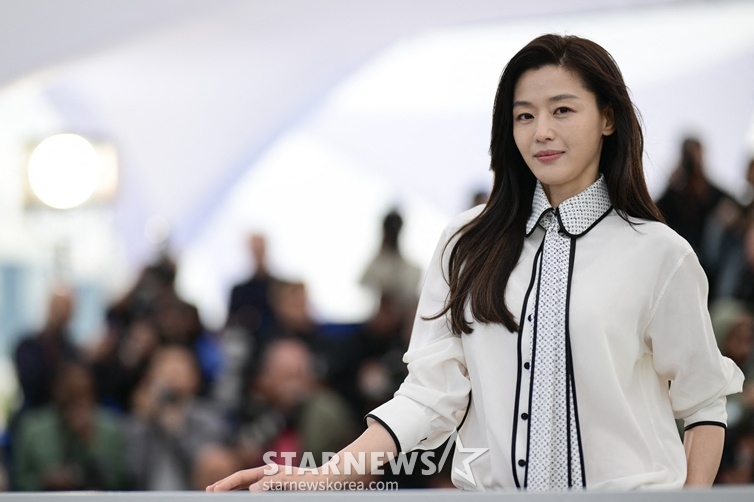
Regarding the casting of lead Jun Ji-hyun, he said, “The character came first.” The character Kwon Se-jung was designed before Jun Ji-hyun joined, and Jun Ji-hyun was actually perfect for the role. “You can’t tell an action actor to remove the action, and you can’t leave Jackie Chan out of a Jackie Chan movie, right? It was important to maximize the strengths that actress Jun Ji-hyun possesses.”
In particular, the director explained that Jun Ji-hyun’s characteristic restrained emotional expression determined the overall tone of the movie. Rather than exploding emotions, the method of suppressing them until the end made the character’s sense of survival and tension even stronger.
He also shared stories about the filming set. Director Yeon Sang-ho explained that he works in a way that maximizes respect for the interpretation an actor brings to the first take.
“I don’t immediately change it just because the acting is different from what I thought. I think about how this actor interpreted it and how to bring that out better.” That trust maintains the atmosphere on set until the end.
“The difference between visual art and narrative is that there must be something visual that cannot be explained in words,” was the final word from the director. It is also a question he faces anew as a director every time: that writing a good narrative and making a good movie are different tasks.