SBS’s “The Story of the Day” (Kkokkomu), hosted by the “Jang Trio” Jang Hyun-sung, Jang Sung-kyu, and Jang Do-yeon, brings us stories from history that we must never forget. For those who missed the broadcast or want to dive deeper into the details, we have summarized everything right here.
The story we want to share with you today is the episode “1975, That Summer at Yaksa-bong,” which aired on the 14th. The guests for this episode were singer Tiffany, entertainer Seo Kyung-seok, and actress Han Gru. (In the spirit of Kkokkomu, this review will be written in a friendly, casual tone.)
A Father’s Accident
It was early morning on August 17, 1975, in Sangbong-dong, Seoul. 19-year-old Jang Ho-yeon was fast asleep when her father woke her up, asking her to go hiking with him. Since she often went hiking with him, she usually would have agreed, but this time she hesitated. It was summer break and a Sunday morning, so she just wanted to sleep in. In the end, Ho-yeon chose her sleep, and her father headed out to the mountain alone.
Ho-yeon says she regretted that moment for the rest of her life. It became a lifelong sorrow. That regret began with a single phone call that came late that afternoon.
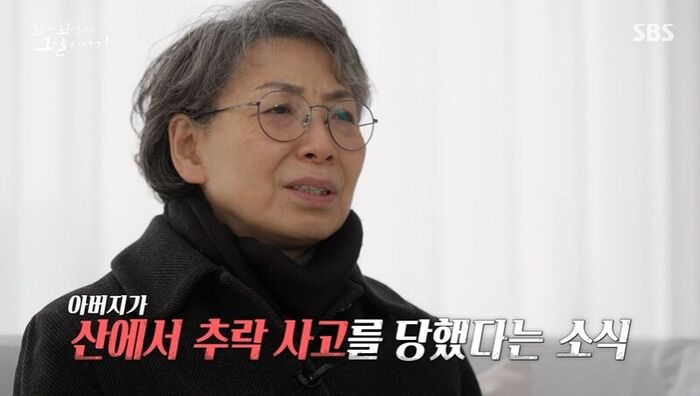
“I answered the phone, and a voice, surprisingly calm rather than shocked, told me my father had fallen from the mountain. I was so startled that my mother and younger brother rushed out immediately. All I remember is crying… just crying loudly.”
– Jang Ho-yeon, youngest daughter
A strange man had delivered the news of her father’s fall. While her mother and brother hurried to the scene, Ho-yeon stayed home and wept. Her father had been an incredibly special presence in her life.
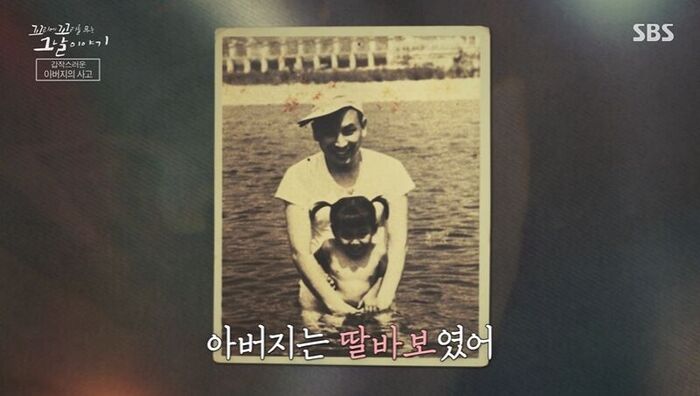
He was a total doting father. While he could be strict with his three sons, he was infinitely tender toward his two daughters, including Ho-yeon. He always waited for her at the bus stop after school. On days when he came home late or left early and couldn’t see his daughters’ faces, he would leave something next to Ho-yeon’s pillow while she slept.
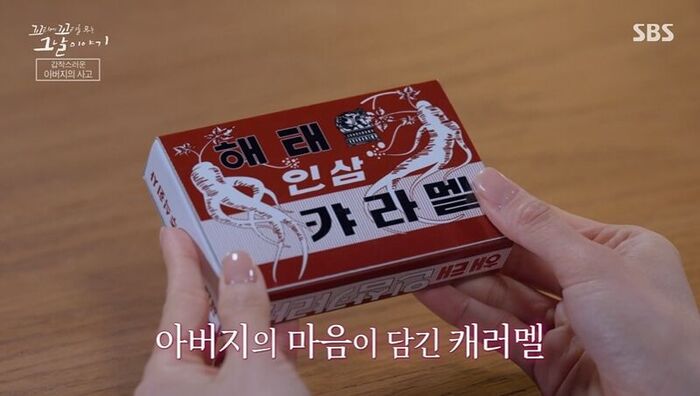
It was her favorite caramel. Whenever Ho-yeon saw the caramel, she knew her father had visited her during the night.
That loving father returned home with his family in the early hours of August 18, the day after the hike. But he returned as a body. The shocking part starts now. It was reported that he had slipped and fallen from a cliff over 14 meters high. However, more confusing details emerged during the funeral preparations. In the 70s, it was common to hold the wake at home. When the family saw the body again in the room, something felt wrong. If someone slips from a cliff, they instinctively use their arms and legs to grab onto anything to stop the fall.
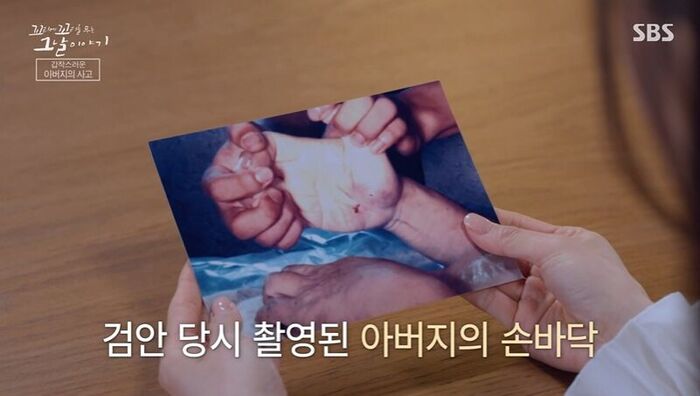
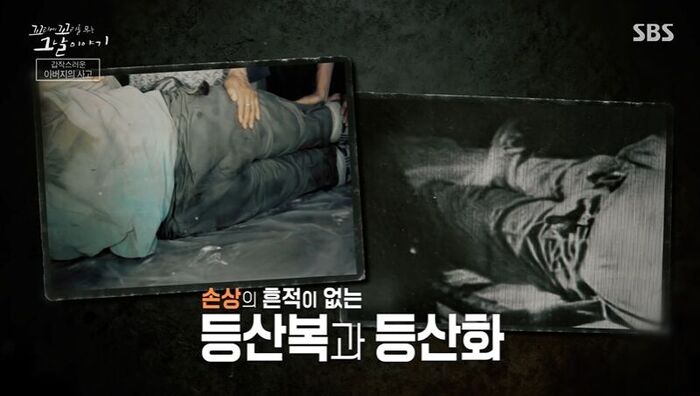
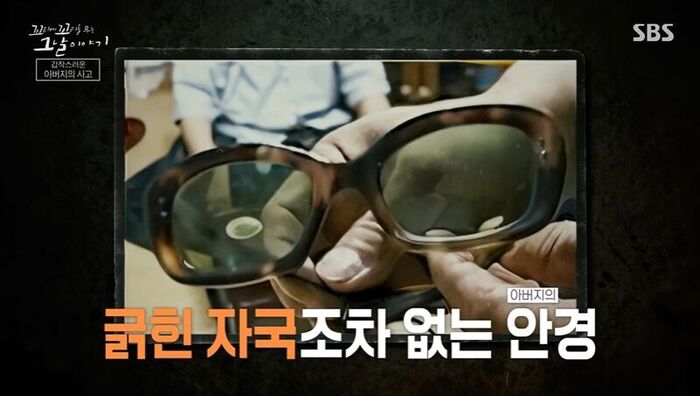
His palms were too clean. There were no signs of damage on the hiking clothes, boots, or the glasses found near the body. Dr. Cho Chul-gu, who examined the body, also found the death suspicious.
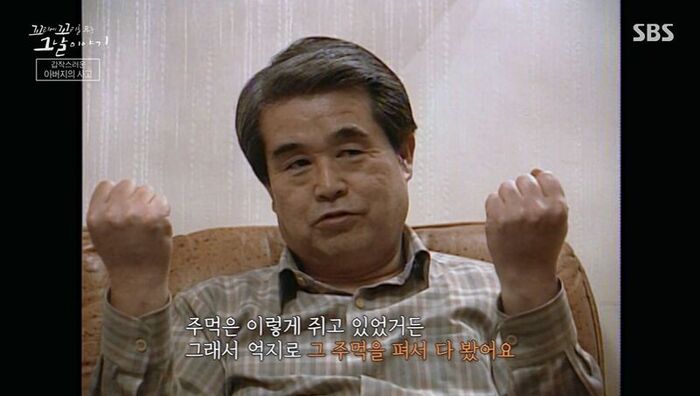
“His fists were clenched like this. I had to force them open to check. There were no wounds inside the hands; they were clean. There wasn’t even any dirt under the fingernails. If someone slips and falls, there should be evidence of an effort to hold onto something to stop the descent.”
– Cho Chul-gu, examining physician at the time
Even to an expert, it was strange. But the most suspicious part was the cause of death.
“Confirmed a depressed fracture of approximately 2cm in diameter at the base of the right temporal region. There are no signs of falling or rolling, and it can be pointed out that the area of the occipital fracture is anatomically difficult to damage through a fall.”
– Dr. Cho Chul-gu’s medical opinion
The cause of death was brain damage, but it was in an area hard to injure from a fall. He was found at the bottom of a valley, yet there were no signs that he had rolled down. Strange, right? To solve such unsolved mysteries, the first step is to visit the scene. The eldest son, Ho-kwon, visited the site with acquaintances.
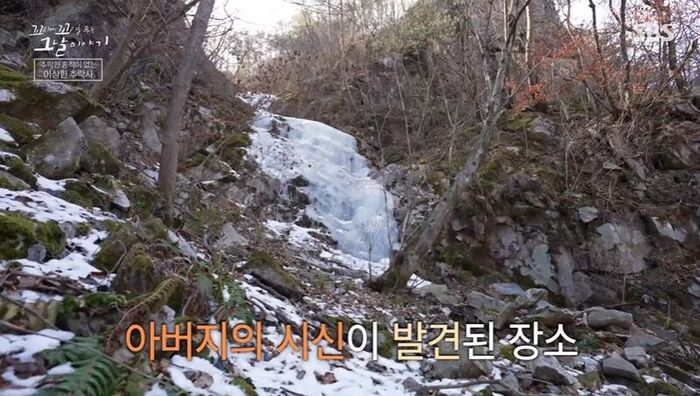
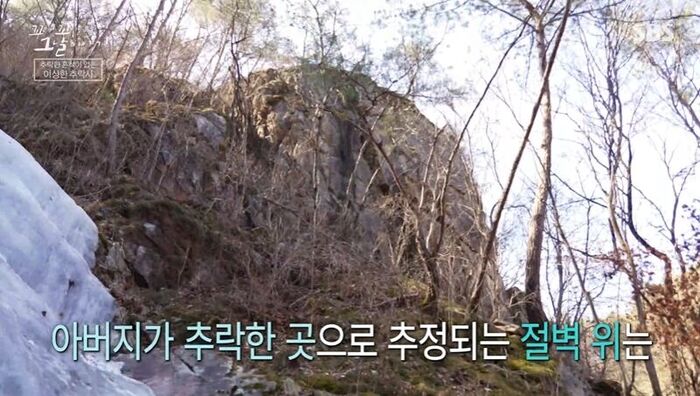
The location of the death was Yaksa-bong on Mt. Unak in Pocheon, Gyeonggi Province. Ho-kwon stood on the cliff where his father allegedly fell and looked down for a long time. But seeing the scene only deepened the suspicions.
The top of the cliff where he supposedly fell is a steep precipice with no hiking trail at all. Since it’s not a trail, even approaching the cliff is difficult. Moreover, the slope is steeper than 75 degrees.
At that time, no one knew that the death of Mr. Jang would become a mystery lasting over 50 years.
The Mysterious Witness
Let’s rethink everything from scratch. Why was Mr. Jang’s death treated as an accidental fall? Because there was a witness, a 41-year-old man named Mr. Kim, who claimed to have seen him fall.
On the day of the accident, Mr. Jang arrived at the entrance of Mt. Unak with other hiking club members around 11:30 AM. It was a clear, hot day. After hiking for about 30 minutes, some members suggested resting in the shade. However, Mr. Jang refused to give up and headed for the summit alone. Shortly after, a man joined the group. This was the witness, Mr. Kim. After asking about Mr. Jang’s whereabouts, Mr. Kim also decided to head for the summit and followed him.
Later, as the remaining club members were preparing lunch, a sweat-drenched Mr. Kim came running back in a panic, shouting, “Something terrible happened! Someone fell off the cliff!” Mr. Jang’s death was reported based on the testimony of this sole witness, Mr. Kim. But there was more to be uneasy about. Let’s hear from the other hiking club members.
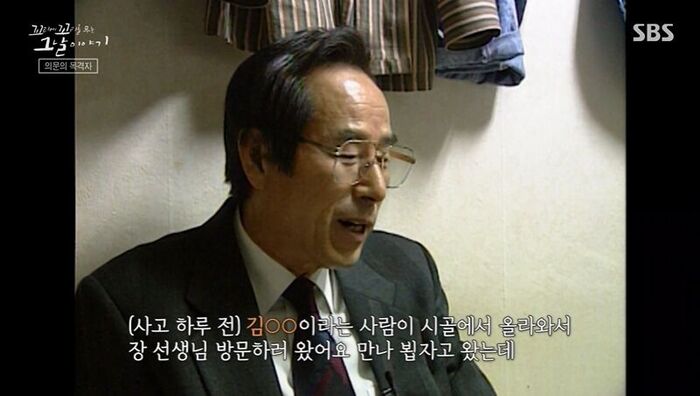
“The day before the accident, a man named Kim came up from the countryside to visit Mr. Jang. He asked if Mr. Jang was going hiking, and when he heard yes, he said he should go too.”
– Kim Yong-deok, hiking club member
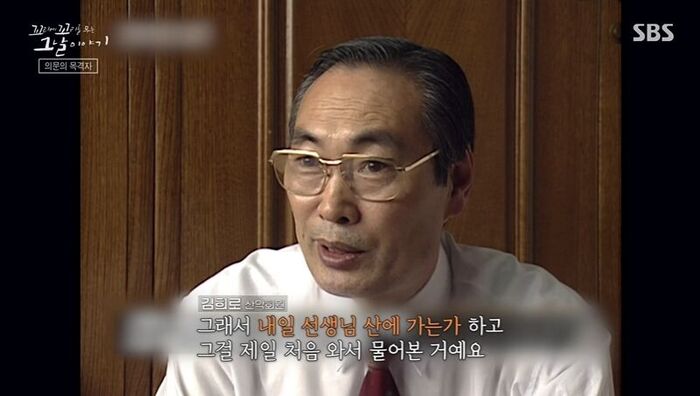
“So he was the first one to come and ask if the teacher was going to the mountain tomorrow.”
– Kim Hee-ro, hiking club member
This means Mr. Kim had been checking Mr. Jang’s movements since the day before. Naturally, the bereaved family had many questions for him. Mr. Kim visited the funeral home three days after the accident, on August 20, 1975. Since the key witness was giving a crucial statement, the family recorded his voice to secure evidence.
“After hiking for a while, I saw two soldiers standing there. The teacher (Mr. Jang) said, ‘I’m over here,’ and he was sitting there drinking tea with the soldiers.”
– Voice recording of witness Mr. Kim
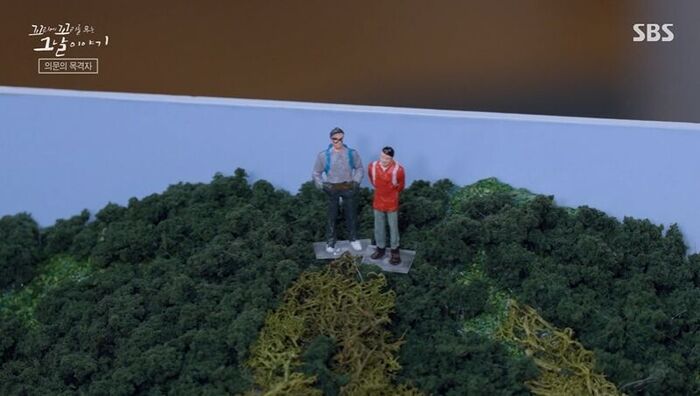
Mr. Kim claimed he met Mr. Jang halfway up the mountain around 12:10 PM. Mr. Jang was sharing coffee with two soldiers. Since there were many military bases in the area, Mr. Kim didn’t think much of it. After that, Mr. Kim hiked with Mr. Jang and reached the summit of Yaksa-bong. Around 1 PM, on the way down, they shared sandwiches Mr. Jang had brought. Then, Mr. Jang allegedly suggested taking a shortcut because it was late and headed toward the cliff in question. Mr. Kim claimed he tried to stop him, but eventually led the way. And then…
“(When asked how Mr. Jang fell) I saw him stagger, but I don’t know exactly how he fell. I’m not sure if he grabbed the top of a tree or if he jumped wrong while leaning on a tree, but from where I was, I saw the tree bend.”
– Voice recording of witness Mr. Kim
Mr. Kim claimed that by the time he looked back with a bad feeling, Mr. Jang had already fallen. Panicked, he rushed down the valley and performed CPR, but when there was no response, he went down the mountain to ask the club members for help. Mr. Kim claimed he returned to the spot where Mr. Jang died with the club members at 2:10 PM.
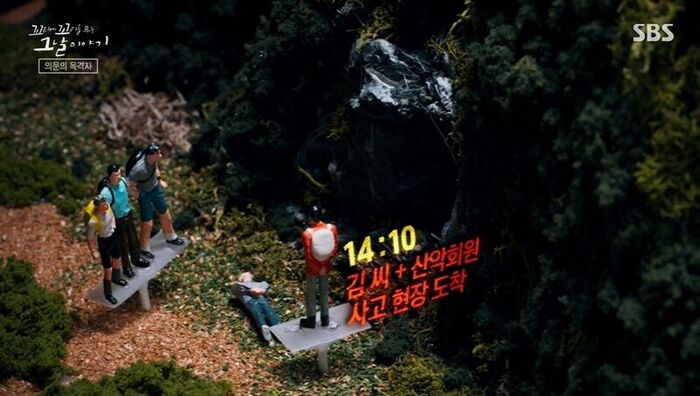
There are many holes in Mr. Kim’s story. Specifically, is it possible to hike, witness a fall, request rescue, and return to the accident site all within two hours? Ho-kwon and his acquaintances retraced Mr. Kim’s claimed route to see if it was possible. It wasn’t. Even professional hikers failed. No matter how fast they rushed, it took over three hours. Descending the cliff path without proper equipment is nearly impossible. Furthermore, the identities of the two soldiers who allegedly drank coffee with Mr. Jang were never confirmed.
No Access Allowed
At this point, Mr. Jang’s fall seems less like an accident and more like a crime. Another person harbored doubts. On August 18, 1975, the day after the death, reporter Jang Bong-jin of the Dong-a Ilbo social affairs department was interviewing villagers around Mt. Unak. The residents’ reactions were puzzled.
“That place was released from being a military protection zone only two weeks ago. How did he find his way there when there are no paths?”
– Resident
It was a place where civilians could hardly access. Reporter Jang wrote an article summarizing these doubts and continued his investigation. However, on the third day, his reporting was stopped.
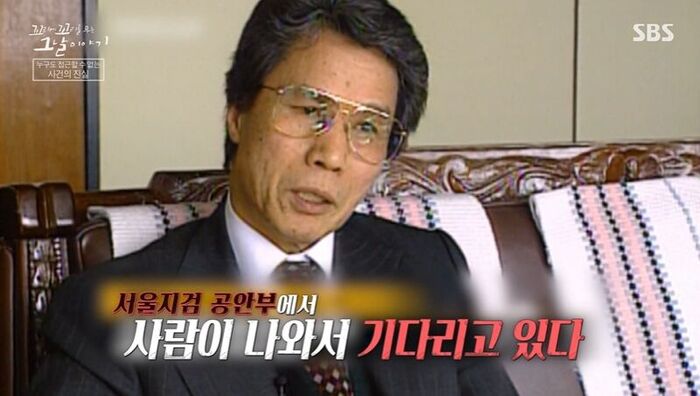
“I was told by the head office to come back immediately. When I asked why, they vaguely explained that because of that article, someone from the Public Security Department of the Seoul District Prosecutors’ Office was waiting for me…”
– Jang Bong-jin, Dong-a Ilbo reporter at the time
Reporter Jang was arrested for the crime of spreading rumors. It wasn’t just the media that was blocked from the case.
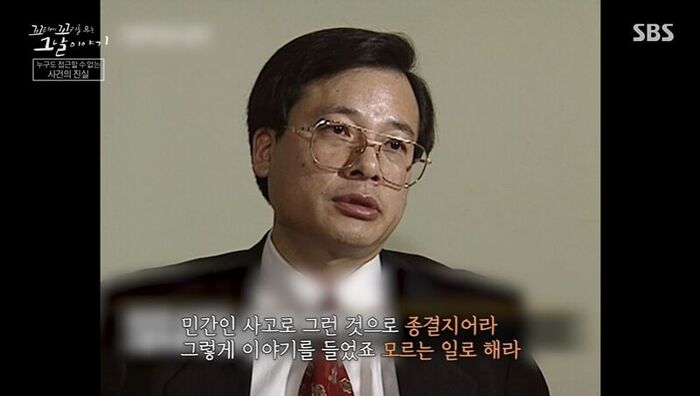
“At the time, I worked in the breaking news section, creating basic data and reporting it to higher units when incidents occurred. I arrived at the scene around 11:30 PM that night. I naturally thought I should conduct a field investigation the next morning, but the case was closed immediately. I was told, ‘Close this as a civilian accident.’ I was told to act as if I knew nothing…”
– Oh Young, former investigator at a nearby military unit
Close it and pretend you know nothing… While everyone kept quiet, the funeral for Mr. Jang, who passed away at age 56, was held at Myeongdong Cathedral on August 21, 1975.
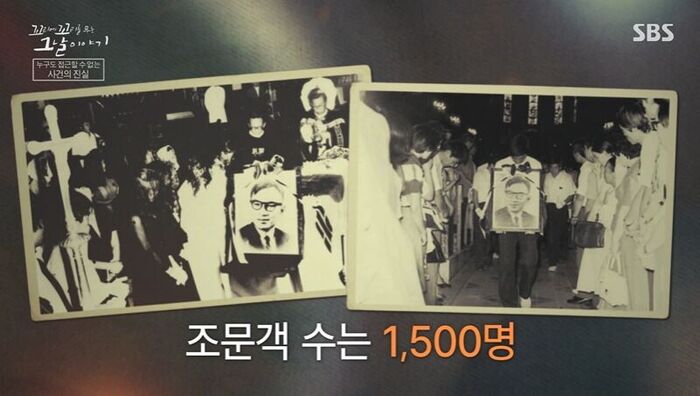
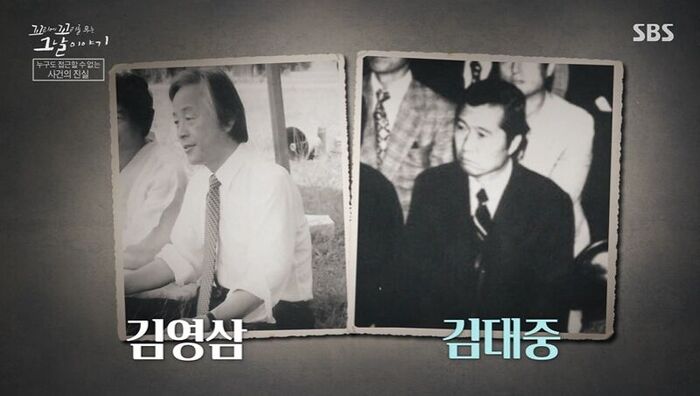
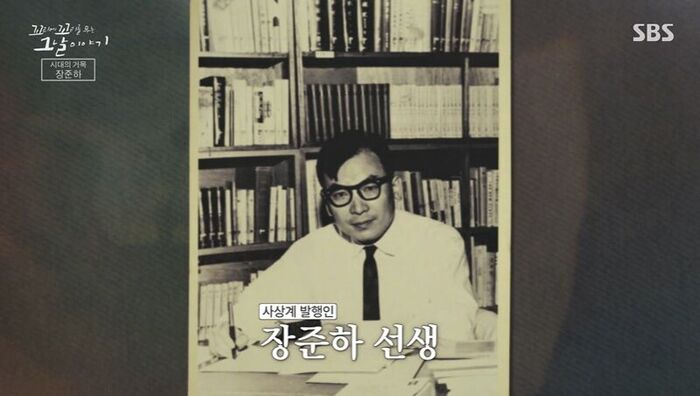
1,500 mourners attended, including famous dissidents and powerful opposition politicians like Kim Young-sam and Kim Dae-jung. Who was this man? His name was Jang Jun-ha.
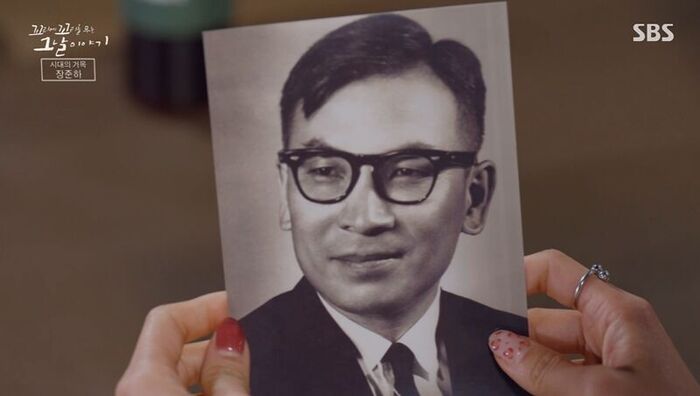
He had many titles, but most people called him “Teacher Jang.” Even his eldest son, Ho-kwon, called him “Teacher Jang.”
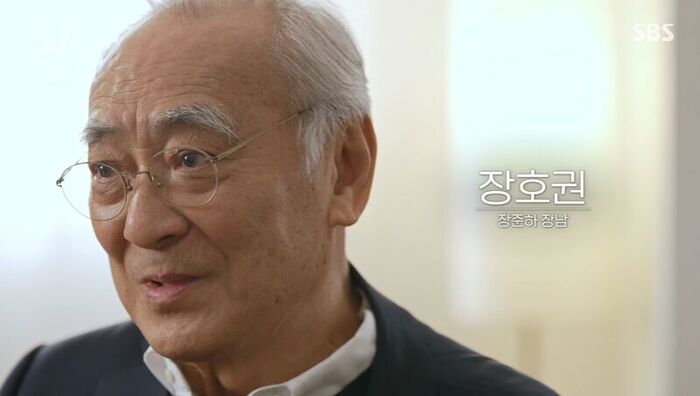
“Many people came to our house. They all called him ‘Teacher Jang,’ and I naturally started calling him that too. It became more comfortable to think of him as a teacher rather than just a father.”
– Jang Ho-kwon, eldest son of Jang Jun-ha
Jang Jun-ha: A Giant of His Era
In the 1950s and 60s, there was a book among intellectuals that served as a status symbol, similar to Time magazine in the US.
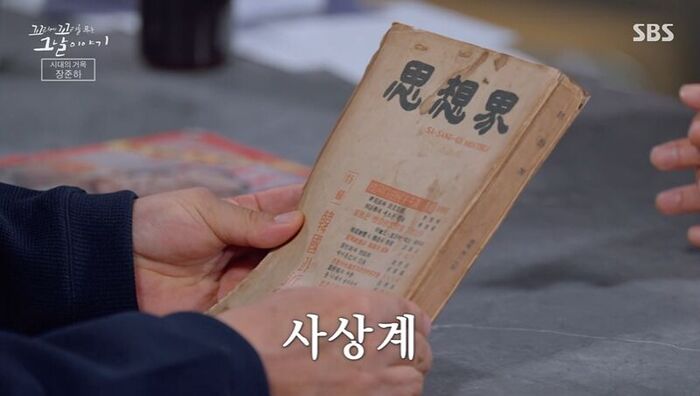
It was a magazine called *Sasanggye*. Launched in April 1953, this comprehensive monthly cultural magazine covered politics, society, history, and culture. Its main contributors were the top intellectuals of the time, such as Ham Seok-heon, Choi In-hun, and Lee O-young. The man who created this magazine was Jang Jun-ha.
The first 3,000 copies of *Sasanggye* sold out immediately. By 1955, circulation grew to 10,000 copies.
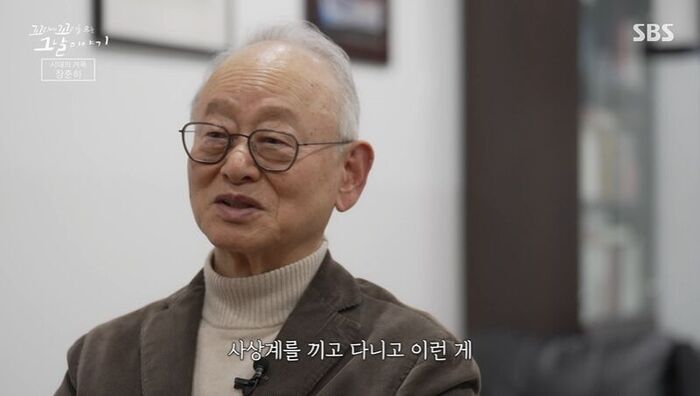
“There was an atmosphere that if you were considered an intellectual, you had to read *Sasanggye*. Carrying it around was like a sign that you were a thinking person…”
– Lee Bu-young, Freedom Press Practice Foundation
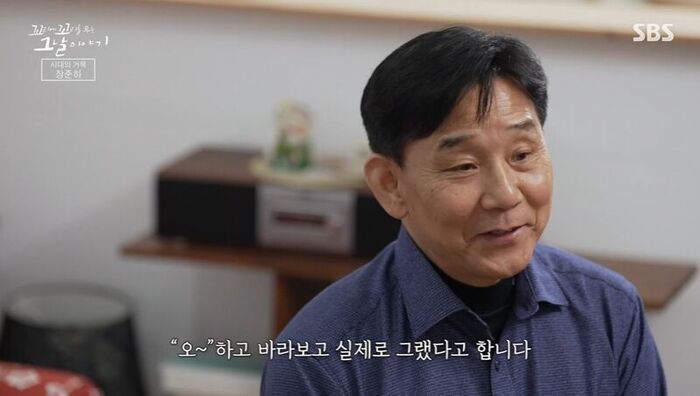
“I heard that if you stood on a bus with *Sasanggye* visible, people would look at you with admiration. It really happened.”
– Lee Jun-young, former Secretary General of the Jang Jun-ha Memorial Association
*Sasanggye* expanded the horizons of those thirsty for knowledge. However, as it became more popular, some people found it uncomfortable. Specifically, the Syngman Rhee regime.
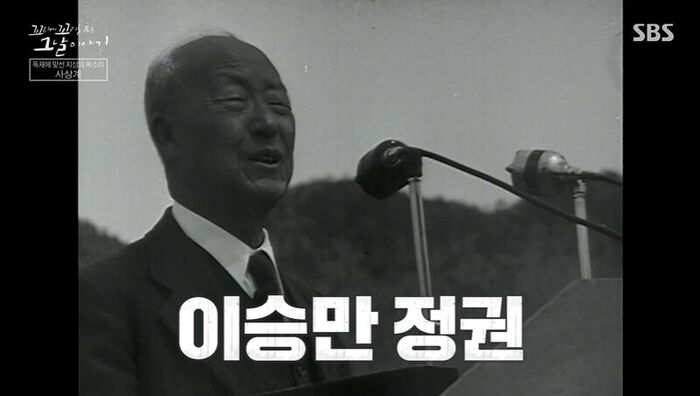
Why? The answer lies in the writings of Jang Jun-ha.
“It is said that the will of the people is the will of heaven. The people cannot forever be the food of the privileged class. I ask you, when have you ever stepped out of your luxury cars to share the suffering of the people groaning in their huts? At what time or place have you ever resented this life due to the bitterness of hunger?”
The people cannot be the food of the privileged. You can feel his love for the citizens. The Syngman Rhee regime must have found this uncomfortable. His fearless criticism didn’t stop there. In the early 1950s, the presidential term was two terms of four years each, for a maximum of eight years. But as his second term ended, President Syngman Rhee changed the constitution, claiming the first president was an exception. This was the “Sasa-o-ip” constitutional amendment. Thus, he began a third term.
As he served three terms, voices of anger erupted. Then, on December 24, 1958, the regime dragged opposition lawmakers from the National Assembly and imprisoned them in a basement, passing an amendment to the National Security Act that allowed punishment for simply criticizing the government. Jang Jun-ha did not stay silent. In the February 1959 issue of *Sasanggye*, he wrote this:
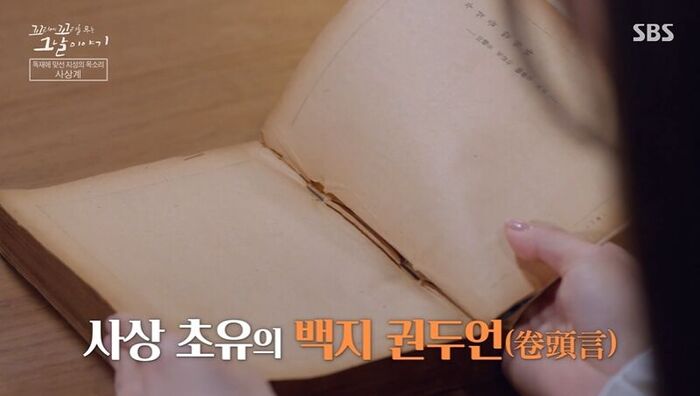
He wrote “What is there to say?” It was an unprecedented blank editorial. He had much to say but chose to say nothing. The readers’ reaction was explosive, and circulation surged past 80,000 copies. Just as *Sasanggye* became a beacon of the era, the 4th presidential election arrived on March 15, 1960. A massive scandal occurred under the 12-year rule of the Liberal Party: the “March 15 Rigged Election.” Ballot boxes filled with 40% Liberal Party votes were swapped with empty ones. Furthermore, due to high illiteracy, people offering to “help” with voting would secretly vote for the Liberal Party, and political thugs openly threatened voters.
Starting in Masan, South Gyeongsang Province, intellectuals, students, and housewives poured into the streets, shouting, “Redo the rigged election! Syngman Rhee, step down!” In response, live ammunition was fired. Police shot their own citizens. At least 186 people were confirmed dead, and over 6,000 were injured. Despite the terror, the people did not stay silent. The anger spread nationwide, and Syngman Rhee eventually resigned.
This event, where the people of Korea changed history themselves, was the April 19 Revolution. How did Teacher Jang feel about it? In one broadcast, he said:
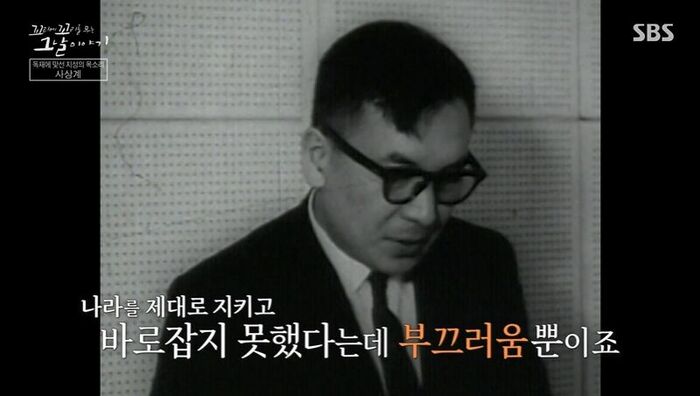
“As seniors who have aged, we can only feel sorry. So many young students, our juniors, died, were injured, and suffered through the April 19 Revolution. It is shameful that we, the seniors, were not smart enough to properly protect and correct the country.”
He felt ashamed. He believed that because the adults failed their roles in a chaotic era, the youth had to be sacrificed. Perhaps that’s why, after Park Chung-hee took power through the May 16 military coup, Teacher Jang’s criticisms became even more intense. In 1962, he received the Magsaysay Award, often called the Nobel Prize of Asia, for his contributions to peace, human rights, and democracy. Mother Teresa was a fellow recipient that year.
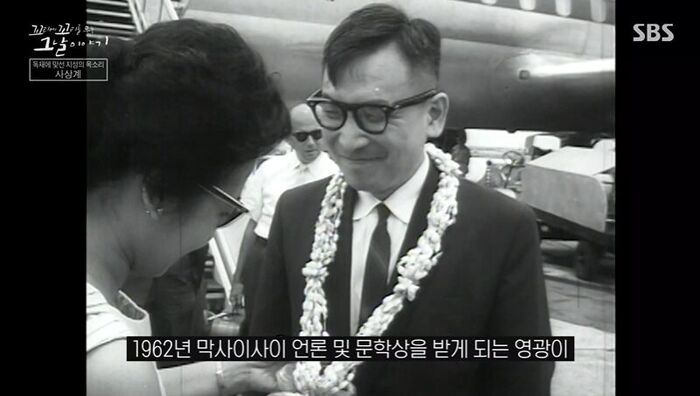
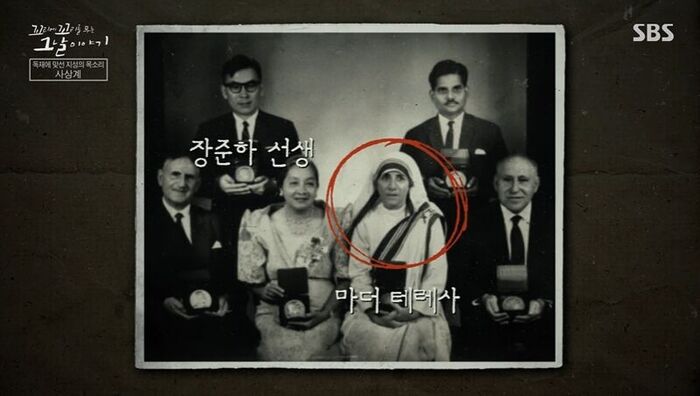
But then, something bizarre started happening at the *Sasanggye* office. Readers began reporting that they never received their magazines, even though the records showed they had been shipped.
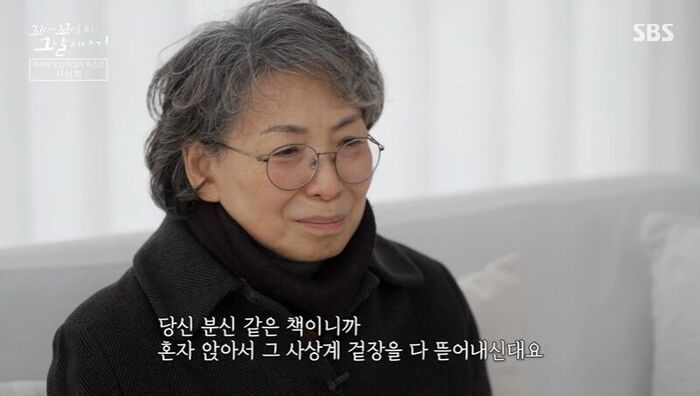
“Detectives or similar officials would wait in front of the readers’ houses, pretend to be the resident, take the magazine from the delivery person, and stack them in a warehouse. After a month or two, they would return all the magazines. Then the books became useless. My father, for whom the magazine was like his own soul, would sit alone and tear off the covers of *Sasanggye* and send only the inner pages to be recycled as scrap paper. Thinking about how he felt while tearing them apart makes my heart ache now that I’m grown.”
– Jang Ho-yeon, youngest daughter
This was the beginning of the “Killing of *Sasanggye*.” Already struggling financially, Teacher Jang fell into debt and eventually stepped down as the publisher. Did he surrender to the Park Chung-hee regime? No. He ran for the National Assembly. He changed his method of fighting from writing to direct politics. He won his first election by an overwhelming margin.
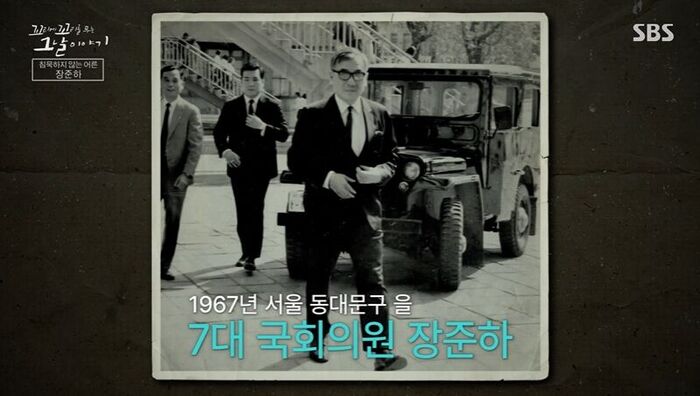
While continuing his anti-dictatorship activities, another event occurred in 1969. Halfway through his second term, President Park Chung-hee also attempted a constitutional amendment. Legally, he could serve twice, but like Syngman Rhee, he tried to make himself an exception. Criticism grew from politicians, dissidents, and the cultural sphere. This was around the time he met Gwang-eon, then a college student.
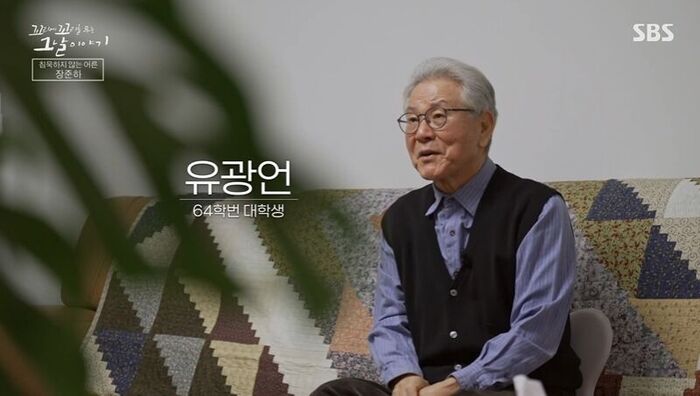
“We needed a declaration of the current state of affairs to give to the students. I wrote it, so I should have been the one caught, but Teacher Jang said he wrote it, printed it, and distributed it himself… I saw that Teacher Jang never pushed what he could do onto others. He was a man who stepped forward and took responsibility. I could see everything.”
– Yoo Gwang-eon, college student (Class of ’64)
He told them to take only him because he was the one responsible, protecting the students. But the amendment passed, and Park Chung-hee began his third term. In 1972, the constitution was changed again: the “Yushin Constitution.” The presidential term became six years with no limit on the number of terms. Direct elections were abolished, replaced by an indirect system through the National Conference for Unification, which was led by the president. Essentially, the president would choose the president.
Teacher Jang couldn’t just watch this happen. On Christmas Eve, 1973, Ho-yeon visited the Seoul YMCA Hall with her family for an important event.
“Our whole family went. My mother took us all along so we could see what the world was like.”
– Jang Ho-yeon, youngest daughter
Inside, the building was packed with dissidents, students, and reporters. In the center, Jang Jun-ha stood before the microphone with a determined expression and began reading a declaration.
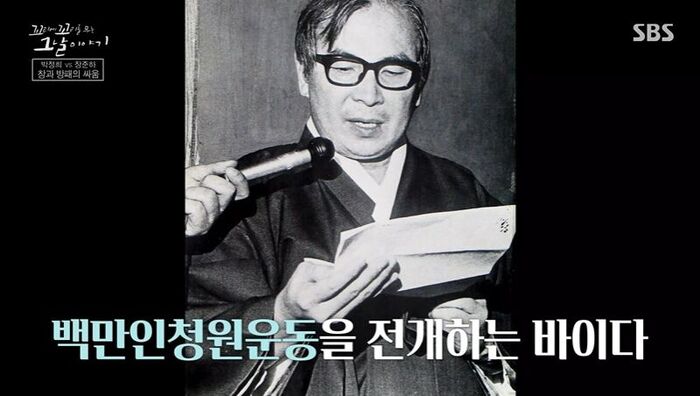
“Combining the demands for liberalization crying out from schools, churches, the press, and the streets, it can be summarized that it is impossible to live under the current constitution. Therefore, we, the people, seek to overcome the alienation from the right to propose constitutional amendments and present our natural rights by launching a million-person petition movement demanding the president revise the current constitution.”
It was a direct confrontation. He intended to convey the will of the people to the Park Chung-hee regime through a million signatures. Naturally, he became a thorn in the regime’s side. Five days later, on December 29, President Park issued a statement.
“Seeing that some impure elements are still caught in delusions and use cunning means to incite and spread rumors while continuing the so-called constitutional petition signature movement, it is clear what their intentions are. I sternly warn them to immediately stop all subversive behavior and the so-called constitutional petition signature movement.”
– From President Park Chung-hee’s statement
He publicly threatened Teacher Jang, labeling him as an impure element. But Teacher Jang didn’t stop. He traveled across the country leading the signature drive. In an era without internet or SNS, 300,000 people signed in just ten days.
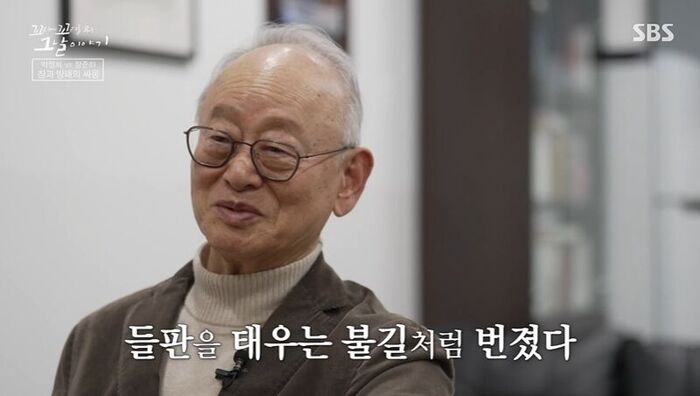
“Many reporters, teachers, artists, pastors, and priests signed… it spread like wildfire across the fields.”
– Lee Bu-young, Freedom Press Practice Foundation
President Park didn’t stop either. It was a clash of spear and shield.
“President Park declared emergency measures, prohibiting all acts of denying, opposing, distorting, or slandering the Constitution of the Republic of Korea, and prohibiting the fabrication and distribution of rumors.”
– News from the time
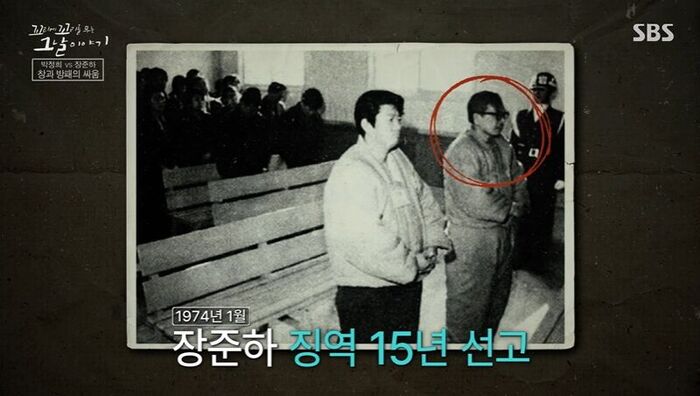
On January 8, 1974, Emergency Measures No. 1 and 2 were declared. Anyone opposing the Yushin Constitution could be arrested without a warrant and sentenced to up to 15 years in prison. The first person arrested and given the maximum sentence was the man who would meet a mysterious death at Yaksa-bong a year later: Jang Jun-ha. He was imprisoned three times under the Park regime and underwent countless interrogations. In this context, does his death seem easy to accept?
After the 49th-day funeral rite, the eldest son, Ho-kwon, worked tirelessly to uncover the truth.
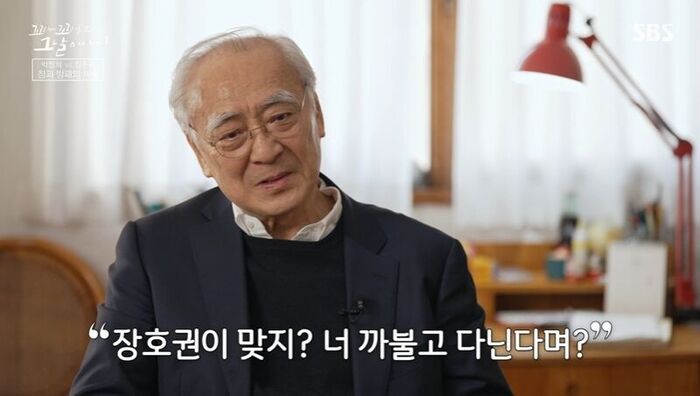
“For about a year after he passed, I tried to get the truth revealed, sending reports to the UN and Amnesty International… and then I was terrorized. They’d say, ‘You’re Jang Ho-kwon, right? I heard you’ve been acting up.'”
– Jang Ho-kwon, eldest son of Jang Jun-ha
He was indiscriminately beaten by thugs, leading to a six-month hospitalization. Afterward, Ho-kwon fled Korea, staying away for 25 years. The rest of the family had to endure a long period of silence.
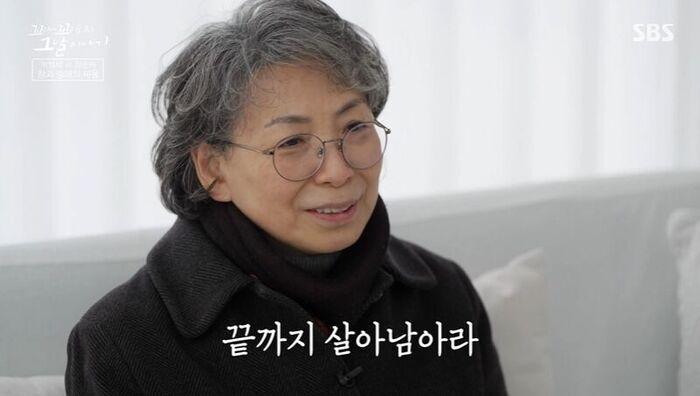
“After the funeral, my mother called us siblings together and told us, ‘Survive until the end.’ Whenever difficulties hit, I felt I had to overcome them… I think I endured it with my teeth clenched.”
– Jang Ho-yeon, youngest daughter
They endured and endured, believing that one day the truth would be revealed.
The Full Story Emerges
Time passed, and in 2003, investigators from the Commission for the Truth-Finding of Unsolved Deaths were reviewing documents. After a special law was passed in 1999, Jang Jun-ha’s case became a target for investigation. A surprising name appeared in one report.
Remember how someone called the house to report the accident? The caller was the witness, Mr. Kim. This was found in a report released by the Korean Central Intelligence Agency (KCIA).
“The wife and family of Jang Jun-ha were contacted by Kim OO, residing in Imun-dong, Dongdaemun-gu, and arrived at the scene around 20:30.”
– From a KCIA report
This is strange because phones were rare in the 70s. In the Yaksa-bong area of Pocheon, only the village head’s house had a phone. To make a call, one needed the head’s permission and it had to be for administrative work. But on August 17, 1975, the village head claimed he never lent his phone to anyone. There were no public phones. So where and how did Mr. Kim call the family before the police did?
Looking back, Mr. Kim’s actions were suspicious from the start. He returned to the scene with the club members around 2:10 PM, but then disappeared and returned to the site around midnight. Investigator Go Sang-man noticed something.
“Around midnight, Mr. Kim returned with another person: Han, the commander of the 105 Security Unit. The 105 Security Unit was located right next to Yaksa-bong. If the village head didn’t lend the phone and there were no phones in the area, where did he make the call?”
– Go Sang-man, former investigator
This security unit belonged to the Defense Security Command, a military intelligence agency. At the time, the Security Command collected intelligence on dissidents and students, and even fabricated spy cases through torture. Was it a coincidence that the Security Command was linked to Mr. Kim? Investigator Go Sang-man met Mr. Kim to resolve these doubts.
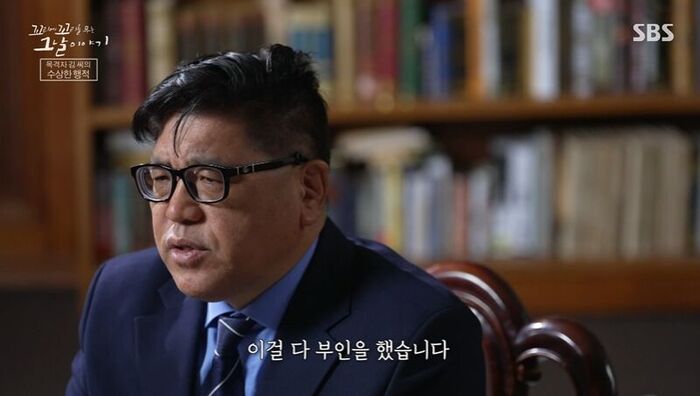
“Even though there was a record of him making the call, he denied everything. He claimed he never did it and that everything was fabricated.”
– Go Sang-man, former investigator
Mr. Kim denied making the call and denied being at the scene at midnight. He claimed it was all a setup, flipped the table, and walked out of the interrogation room.

“It was hard to understand why he would change his story about something he personally experienced.”
– Moon Hyung-rae, former investigator
The investigators got no answers after dozens of interviews. Mr. Kim, the sole witness, passed away in 2017. Who knows the truth now? Likely the former Security Command officials. Investigator Go Sang-man had a chance to check documents at the archives of the Defense Security Command (later renamed Gimu-sa). But when he searched for “Jang Jun-ha,” not a single document appeared. When he searched for the names of people arrested with him, documents poured out. It seemed the records regarding Jang Jun-ha were intentionally deleted.
Blocked by the intelligence agency, the Commission concluded after two investigations that the truth was “impossible to determine” due to the lack of cooperation from intelligence agencies. Would the truth of August 17, 1975, remain a mystery? No, the story of Teacher Jang didn’t end there.
A Clue Found in the Earth
In August 2011, 36 years after his death, heavy rains caused the stone wall behind Teacher Jang’s grave to collapse. The family decided to relocate the grave. In the summer of the following year, when they opened the coffin, everyone was horrified.

“The moment the coffin opened, people were shocked. ‘What is this?'”
– Jang Ho-kwon, eldest son

“The moment I saw it, it was indescribable… so miserable, cruel, and brutal. How could this happen? I cannot put into words the feeling I had during that first excavation.”
– Lee Jun-young, former Secretary General of the Jang Jun-ha Memorial Association

The remains revealed after 37 years showed a clear depressed fracture 6cm in diameter on the skull. Other fractures were only found on the hip bone. Ho-kwon sought help from forensic expert Professor Lee Jung-bin for a detailed examination using X-rays and CT scans.

“The hip and skull are broken, but the shoulder bones are intact? That makes no sense. Not a single back bone, neck bone, or rib was broken. The hip bone isn’t something that breaks easily; it requires a very strong impact. So, he did fall, but in my opinion, he was hit in the head and then thrown…”
– Lee Jung-bin, forensic expert
The conclusion was that while he did fall, if he had slipped down a 70-degree slope, it would be typical for the neck, waist, and shoulder bones to break. The lack of bleeding and external trauma suggests he may have already been dead before the fall. After 37 years, the remains proved that his death might not have been an accident, but a crime.
Why did Teacher Jang die on Sunday, August 17, 1975? At that time, he was preparing a major action. Before we talk about his death, there is a story you must know.
The Youth of Jang Jun-ha
In July 1944, during the Second Sino-Japanese War, the Japanese Tsukada unit in Xuzhou, China, was in an uproar. Alcohol and cigarettes sent by the Emperor were distributed, and the laughter of drunken soldiers filled the air. It was the 7th anniversary of the war. But as roll call approached, something happened.
At 9 PM, a man stepped out of the barracks with three other Koreans. It was 25-year-old Jang Jun-ha. In a secret move through the darkness, he leaped over the wall. He had deserted. In fact, he had joined the army specifically to desert. It all started with a short newspaper article.

“During his studies in Japan, he didn’t miss a short piece in a Japanese newspaper. It mentioned that very rebellious and dangerous people were active (in the Provisional Government).”
– Lee Jun-young, former Secretary General of the Jang Jun-ha Memorial Association
Jun-ha read about the “unruly Koreans” (bulryeongseonin) – independence activists. Even decades after the country was stolen, some were still fighting to take it back. Through that newspaper, he learned of the existence of independence fighters and the Provisional Government of the Republic of Korea in China. From then on, he had a dream: to find the Provisional Government and join the Liberation Army.
“The only way to find the Provisional Government was to join the Japanese army, be deployed to the Chinese front, and then escape…”
– Lee Jun-young, former Secretary General of the Jang Jun-ha Memorial Association
He and his colleagues successfully cleared the wall, but they risked death if caught. They ran. A sentry spotted them, and shots rang out. They ran for three days and nights in a life-or-death escape before finally reaching a village. Exhausted, they collapsed. Then, men with guns approached and asked something in Chinese. Were they Chinese soldiers? Or Japanese collaborators? After hesitating, Jun-ha wrote in Chinese characters on the ground.
“We are Korean youths. We escaped the Japanese camp two nights ago. We are looking for the Eighth Route Army.”
The other party replied in characters:
“We are that Eighth Route Army.”
The Eighth Route Army of the Chinese National Revolutionary Army was one of the units fighting against Japan. Jun-ha and his friends had finally escaped. After days of proper food and sleep, they prepared to leave again. Their destination was the Provisional Government.
They walked west for months. Winter arrived, and they faced a massive mountain range called the Pashu Pass, so steep and high that even swallows couldn’t cross it. While Mt. Halla is 1,947m, the Pashu Pass is over 3,000m. It was an endless uphill climb in heavy snow. They had no winter clothes or boots. Their feet sank into the snow, and the cold was paralyzing. As consciousness faded, Jun-ha bit his lip until it bled to stay awake. He thought about why he was suffering so much and realized it was because he had no country. He wept with frustration and made a vow with his colleagues.
“I will not let my descendants suffer like this. I will not be a failure of an ancestor.”
Vowing never to pass on this pain, they hugged each other. Finally, the sun rose. With renewed strength, Jun-ha walked on. On January 31, 1945, they arrived at a building. Something was fluttering on the stairs, and Jun-ha froze.

It was the Taegeukgi (Korean flag). It was the first time they had seen the flag in person. They had finally reached the Provisional Government. Tears streamed down their faces. Without being told, Jun-ha and his friends saluted the flag.

The distance they walked to reach the Provisional Government was 2,356km. That’s more than a round trip from Seoul to Beijing. They walked that distance thinking only of independence. They were only 26 years old.

This is an OSS uniform. The OSS was the predecessor to the CIA. At the time, a secret operation called “Eagle Project” was underway in the OSS China branch. The goal was a secret infiltration of the Korean peninsula to neutralize the Japanese army. Special agents would parachute into key locations, organize guerrilla units, destroy military facilities, and disrupt the rear until the US military landed.
The agents needed exceptional skills. They underwent hellish training in shooting, demolition, guerrilla infiltration, code-breaking, and radio communication. Every week they were evaluated, and those who failed were removed. On August 10, 38 out of 50 agents passed the final evaluation. Among them was young Jang Jun-ha.

Everything was ready. Before the operation, Jun-ha wrote a will. The probability of death was higher than the probability of survival.
“My soul shall spread like that sunset. In the heart of my people, my soul shall swim forever in blood. In the history of my fatherland, in blood.”
But while waiting for the order to deploy, unexpected news arrived: Japan had surrendered. Jun-ha was happy, but he worried about the future of the country.
“There was a sense of relief that I didn’t have to die. But on the other hand, if the Liberation Army and Allied forces had entered the peninsula together, the Provisional Government would have been an Allied power, a victorious nation. I believed that was the only way to achieve a proper and straight independence. But that operation failed. So, what would happen to the future of this country?”
– Lee Jun-young, former Secretary General of the Jang Jun-ha Memorial Association
He wanted true independence. After liberation, his worries became reality. The peninsula was divided, and war broke out. In the land where he believed democracy would take root, dictatorships followed.
Jang Jun-ha’s Final Act
Time passed, and it was 1975 again. As mentioned, he was preparing a “major action.” He had been sentenced to 15 years for violating Emergency Measure No. 1 and was imprisoned. How could he prepare an action in such a state?

“When I visited him, he’d say, ‘Oh, you’ve grown so much. Don’t get sick,’ and give me words of encouragement. Then he’d press a small piece of paper into my hand. I felt that I had to take it without being caught. I’d go home and tell my mom, ‘Dad gave me this,’ and she would use it to communicate with others.”
– Jang Ho-yeon, youngest daughter
Suffering from angina, Teacher Jang was released in January 1975 due to a stay of execution, but his life outside was like a prison without bars. He was under constant surveillance by KCIA agents. Then, on July 29, 1975, he secretly met someone in Donggyo-dong: Kim Dae-jung. Rumors spread among dissidents that Teacher Jang was preparing something huge.

“He was planning to release a statement against Emergency Measure No. 9 and was also planning a mass movement for an anti-war peace rally.”
– The late Baek Ki-wan, Director of the Unification Problem Research Institute (1993 interview)

“We intended to make that important statement around August 15. But Yoon Bo-sun was away in the countryside on vacation, so we couldn’t do it then. We asked, ‘Then when?’ and decided on August 22.”
– The late Gye Hun-je, democratization and unification activist (1993 interview)
Their D-day was August 22, 1975. But five days before the action, on August 17, Teacher Jang died in the Yaksa-bong valley. Was it a coincidence or a sudden misfortune? The reason his death remained a mystery for over 50 years is that documents were never released and some people remained silent. The KCIA, which monitored every move of Teacher Jang and his family, continued to follow the bereaved family even after his death.
“Detectives were always watching. Relatives were too scared to visit. Whenever someone came to the house, they’d ask, ‘Why are you here?’ ‘Who are you?’ So, no one could visit freely.”
– Jang Ho-yeon, youngest daughter
“All my friends ran away. When I tried to find a job, they’d give me an envelope and say, ‘I’m sorry.’ This was because if they gave me a position, the KCIA would immediately come and harass them. These are the things that happened to the family of a human being named Jang Jun-ha.”
– Jang Ho-kwon, eldest son
Because they were Jang Jun-ha’s family, they couldn’t meet friends freely or find employment. Poverty and isolation were daily life. They moved over 30 times, eventually living in a haunted house. Did the family resent him? No. What saved them was the name “Jang Jun-ha.”

“One day, while I was at home, I’d hear a thud in the yard. I’d go out and find a sack of rice. When we worried about running out of coal in winter, a coal delivery would arrive. I felt that we were living well… that we were living correctly… and that we were living in a way that wasn’t shameful to others.”
– Jang Ho-yeon, youngest daughter
Who sent them? They don’t know for sure. But it’s clear they were people who respected and supported Teacher Jang’s will. A man called an unruly Korean, an impure element, and a dangerous person. Looking back, Jang Jun-ha dreamed a subversive dream that the era did not allow. In a time when independence movements were seen as riots, he dreamed of sovereign independence, and in a time of forced silence and oppression, he never stopped speaking the truth.

“He was no ordinary person. He was someone who fired up the hearts of us youths. He used to say that he hoped the era we would live in would be a peaceful time, different from the one he lived through.”
– Lee Bu-young, Freedom Press Practice Foundation

“I think my father really dreamed. He dreamed of a world where everyone is happy and peaceful. Having lost his country and experienced the pain of war, I believe those experiences made him feel that such a world should never happen again.”
– Jang Ho-yeon, youngest daughter
A true adult who knew shame in a chaotic era. Did the dream of Jang Jun-ha, who wanted to leave a better world for the next generation, come true?
On January 24, 2013, a retrial began for Teacher Jang’s case of violating Emergency Measure No. 1. We will end today’s story with the content of that judgment.
“Popular sovereignty. During the dark age of human rights where the basic constitutional values of modern constitutions, such as the sovereignty of the people, were brutally oppressed, the deceased did not hesitate to undergo personal sacrifice and hardship to restore the basic values of democracy and become a lamp of the era. The noble view of history and spirit of sacrifice of the deceased continue to be passed down through the ages, and we express our sincere respect and gratitude. We hope this retrial judgment provides some peace and comfort to the deceased. The defendant is not guilty.”

After hearing the story of ‘that day,’ what are your thoughts today?