The Emmy-winning legend ‘Beef’ returns with Season 2 after three years. From the exploding anger of Season 1 to the swallowed anger of Season 2… a class war of ‘socialized anger’ unfolding at a country club. When the class-seizing sequence designed by Director Lee Sung-jin, featuring ‘keyring man’ Song Kang-ho and chaebol Youn Yuh-jung, transcends deja vu.
In a corner of a country club garden where a party is in full swing, countless ants are moving busily. A temporary employee preparing for the party steps on them without a second thought. No one cares about the life or death of the ants. Nor does the employee realize that they, too, are just another ant who can be consumed or replaced at any time for those with money. This is the opening scene of Netflix’s ‘Beef’ Season 2, released on the 16th of last month. This brief sequence compresses the entire worldview of Season 2.
■ Stepping on a ‘Smile’ Instead of the Accelerator… The Bare Face of Socialized Anger
Season 1 started from something simple. A car blocked another in a parking lot, and two drivers flipped each other off, leading to catastrophe. Korean-American contractor Danny (Steven Yeun) and entrepreneur Amy (Ali Wong) spent their days burning each other’s houses, sabotaging businesses, and threatening one another, eventually destroying themselves. Season 1 won 8 Emmys by showing how deep a small spark of anger can pull a person.
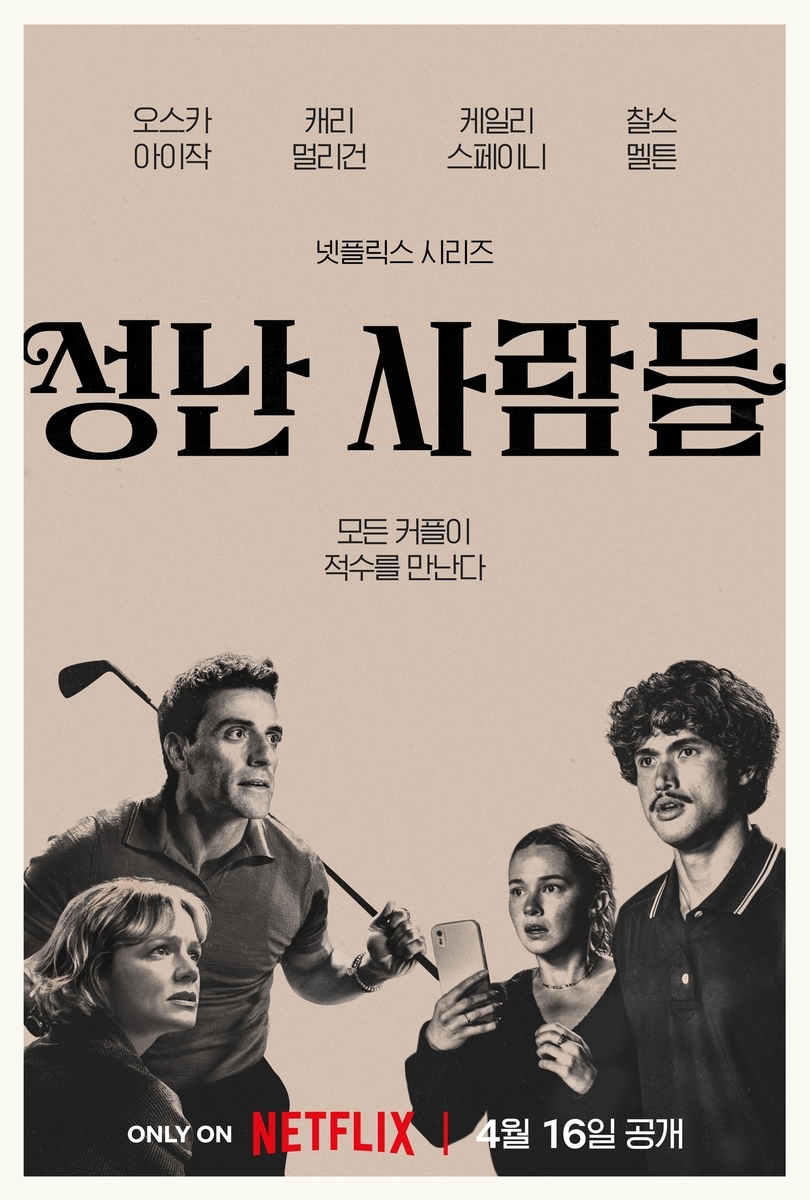
Returning three years later, Season 2 has a different setting. The location has evolved into a luxury country club, and the war has expanded from two people to two couples. The story begins when Josh (Oscar Isaac), the general manager of the country club, and his wife Lindsey (Carey Mulligan) have a fierce argument, which is accidentally captured on a smartphone by temporary employee Austin (Charles Melton) and his fiancée Ashley (Cailee Spaeny). The two use the video as leverage to demand permanent positions, leading to a chain of blackmail and conspiracy. While Season 1’s road rage was impulsive and immediate, Season 2 flows in a much quieter and more calculated direction.
The character Josh illustrates this difference well. In front of club members, he always says, “I’ll take care of everything,” but in reality, he is plagued by debt and his marriage is silently cracking. After barely succeeding in renewing his contract with Chairman Park (Youn Yuh-jung), a Korean-American chaebol who recently acquired the club, Josh says “Thank you,” to which Chairman Park coldly replies, “In Korea, you bow to show respect.” Josh bows deeper. As if anger is a luxury in the face of survival, he willingly swallows the insult.
Ashley and Austin are the same. Their obsession with permanent positions isn’t just about money. Ashley is facing surgery to remove an ovarian cyst but has no health insurance. She needs a permanent job to get insurance benefits. The reality of the US healthcare system pushes them toward the option of blackmail. Instead of exploding with anger, they turn it into an opportunity; this is the ‘socialized anger’ the drama speaks of.
■ An Elegant Scam Called Love, the ‘Relationship Trap’ Designed by Capital
In Season 1, Danny and Amy superficially attacked each other, but they were actually fighting themselves. The shame and frustration they had suppressed for a long time to survive as Asian Americans exploded all at once through a trivial incident of road rage. The anger in the first season was internal anger directed outward.
Season 2 turns its gaze inward to dig into a ‘total mess of relationships.’ Every character stands on the boundary where their deficiencies turn into desire. Austin is a former football player who now makes a living through online training after his prime. He lives without facing the gap between his glamorous past and shabby present. Ashley is an ambitious person who desires more than her abilities, and while she is obsessed with her relationship with Austin, she doesn’t hesitate to use that relationship as a tool. Josh and Lindsey maintain the appearance of a ‘perfect couple’ and an upper-class network, unable to be honest with each other, and that silence slowly rots their relationship. Chairman Park remarried Dr. Kim (Song Kang-ho), who is 20 years younger, wanting a partner who “wouldn’t die before her,” but she pays the price for that choice as she faces the reality of having to cover up her husband’s medical accident.
Season 2 tells a story about the pain that comes from wrong choices. Each couple treats the other as a scapegoat, saying, “We aren’t bad people. They are the bad ones,” but even Austin and Ashley, who seemed the most innocent, eventually follow the same path as the older generation they criticized. Within the logic of capitalism where money equals power, no generation is exempt.
The English medium The National noted that while this season is often compared to ‘The White Lotus,’ there is a decisive difference. While ‘The White Lotus’ focuses on tensions within the wealthy class, ‘Beef’ tracks how the collision of entirely different classes transfers that crack across social strata. At the end of that crack, there is always someone’s wound.
■ Song Kang-ho’s Pathetic Side Meets Youn Yuh-jung’s Chill, a Hollywood Variation of ‘Parasite’
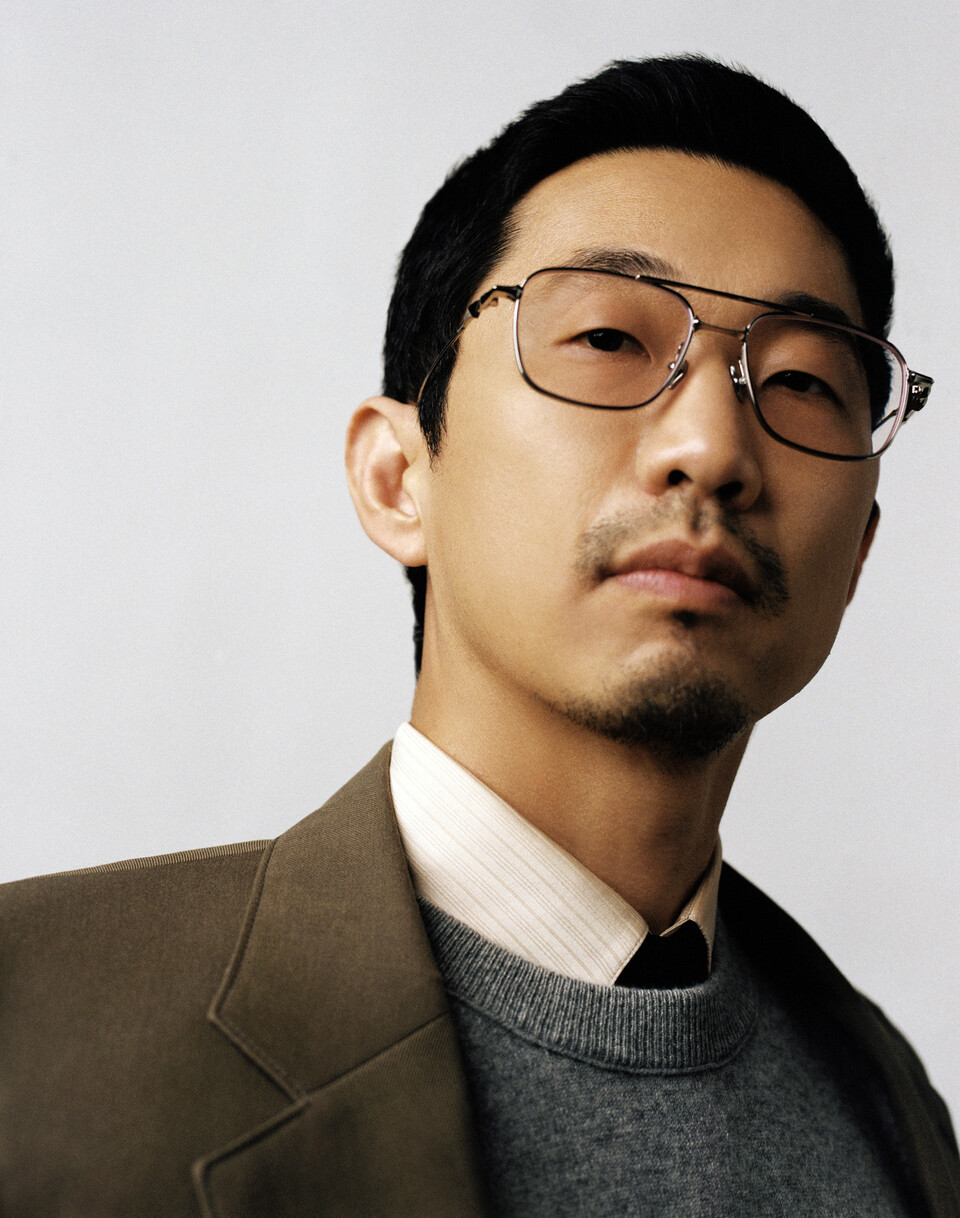
There is a notable scene in Season 2. After Ashley gets a permanent position using the video of the couple’s fight, she fakes Austin’s credentials to get him hired at the club. This is very similar to the scene in Director Bong Joon-ho’s ‘Parasite’ where the Ki-taek family infiltrates Mr. Park’s house by forging academic backgrounds. This is no coincidence. Director Lee Sung-jin has publicly expressed his respect for Director Bong Joon-ho and cast Song Kang-ho, often called Bong’s persona, in a major role. By borrowing the format of ‘Parasite,’ Lee Sung-jin’s camera expands the meaning by placing two giants of Korean cinema.
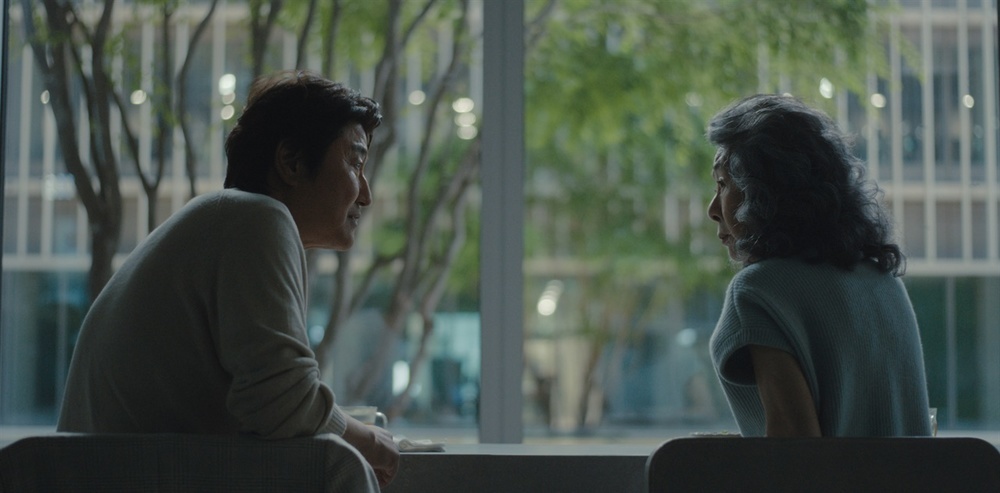
Because of this, the addition of Youn Yuh-jung and Song Kang-ho means more than just casting. Chairman Park, played by Youn Yuh-jung, is a chaebol woman with a husband 20 years younger, which connects to the chaebol character she played in the 2012 film ‘The Taste of Money’ who desired young men. During a press screening for Season 2, Youn Yuh-jung said, “In Korea, no director would have written a character for me with a husband 20 years younger.” She essentially performed a setting that Korean social conservatism wouldn’t allow for the first time on a Hollywood stage. The fact that Song Kang-ho, known as Bong Joon-ho’s persona, joined indicates that Director Lee Sung-jin is conscious of the ‘Parasite’ lineage.
In particular, Song Kang-ho caused a stir by showing a face he had never shown in his 20-year career. Dr. Kim, whom he plays, is a younger husband who relies entirely on his billionaire wife. His soft tone, clinging to her by saying, “How will I make a living if you leave me?” instead of his usual dialect, provided a shocking freshness to viewers, earning him the nickname ‘keyring man’.
Meanwhile, Director Lee Sung-jin didn’t just expand the casting in Season 2. While Season 1 was a story limited to Korean-Americans, Season 2 widened the radius of identity. Charles Melton, who played Austin, a half-Korean character experiencing identity confusion, actually has a first-generation Korean immigrant mother. Melton expressed gratitude, saying, “This is the first time in my life that Lee Sung-jin wrote a Korean-American character for me.” The director described this setting as “a bridge between West and East.”
This is why the drama goes beyond simple entertainment. Along with the movie ‘Minari’ and the Netflix series ‘K-Pop Demon Hunters’, it is leading the trend of Korean diaspora content moving from the periphery to the center of global popular culture. The previous work was nominated in 13 categories at the 75th Emmy Awards and won 8, including Best Series, Directing, and Writing, with Steven Yeun and Ali Wong taking the Lead Actor and Actress awards. Stories of Korean immigrants swept the most prestigious awards in the US. Netflix is aggressively campaigning for Season 2 for the 2026 Emmys.
■ Between an 89% Rating and a -58% Viewership: ‘Observation’ Remains Where ‘Empathy’ Left
In terms of critical success, Season 2 remains solid. The Rotten Tomatoes critic score is 89% for Season 2 compared to 98% for Season 1, with many outlets calling it a “masterpiece on the same level as Season 1.” The crumbling marriage played by Oscar Isaac and Carey Mulligan is the central axis of this season, and even critics who expressed disappointment praised their acting. Variety pointed out that it “loses focus throughout the 8 episodes and makes the already expanded premise more cluttered,” but noted that this was separate from the actors’ performances.
However, the audience reaction was different. According to official Netflix counts, the first-week viewership for Season 2 was about 2.4 million views, a 58% decrease compared to the 5.8 million views of the previous work’s first week. Also, unlike Season 1, which became a typical word-of-mouth hit by surging 107% in the second week to 12 million views, this season failed to replicate that trend. According to Deadline, it dropped out of the Netflix Global Top 10 chart in less than four weeks.
The reasons are complex. It seems to be a result of the three-year gap, the transition to an anthology format, and the chemistry created by Steven Yeun and Ali Wong. Above all, Season 1 drew immediate empathy by using road rage, a moment anyone might have experienced, as a trigger, but the country club in Season 2 is a world of others for most viewers. The class gap symbolized by the ants in the opening existed between the viewers and the story within the drama.
Nevertheless, Season 2 does not betray the promise of Season 1. A single line, “Rich people make me want to throw up,” instantly captures the overall mood of the drama, and the circular structure of featuring ants in the opening of episode 1 and the ending of episode 8 increases the work’s completion. The US film review site RogerEbert.com summarized the essential difference between the two seasons like this: “While people saw themselves in the protagonists in Season 1, they see the world in Season 2.” It became wider. That is both the achievement of Season 2 and the reason it didn’t draw as much immediate empathy as before.
Let’s go back to the opening. Over the procession of ants being carelessly stepped on, some are still raising a toast, and some bend their pride to fill that glass. The world shown in Season 2 is wider than the parking lot in Season 1, but the space for individuals struggling like ants to breathe has become narrower. Director Lee Sung-jin asks a question through these heartless relationships: Are we beings who can survive without stepping on someone else? When anger becomes silence instead of noise, the drama finally becomes a cruel reality.