“Cheonse, Cheonse, Cheon-cheonse”
“Cheonse” was a greeting used by officials for the King until the Joseon Dynasty. Back then, only an Emperor (the Chinese Son of Heaven) could receive “Manse.” Even the Japanese Emperor received the greeting “Tenno Heika Banzai” (Long live the Emperor).
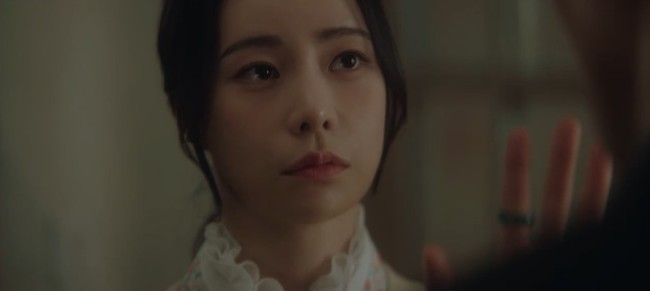
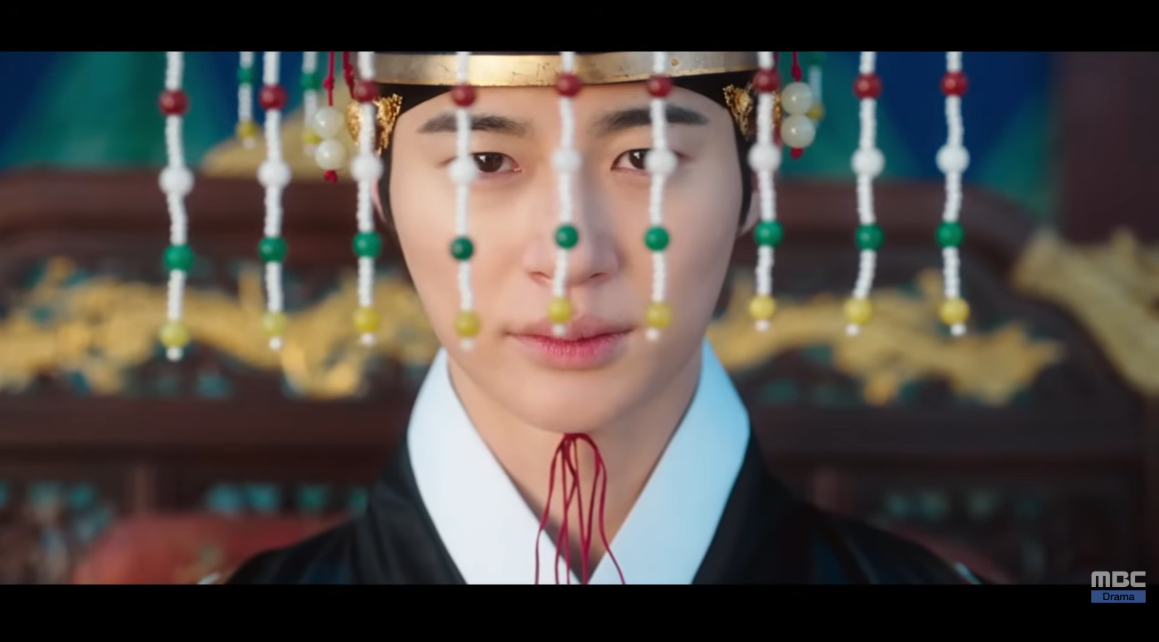
The sloppy settings of ‘The Grand Prince’s Wife’ have spiraled into a controversy over historical distortion. In a drama set in a 21st-century constitutional monarchy in South Korea, the King (played by Byeon Woo-seok) wears a nine-ring crown (while Emperors wear twelve-ring crowns), and officials shout “Cheonse.”
Netizens are pouring criticism onto ‘The Grand Prince’s Wife.’ Many point out that the coronation scene was the final straw in a series of historical distortions. Is it a “21st Century Grand Prince’s Wife,” or a “21st Century Vassal Wife?”
First, the South Korea in ‘The Grand Prince’s Wife’ universe is an independent and powerful nation. The Japanese colonial period and World War II have been completely edited out. To put it bluntly, the show ignores logic to focus only on rom-com elements and royal conflicts. Was there really a need to use “Cheonse?”
In actual history, King Gojong proclaimed the empire in 1897 and set the era name as “Gwangmu.” The country’s name was changed to the “Korean Empire,” and the title was changed to “His Imperial Majesty.” Later, the Provisional Government proclaimed the “Republic of Korea,” moving from a land of an Emperor to a land of the people. ‘The Grand Prince’s Wife’ has essentially degraded this history by erasing it.
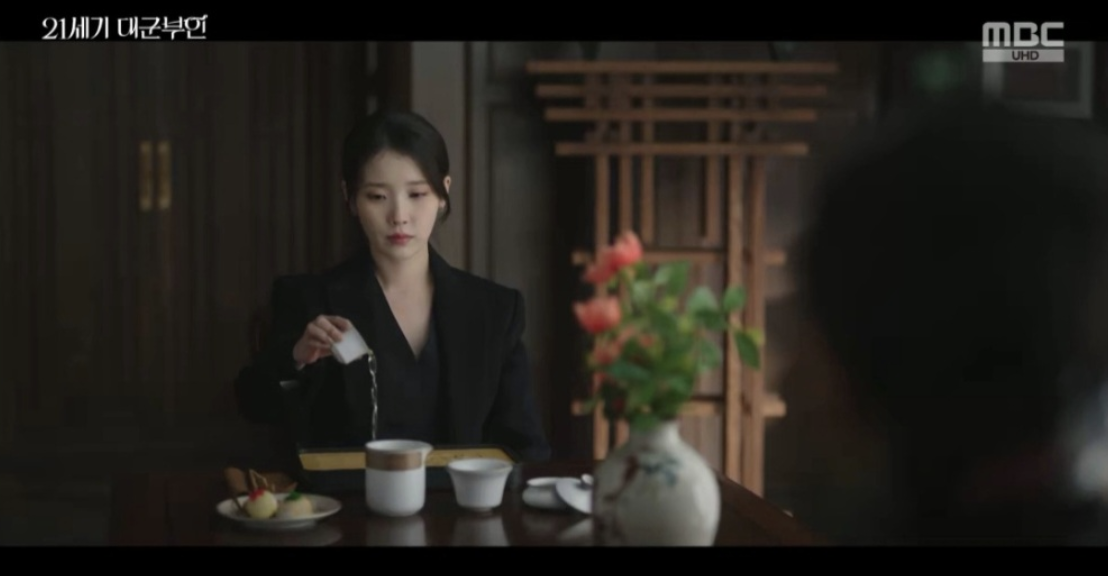
The scene where Sung Hee-joo (played by IU) spills tea while in a psychological battle with the Queen Dowager (played by Gong Seung-yeon) also feels out of place. Using tea to insult or pressure someone is not a Korean style; it is a direction often seen in Chinese palace intrigue dramas.
Furthermore, Hee-joo does not wear Hanbok even when invited to royal events. This setting is used as a strategy for Hee-joo to rebel against the royal establishment. In this drama, does Hanbok also seem like an old custom that needs to be abolished?
In fact, this drama has ignored historical accuracy from the start. For example, after Hee-joo marries Grand Prince Ian, she is called “Gun-buin.” To be historically accurate, she should be called “Bu-buin.”
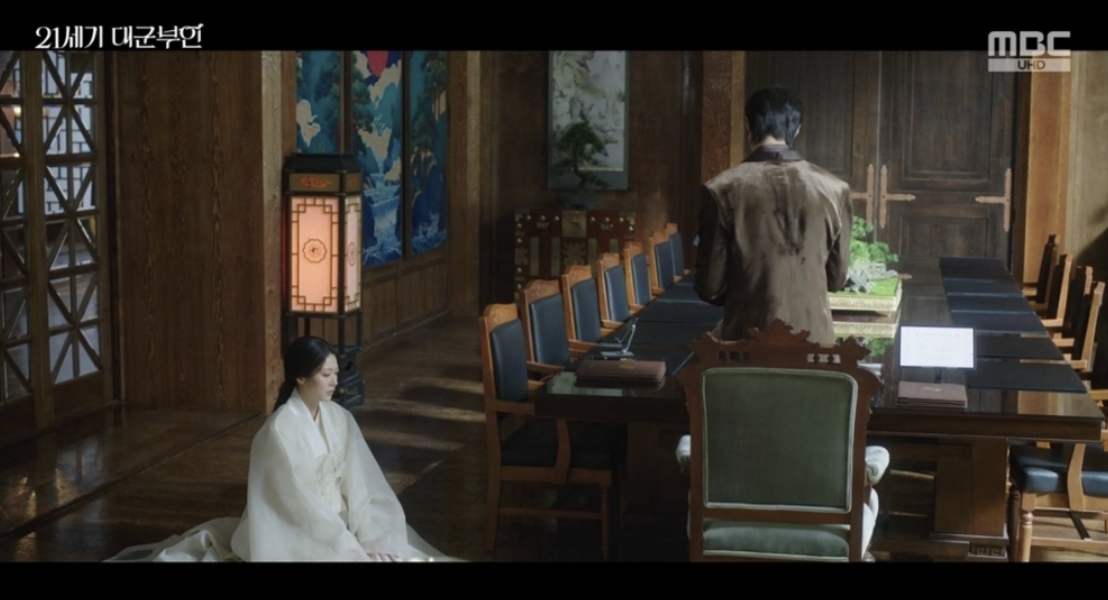
The Queen Dowager wearing white mourning clothes to apologize to the Grand Prince is also completely impossible in the Joseon royal court. Moreover, a Grand Prince cannot act as regent while the Queen Dowager is present. It is also unthinkable for Grand Prince Ian to run in the Jongmyo shrine, where the ancestral tablets are kept.
The production team brushed off these distortions using the all-purpose cheat code of “dramatic license.” They conveniently took flashy keywords like “The Grand Prince’s Wife,” “Jaga,” and “Royal Family,” while skipping the necessary verification. If so, why was there no dramatic license in the coronation scene?
This leads to a chain of questions. Why was the palace burned down three times? Why were the symbols of the Four Guardian Deities shot with arrows? Why was the term “Hungseo” used in the royal chronology even after the proclamation of independence? Why was the temple name of Crown Prince Munhyo set as “Hwijong” (a name associated with a bad ruler in China)?
All these pieces fit together to create concerns about the belittlement of history, historical distortion, and the Northeast Project. This is a disaster born from a complacent script and lazy direction.
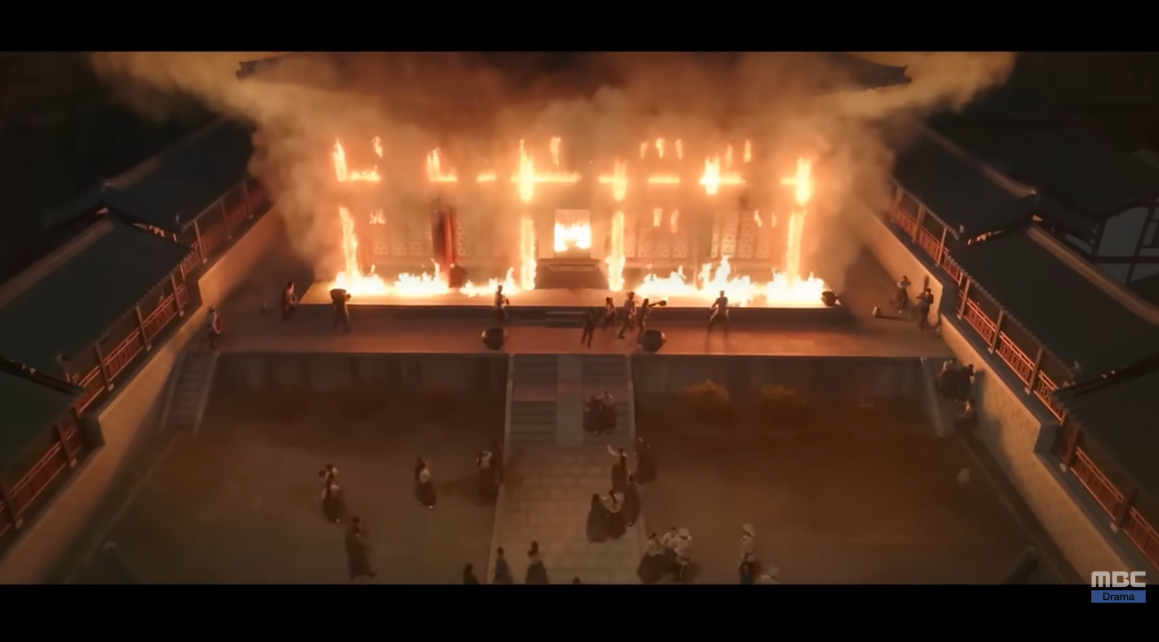
Of course, no one is asking for a documentary. Creative freedom and reinterpretation should naturally be respected. However, when borrowing from history, creativity should not encourage distortion or damage historical value.
Five years ago, ‘Joseon Exorcist’ (2021) was canceled after only two episodes, and all filmed footage was destroyed. The public perceived it as an insult to King Sejong the Great and part of the Northeast Project. The broadcaster, writer, director, and cast all issued apologies.
The writer, director, and lead actors IU and Byeon Woo-seok of ‘The Grand Prince’s Wife’ cannot escape this responsibility. The drama went viral and gained popularity through the names of IU and Byeon Woo-seok, but it ended up contributing to the belittlement of Korean history.
On the 16th, the production team of ‘The Grand Prince’s Wife’ issued a belated apology, stating, “As it is a romance and an alternative history piece, a more cautious approach was needed regarding the intersection of the fictional world and actual historical context, but the related review was insufficient.”
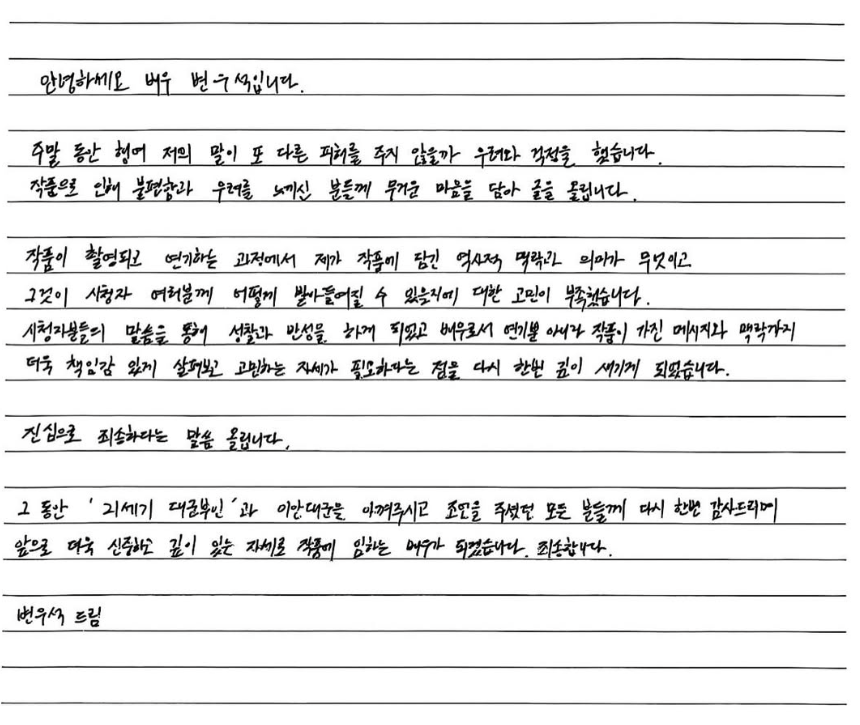
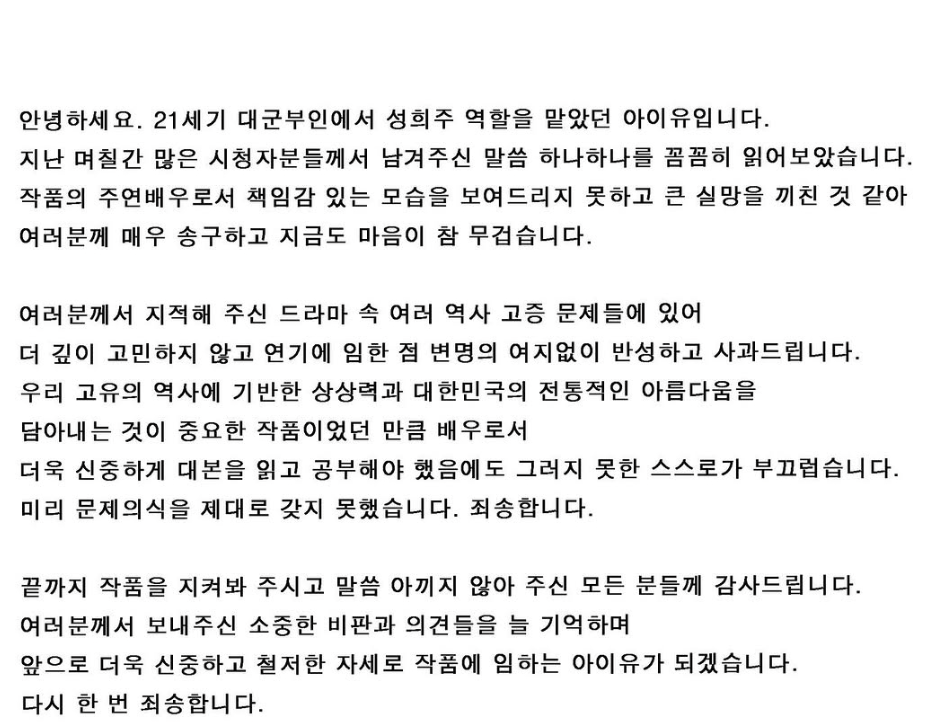
IU and Byeon Woo-seok also posted handwritten apologies on the 18th. IU bowed her head, saying, “I reflect and apologize without excuse for engaging in acting without thinking more deeply about various historical accuracy issues.”
Byeon Woo-seok also left a message saying, “I lacked consideration for what the historical context and meaning in the work were and how they could be perceived. I am sincerely sorry.”