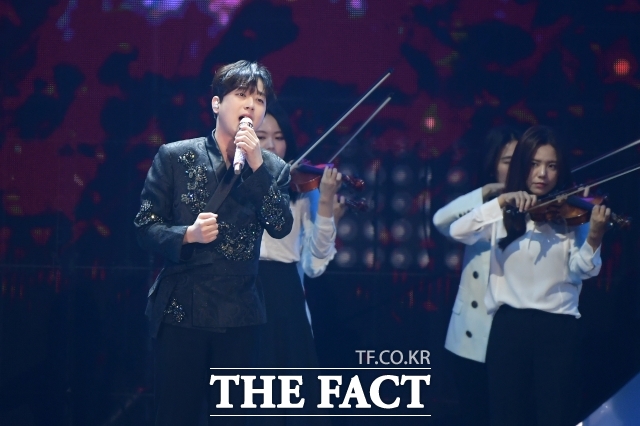
A sunny May weekend saw Seoul turn red-hot with an incredible stage! We’re talking about Lee Chan-won’s Seoul encore concert, ‘Changa: A Radiant Day’.
Starting with a Seoul performance last December, Lee Chan-won met fans across the country in Daegu, Incheon, Busan, Jinju, Gwangju, and Daejeon. Finally, on May 9 and 10, he brought the national tour to a grand finale at the Seoul Olympic Park KSPO DOME.
This encore performance was more than just an extra show. It served as the final page of a long journey following his second studio album ‘Radiant’, marking the finale of a ‘radiant day’ completed together with his fans.
The area around KSPO DOME was in a full-blown festival mood for two days. Fans from all over the country gathered early with lightsticks and slogans, and with commemorative photo zones and fan events outside the venue, it felt like one massive festival.
Many noted that the performance paired perfectly with the fresh vibes of May. Even before the show started, fans were saying, “Today is truly a radiant day,” and the atmosphere was filled with warmth and overwhelming emotion.
The stage production was also impressive. With spring landscapes created using large LEDs, soft lighting, and a live band sound, the entire concert flowed like a musical movie.
The setlist was as rich as a tour finale should be. Centered around tracks from his second studio album ‘Radiant’, the show featured everything from emotional ballads and traditional trot to high-energy stages where he breathed together with the audience.
The encore stage was a particular highlight for fans. Even after the show officially ended, the sing-alongs and cheers didn’t stop, and Lee Chan-won stayed well past the scheduled time to greet his fans until the very end.
One of the biggest talking points throughout this tour was the ‘3-hour performance’. It received high praise for not just rushing through songs, but for being a show where he talked with fans and shared memories, truly creating a day together.
The behind-the-scenes atmosphere was heartwarming. Lee Chan-won personally read fans’ cheering messages during the show and approached the audience to make eye contact. Fans responded with sing-alongs and cheers for every song, turning the venue into one giant choir.
Above all, the meaning of the ‘Changa: A Radiant Day’ tour is captured in its title. ‘Changa’ means singing of someone’s shining moment, and ‘A Radiant Day’ refers to the stories of music and people that make even an ordinary day special.
Through this tour, Lee Chan-won is being praised for proving his presence as a performance artist who transcends generations, moving beyond just being a trot singer.
The massive sing-along during the final stage of the Seoul encore concert seemed to compress all the emotions of the national tour that had lasted for the past six months.
‘Changa: A Radiant Day’, bridging 2025 and 2026, is not an end, but another radiant beginning that Lee Chan-won and his fans will write together.
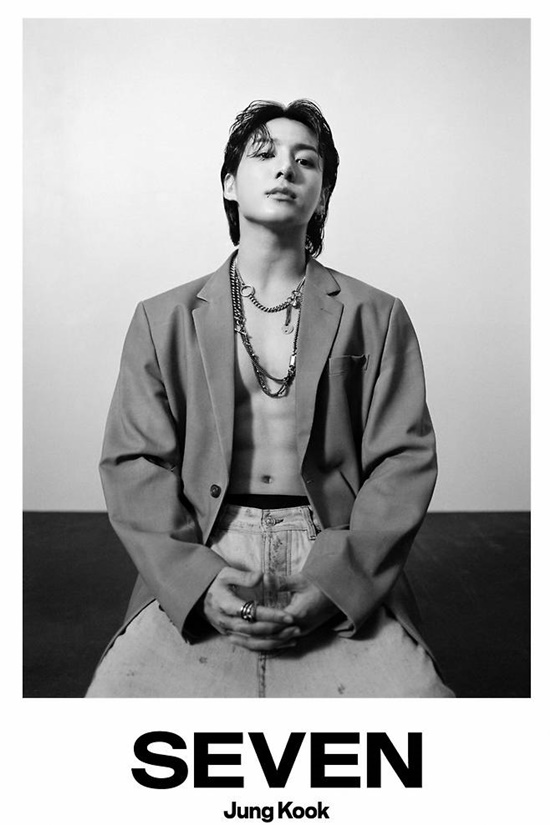
BTS’s global status is beyond imagination, and the individual capabilities of the members are also soaring.
Let’s look at the amazing records of BTS and Jungkook, who have once again proven their presence in the global music market, from the long-term success of the full-group album ‘Arirang’ on Billboard to the new global chart records being written by Jungkook’s ‘Seven’.
BTS’s fifth studio album ‘Arirang’ has remained in the Top 10 of the US Billboard main album chart, the ‘Billboard 200’, for seven consecutive weeks.
This week, ‘Arirang’ ranked 7th with 49,000 units sold. Although it dropped two spots from last week, it still maintains a top position, showing powerful global momentum.
This record is especially meaningful. ‘Arirang’ was the first K-pop album to take the #1 spot on the ‘Billboard 200’ for three consecutive weeks. By staying in the Top 10 for nearly two months since its release, it has established a long-term hit status.
Moreover, this album is drawing significant attention as it is the first full-group album BTS has released in about 3 years and 9 months. The members, reuniting after military service and solo activities, have triggered an explosive response from fans worldwide.
The current US music market is incredibly competitive. Noah Kahan’s new album has held #1 for two weeks, and legendary albums like Michael Jackson’s ‘Thriller’ and ‘Number Ones’ have climbed back up the charts.
In this environment, the fact that BTS maintained a Top 10 position for seven consecutive weeks proves their public appeal and streaming competitiveness beyond just fandom power.
Jungkook’s solo records are equally mind-blowing. His solo debut song ‘Seven’ set a massive record by entering the US Billboard ‘Global (Excl. US)’ chart for 146 consecutive weeks. This is the first and longest record for an Asian solo artist.
It is surprising that the song is still being consistently consumed long after its release. While global hits often drop sharply over time, ‘Seven’ continues to extend its record by maintaining long-term streaming power.
Additionally, ‘Seven’ recently topped the Billboard Vietnam ‘Hot 100’ chart, proving its enduring popularity in Asia. It also maintains a high rank on the Billboard Korea ‘Global K-Songs’ chart, alongside ‘Standing Next To You’ and ‘3D’.
Jungkook’s solo achievements are already considered historic. ‘Seven’ debuted at #1 on the US Billboard main singles chart ‘Hot 100’ and stayed on the chart for 15 weeks.
Furthermore, it set a record on Spotify’s ‘Weekly Top Songs Global’ chart by entering for 147 weeks, the first and longest for an Asian solo artist, with cumulative streams surpassing 2.9 billion.
This suggests that Jungkook’s music is being played long-term within the global mainstream pop market, moving beyond consumption centered on K-pop fandoms.
Why do these records keep happening? First and foremost, BTS has established itself as a global pop brand beyond just being a K-pop group.
Analysis suggests that a structure has been completed where initial fandom power is followed by repeated listening and streaming from general listeners whenever an album is released.
The same applies to Jungkook. ‘Seven’ succeeded in long-term popularity by combining an English-centric pop sound, a catchy melody, and a strategy friendly to global platforms. Its ability to survive in a music consumption environment centered on Spotify and TikTok is key.
Ultimately, these records by BTS and Jungkook are symbolic examples showing that K-pop has fully settled as a mainstream genre in the global music market, transcending regional trends.

Recently, singer Jang Yoon-jeong garnered a lot of attention by appearing as a special guest on the professional evaluation panel of ‘Unknown Singer’.
Her critiques and comments after watching junior singers’ performances have resonated deeply with viewers. It’s been noted that she is not just a ‘star judge’ but has established herself as a symbolic mentor in the trot world.
So, why does her word carry so much weight? Jang Yoon-jeong is not just a singer with many hits; she is seen as the person who changed the entire trajectory of the trot market.
When ‘Omona’ caused a nationwide syndrome in 2004, it became the catalyst for the then-stagnant trot market to return to the public mainstream. She is cited as a representative singer who made trot naturally consumable even for the younger generation.
In other words, before being a ‘successful trot singer’, Jang Yoon-jeong holds a unique position as a symbolic figure who led the popularization of modern trot.
Therefore, to junior singers, she is not just a senior, but someone who “actually changed an era in the trot market.” The biggest reason her critiques are so noted is her ‘field experience’.
Jang Yoon-jeong has personally gone through almost every stage, from event stages during her unknown days to broadcast activities, concerts, variety shows, and audition programs. Because of this, she is praised for pinpointing a contestant’s nervousness or mistakes more realistically than anyone else.
Her judging style doesn’t stop at evaluating singing skill. She looks very closely at whether the lyrics are delivered, if the audience feels the emotion, and if the unique flavor and breathing of trot are alive.
Since trot is a genre where emotional delivery, breathing, and stage presence are more important than competing for high notes, many feel her evaluation method is closest to the essence of trot.
Another notable point is her attitude toward juniors. While she points out shortcomings coldly, she often provides realistic advice and encouragement so the contestants don’t feel discouraged. As a result, contestants perceive it as a ‘learning critique’ rather than a ‘scolding critique’.
Interestingly, Jang Yoon-jeong is still at the center of the trot market. Even as generational shifts happen quickly, she simultaneously handles the roles of active singer, broadcaster, and mentor.
With the increase in trot audition programs, the importance of an ‘authoritative senior’ who can evaluate skills has grown. In this trend, she is one of the few figures who possesses experience, public appeal, and symbolism.
Consequently, many feel that the program itself gains credibility the moment Jang Yoon-jeong appears.
Ultimately, her presence doesn’t come from simple popularity. It is the result of her experience enduring unknown days to reach the top, her symbolism in popularizing the trot market, and her realistic perspective in reading the potential of juniors.
This is likely why many junior singers still feel nervous at her word and desire her advice the most.

Public stars are always in the spotlight, even for small things. Every move is a point of interest, right? Private matters like dating, marriage, divorce, and remarriage draw even more attention.
It has been revealed that actress Kang Sung-yeon remarried ‘three years after her divorce’. Much attention is being paid to her recent news of choosing love again after the pain of divorce. It is especially buzzing as she shared the story of building a new family with her two children.
Kang Sung-yeon personally announced her remarriage via SNS. In the photos with her husband, the two lean on each other with bright smiles, leaving an impression of a comfortable and stable atmosphere.
Attention also focused on the handsome appearance of her non-celebrity husband, who captured eyes with his reliable build, kind impression, and affectionate vibe.
Kang Sung-yeon expressed her sincere feelings for her husband in a long post, stating, “Thanks to you, who embraced and protected my aching heart, I was able to smile again,” and “Everything I do with you feels like a miracle.”
She carefully informed her fans of the news, saying, “I have met a good person and am building a new family with my children,” and “I was cautious because I didn’t want it to become noisy, which is why I’ve only now found the courage to let you know.”
Many noted the story about her two sons. As a mother of two children in consecutive elementary school grades and a wife in a new family, she revealed she spent a long time contemplating how to live. She eventually confessed that she reached the conclusion that ‘my own happiness’ is the most important thing.
Kang Sung-yeon married pianist Kim Ga-on in 2012 and had two sons. However, she shared the sad news of her divorce in December 2023, after 11 years of marriage.
After cautiously mentioning through broadcasts and SNS that she met a good person who loves and cares for her children more than anyone, she has now officially announced her new start by revealing her remarriage.
Remarriage can be a difficult choice for some, but Kang Sung-yeon chose happiness after a time of hurt and is building a new family with her two children.
Fans are sending support, reacting with comments like “I hope you live happily,” “I can feel the sincerity,” and “It’s great to see her smiling more.”

The movie ‘Salmokji’ has finally surpassed 3 million viewers. This is a feat not seen since ‘A Tale of Two Sisters’ in 2003, making it a milestone after 23 years.
It has already surpassed ‘Gonjiam’ to become the second highest-grossing Korean horror film of all time, and some say it could even challenge the record of director Kim Jee-woon’s ‘A Tale of Two Sisters’.
In the Korean film market, the horror genre has always been classified as ‘non-mainstream’ because of the perception that its box office ceiling is relatively low and its audience is limited.
However, ‘Salmokji’ completely broke this formula. What’s especially meaningful is that this work is not a franchise from a star director, nor a blockbuster with a massive budget.
The core of its success is that director Lee Sang-min, in his first commercial feature film debut, surpassed 3 million viewers solely through word-of-mouth and audience reaction.
Audience reviews have been pouring in, with comments like “I can’t go near the water for a while,” “It pulls you along like a rollercoaster,” and “You end up discussing the interpretation after the movie ends.”
The key to its success was that it wasn’t just a scary movie, but was consumed as an ‘experiential horror film’ where viewers share interpretations and clues.
Although the production company hasn’t disclosed the exact budget, the industry views ‘Salmokji’ as a mid-to-low budget horror film.
Typically, Korean horror films of this scale have a net production cost of about 3 to 6 billion won, and including marketing, the total investment is estimated at 7 to 9 billion won.
Theater revenue doesn’t go entirely to the production company. Usually, the theater and distributor take about half, and the rest goes to the investment and production side. ‘Salmokji’ can be seen as having far exceeded its break-even point.
So, how much did the production company make? Using simple industry calculations, if we apply 3 million viewers × an average ticket price of about 15,000 won, the total theater revenue is around 45 billion won.
Excluding the theater’s share and distribution fees, the amount returning to the investment and production side is estimated at about half, roughly 20 billion won.
If the production cost of ‘Salmokji’ was around 3 billion won, it has already recorded a significant profit from theater revenue alone. This final profit could grow even larger when adding IPTV, OTT, overseas rights, VOD, and secondary copyright revenue.
Horror genres have high overseas sales competitiveness, so reactions in Southeast Asian and Japanese markets are also highly valued. This success is likely to be more than just the success of a single horror film.
The recent Korean film market has been criticized for the polarization of ’10-million-viewer movies’, investment centered on blockbusters, and the disappearance of mid-sized films. ‘Salmokji’ showed that even a relatively small-scale movie can survive in theaters if it has an original concept and strong word-of-mouth.
It also reaffirmed that younger audiences want to consume ‘movies where they can scream and experience together’ in the theater.
Interest in theaters has grown even more this year thanks to the movie ‘The Man Living with the King’, which recorded 16.81 million viewers. It remains to be seen if ‘Salmokji’ will surpass the record of ‘A Tale of Two Sisters’ and rewrite the history of Korean horror films.