
High school senior Dora (played by Kim Do-yeon) suffers from a mysterious skin rash.
The rash, which looks like a mix of blisters and burn scars, starts on her hands and spreads across her entire body. After a doctor diagnoses it as a mental illness, her whole family moves to a house in the countryside to help her recover.
There, she meets her neighbor, Nami (played by Ando Sakura), who is the complete opposite of the frail and gloomy Dora.
Nami, a Japanese woman married to a Korean man, radiates a free-spirited, bold, yet warm energy.
The contrast between the two is clear: while Dora struggles desperately to learn how to swim in the ocean, Nami simply lets go and floats peacefully under the sun.
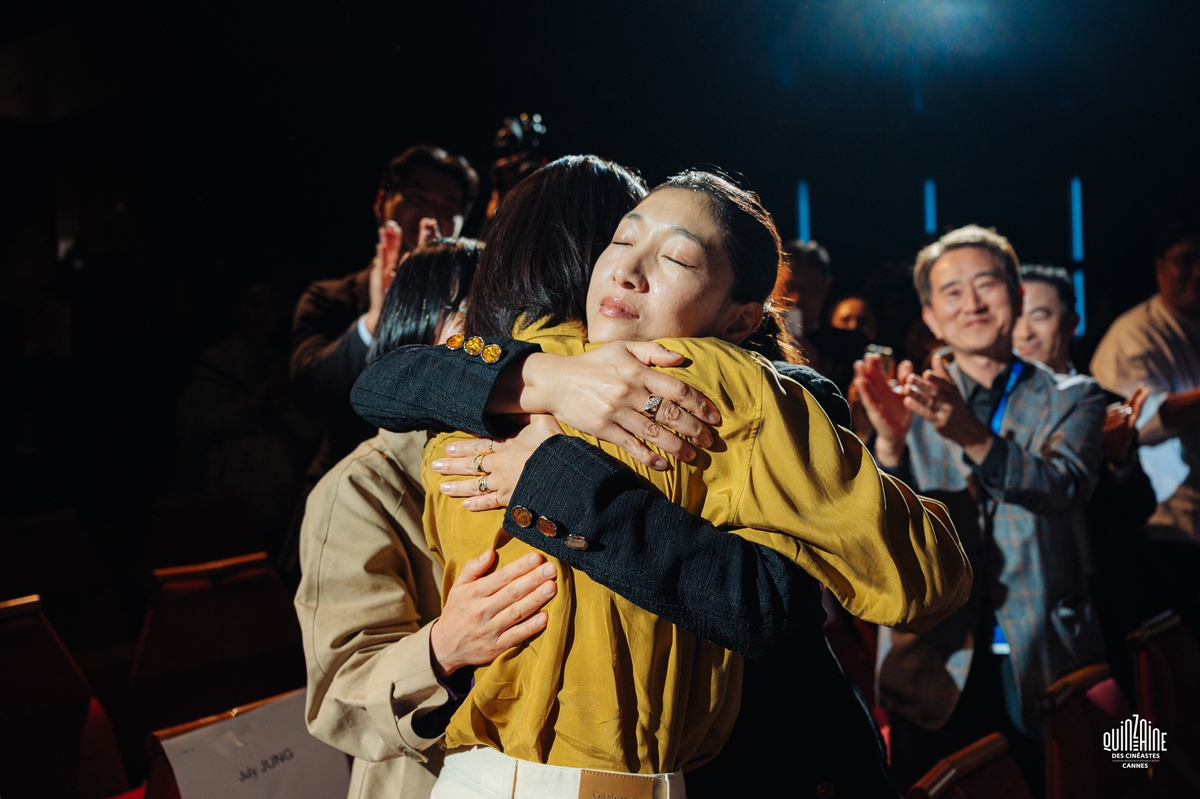
Invited to the Directors’ Fortnight at the 79th Cannes Film Festival, Director Jung Ju-ri’s ‘Dora’ follows Dora’s journey as she gradually heals from her mental illness in the countryside.
With keywords like “disease and healing” and “two women meeting in a seaside village,” you might expect a cozy, pastoral vibe, but ‘Dora’ doesn’t follow the usual path.
Inspired by the “Dora Case,” a famous failed treatment by Freud in the early 20th century, the film dives into hysteria, repressed desires, and chaotic family conflicts.
While it borrows basic elements from Freud’s research, Director Jung Ju-ri (known for ‘Do-hee’ (2014) and ‘Next Sohee’ (2023)) reinterprets the story with her signature style, especially in how she views Dora and the choices the character makes.
The mysterious charm of Ando Sakura, who plays Nami, also plays a huge role in drawing the audience in.
To Dora, who lives in constant tension and anxiety, Nami offers a short but powerful piece of comfort in broken Korean: “If you let go instead of enduring, you’ll float.”
Dora seems to feel that Nami can provide something she never received from her cold, sensitive, workaholic mother.
However, the film quickly subverts these expectations. Director Jung Ju-ri constantly throws unexpected situations and dialogue at the audience to prevent them from simply empathizing with Dora or making easy judgments about her.
Because of this, viewers don’t see Dora as just a “patient” or a “high school girl,” but as a complex, three-dimensional human being.
Actress Kim Do-yeon delivers a grounded performance as Dora, vividly portraying emotions that range from clumsy and weak to bold and shocking. The process of Dora healing herself in her own way radiates a wild, pulsing life force.