History isn’t just found in museums. Inside a single container warehouse, the past of a certain hip-hop group lay forgotten under a layer of dust. When the doors finally opened after 10 years, it wasn’t the glittering glory of millions of views that awaited. Instead, there were old contracts, an electric bike, and video tapes worn by use. These were the sealed records of growth from a time before K-pop had its current capital-driven system, when artists and their families had to start from scratch.
The episode “Exhuming Epik High’s Secret Warehouse,” released on May 21 via their official YouTube channel ‘EPIKASE’, was more than just a trip down memory lane. It served as a modest archive, offering a glimpse into an era before established capital and systems were in place.
A first exclusive contract from the Woollim Entertainment days in 2003, discovered in the warehouse, vividly illustrates the unfair realities of the music industry at the time. Tablo’s bitter exclamation, “We didn’t receive a single penny for our music because of this contract. I created the hit ‘Fly,’ but I didn’t get a cent!” highlights the unfair and haphazard agency systems that many indie and hip-hop musicians faced back then.
This was a time before SNS, professional PR agencies, or the concept of viral marketing. The marketing strategy Epik High chose back then was simply “footwork.” Seeing the promotional stickers for their first album, Tablo recalled their debut, saying, “We had no way to promote our first album. There was no SNS back then. I designed these myself and distributed them everywhere.”
Furthermore, stories from the ‘Map the Soul’ era after they went independent—where they did everything by hand, from folding t-shirts to shipping packages directly, which led to them being heavily criticized by the industry—serve as a record of a time when they had to survive and grow like weeds.
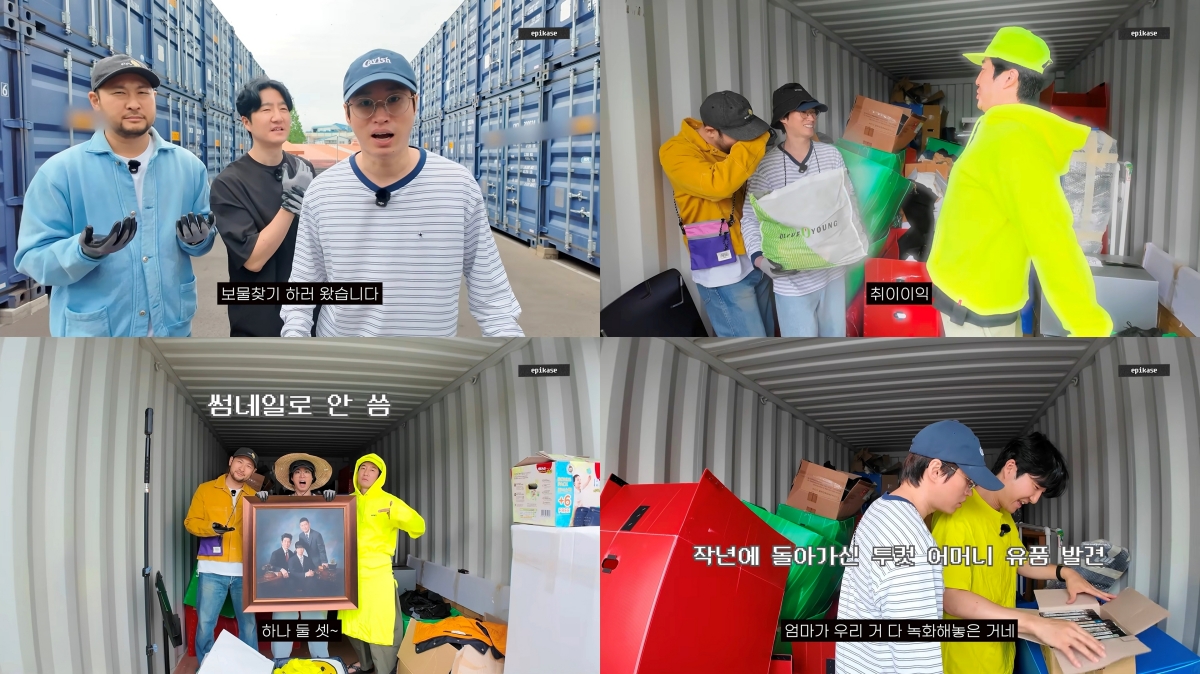
Deep inside the warehouse, Two Cut found belongings of his mother, who passed away last year. The boxes were filled with faded VHS tapes. They contained recordings of Epik High’s rookie appearances on shows like ‘10,000 Won Happiness’, ‘Star Golden Bell’, ‘Truth Game’, and ‘Love Letter’, all meticulously labeled in his mother’s handwriting.
In an era without digital replays or YouTube clips, it was his mother’s devotion—staying glued to the TV and even using anti-recording tapes—that saved these rookie appearances that broadcasting stations might have deleted. Her private archive for her son ended up preserving precious early materials for Epik High.
Looking at the faded costumes, old trophies, and 3.5-inch floppy disks filling the warehouse, Tablo remarked, “I think objects become alive when they are filled with memories and recollections.”
Today, K-pop has undoubtedly become a massive industry. The systems are precise, and the achievements are dazzling. But at the beginning, there was a young Epik High who continued to take reckless challenges, along with other young dreamers. The resonance of Epik High’s warehouse “exhumation” is a story of the romance that today’s sophisticated systems cannot replace and that modern K-pop has lost.