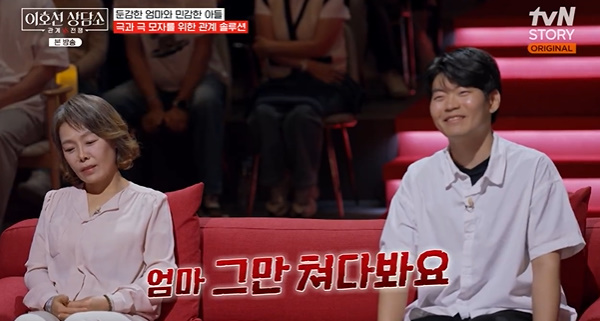
“Lee Ho-sun’s Counseling Center” shared a variety of touching and challenging stories.
In the episode aired on the 26th of tvN STORY’s variety show “Lee Ho-sun’s Counseling Center,” a remarried couple who defected from North Korea, as well as a mother and her son (born in 2003) who refuses to leave the house due to extreme sensitivity to sound and smell, made an appearance.
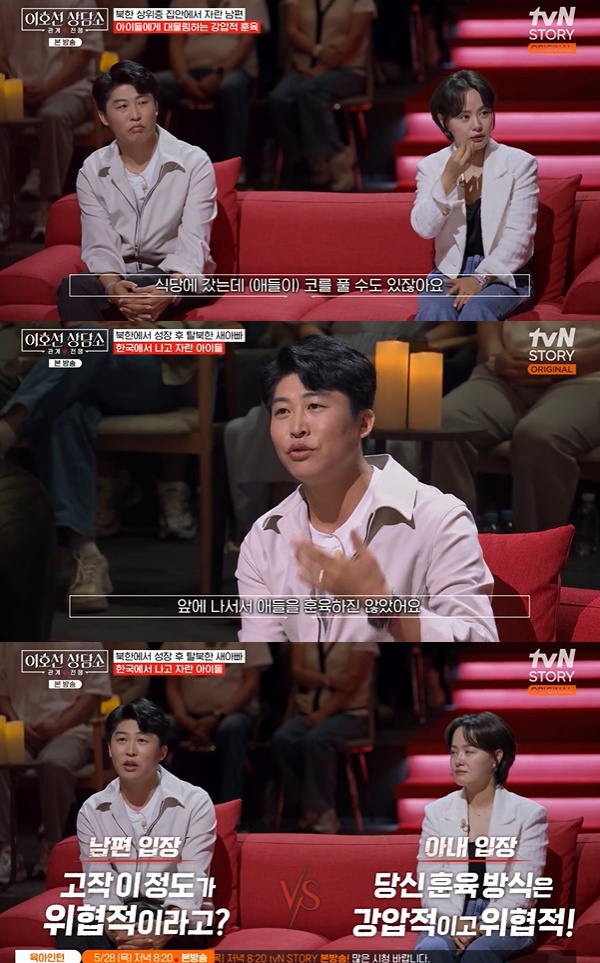
The wife in the remarried family opened up about her deep worries regarding her husband’s overly strict lifestyle. She revealed that he emphasizes frugality and discipline to an extreme, even making them fold a single square of toilet paper multiple times, and maintains tight control over the children. He reportedly gives them looks if they blow their noses in restaurants and even put up a sign in the home bathroom that reads, “Urinate while sitting.”
Regarding this, the husband stated, “I didn’t start disciplining them directly from the beginning. I thought the children needed time to adjust, so I spoke through my wife.” He added, “However, as time passed, I felt I had to fulfill the role of a father.” He further explained, “No matter how educated or smart someone is, it’s hard to look at them if they lack basic manners,” mentioning that he once turned off the show “My Golden Kids” because it made him angry.
Recalling their first meal together, he said, “I was shocked to see them farting during the meal. For a moment, I wondered if it was because they were raised by a single mother.” He explained, “In North Korea, there is a culture of looking unfavorably upon those who grew up without a father, and family background is very important when marrying. That’s why I really wanted to teach the children etiquette.”
The husband also mentioned his own upbringing, saying, “My father raised me very strictly. It was hard at the time, but after becoming an adult, I came to understand that love.” He added, “I believe I grew up to be a proper person thanks to that educational method.”
However, he admitted, “I try to discipline them with my eyes rather than words. But I worry that my gaze might hurt the children.” The wife added, “I also hit the children when they couldn’t do things on time, and I regret that now.” She noted, “It feels like my husband’s body is here, but his mind is still in North Korea.”
Professor Lee Ho-sun pointed out, “There is something called ‘intergenerational trauma transfer,’ where the traumatic experiences of one generation affect the next. The adjustment of the couple and the child are separate issues.” She noted, “It’s not that the direction is wrong. The husband is strict because he loves the children and is anxious that they might go wrong because of him.”
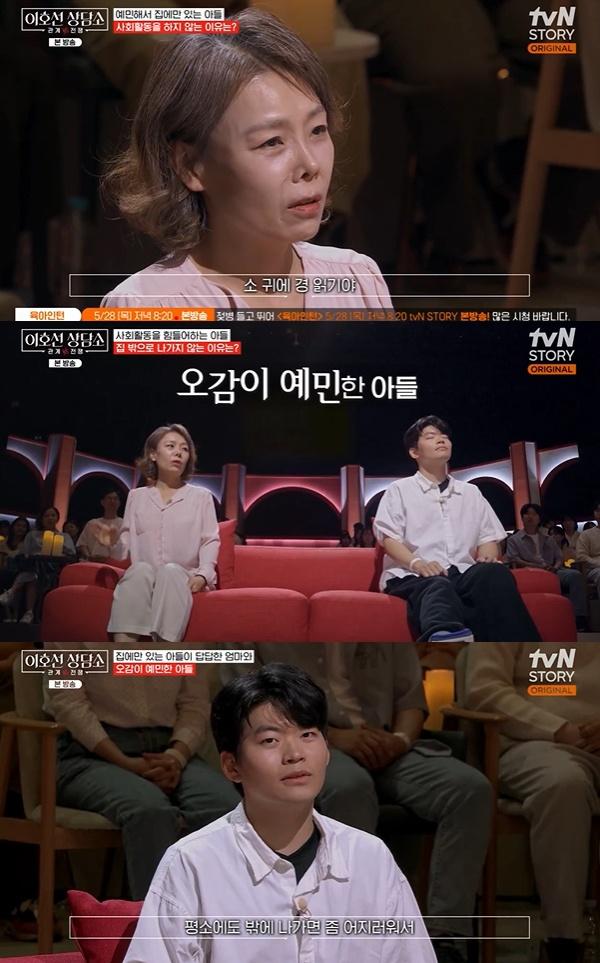
A mother with a son who has extremely sensitive senses expressed her frustration, saying, “I suggested he try part-time jobs like delivery work, but he doesn’t seem to like it. Talking to him is useless.” She recalled that unlike other boys who played and sweated outside, he never did any of those things.
The son shared his experiences, saying, “When kimchi was served at school, it tasted like detergent to me. Others said it didn’t taste like that.” He also revealed his sensitivity, noting that when sleeping with family since childhood, he would block his left ear with a pillow and his right ear with his arm.
He further confessed, “Even after becoming an adult, I couldn’t find something I liked. I wanted to find work I enjoyed, study, and then get a job.” He learned editing at a government-funded academy, but since they didn’t provide job placement, he had to search and apply on his own. “I applied to a few places, but I wasn’t hired,” he lamented, adding, “People are harder to deal with than the job itself. There are people who smell or shout.”
Professor Lee explained, “About 15 to 20% of the global population are HSPs (Highly Sensitive Persons). The son is very dependent but doesn’t realize how others feel. He lacks social intuition.” She pointed out, “The mother only worries about her son but doesn’t notice the core issue. The son needs to stop relying so much on his mother. He’s like a kindergartner.”
She advised, “He needs to practice while his mother is still around. Let’s slowly prepare for independence. He should be independent within 3 to 5 years.” She further suggested, “The mother should not touch the room after the son has cleaned it. He shouldn’t be treated like a young child; they should treat each other as adults. Let’s find a comfortable environment by quantifying smells and sounds.”