 방송 화면 캡처.”/>
As of May 12, it seems almost too easy to criticize comedian Yang Sang-guk. His popularity recently soared, even appearing on tvN’s “You Quiz on the Block” on April 29 as the “most talked-about” figure. However, he faced a massive backlash after appearing on the YouTube channel DdeunDdeun’s “Pinggye-go.” While Nam Chang-hee shared sweet newlyweds’ stories about preparing breakfast and seeing his wife off to work—which left Yoo Jae-suk and Han Sang-jin impressed—Yang Sang-guk stepped in to shut it down, stating, “From my perspective, that’s actually dangerous.” He insisted that “men from Gyeongsang-do just don’t do that,” framing it as a regional style difference. Despite attempts to reason with him, he remained stubborn until Yoo Jae-suk finally ended the conversation by warning, “If you say that one more time, I’m going to scold you.” The reaction in the comments was overwhelmingly negative, and the public mood shifted quickly. Then, on the May 9 broadcast of tvN’s “Amazing Saturday,” he appeared as part of Kim Hae-jun’s YouTube content “Romantic Couple.” He quickly switched from his character to his own persona and refused to play along with almost every skit Kim Hae-jun had prepared, sparking another attitude controversy. Media outlets that were cautious during the “Pinggye-go” incident are now using harsh terms like “falling into the abyss,” declaring the end of his brief peak. By ruining his own momentum on “Pinggye-go,” his rapid downfall seems self-inflicted. However, I don’t agree with reducing this entire incident to just a matter of Yang Sang-guk’s personal attitude.
The simplest explanation for Yang Sang-guk’s rapid rise and even faster fall over the last two months is a narrative where a long-unpopular comedian suddenly experienced massive attention, lost his head, and revealed an arrogant, stubborn side. That might be true. While his high-toned Gyeongsang-do dialect has been his signature since the “Gag Concert” days, his recent appearance on “Amazing Saturday”—where he shouted aggressively and intimidated other cast members—was exhausting to watch. Regardless of whether it was intended to be funny, he clearly crossed a line. However, in the sketches that made him the “most talked-about,” Yang Sang-guk often performed the identity of a “Gyeongsang-do man,” using his status as a native speaker to establish dominance in a relationship. Three months ago, in a video on comedian Kim Dae-hee’s “Kkondae-hee” channel that garnered 2.1 million views, he agreed with Kkondae-hee (who was acting as a Gyeongsang-do person), saying, “Gyeongsang-do people, we don’t back down, right?” before delivering a sharp blow with, “Wow, you sure eat a lot.” While that was a mutually agreed-upon sketch and different from the context of “Amazing Saturday,” the point is that whenever he plays the “real” Gyeongsang-do man based on his origin and dialect, he performs an exaggerated and aggressive form of masculinity. It is a worldview where any level of roughness or rudeness is tolerated as long as it is spoken in a Gyeongsang-do dialect.
“Amazing Saturday” and “Pinggye-go” are relationships that exist outside of that specific worldview. On “You Quiz on the Block,” he mentioned being confused about why the public suddenly liked his comedy when he hadn’t changed, but he seems truly ignorant of how the meaning and effect of the same words and actions can change depending on the context. On “Amazing Saturday,” he didn’t just fail to play the role of the uncle in “Romantic Couple”; he performed his familiar “no backing down” Gyeongsang-do masculinity to the point of excessively ignoring and destroying Kim Hae-jun’s setup and skits. The controversial scene on “Pinggye-go” where Yoo Jae-suk threatened to “scold” him can be better understood as an over-immersion into a patriarchal Gyeongsang-do masculinity that refuses to bend. I believe this is closer to the truth than simply questioning his personality. But even this is an incomplete truth. He didn’t just fail to understand the context of when his comedy works; more accurately, he seems unaware that the masculinity he performs is so harmful and outdated that a slight slip-up can offend others and lead to his own downfall. And this isn’t just Yang Sang-guk’s fault. It’s no coincidence that his views on dating and women became a controversy on “Pinggye-go.” There is a clear gender dimension here, and any criticism that ignores this is only half-complete. In “Pinggye-go” and “Kkondae-hee,” Yang Sang-guk justifies his actions by referring to “us” instead of “I.” Here, the subject is not the individual, but Gyeongsang-do men. Whether it’s not walking a woman home or “not backing down,” the actual average of Gyeongsang-do men is a secondary issue. The reason certain words and actions are given meaning as a “masculine practice” is that this type of masculinity is accepted as a social script. Even Kkondae-hee is a character who justifies the speech of a patriarchal elder by leaning on the profile of being a Gyeongsang-do man. Since Kim Dae-hee is not actually from Gyeongsang-do, this masculinity is sometimes performed as a self-deprecating parody within a sketch, but it must remain open to critical context.
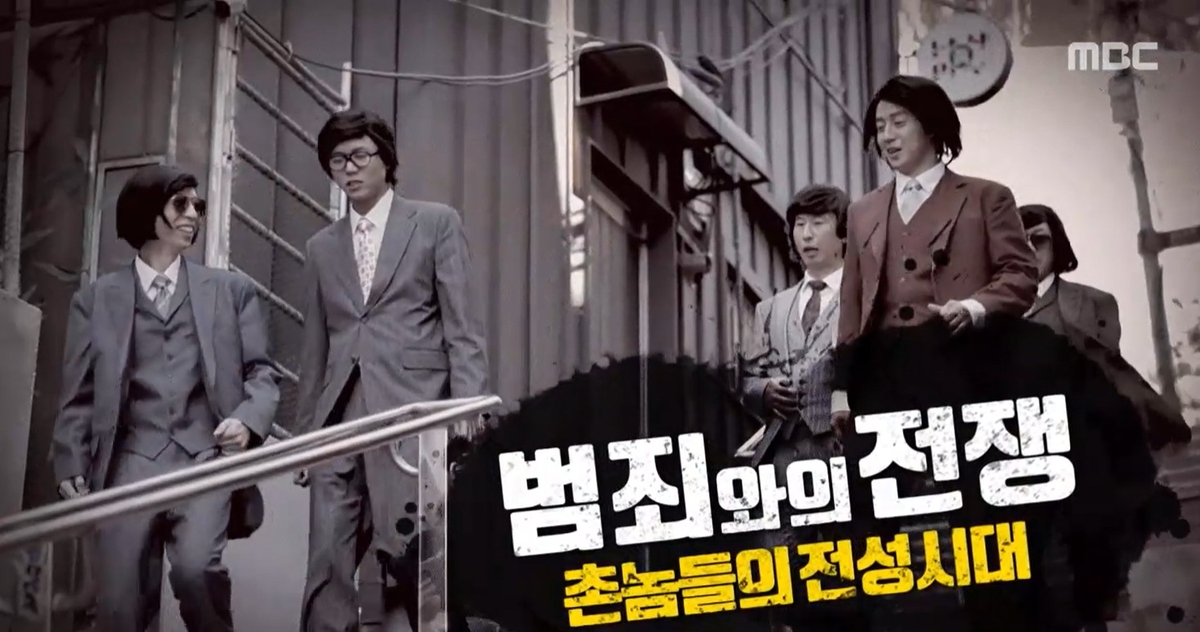
In that sense, to understand the current controversy, we must look back to MBC’s “Hangout with Yoo” from two months ago, which helped him enter the mainstream and connected him with Yoo Jae-suk. As the episode title “The Golden Age of Country Bumpkins” suggests, the episode parodied the movie “Nameless Gangster: Rules of the Time,” with all cast members obsessing over “big brothers” and Busan. While everyone cringed at Yoo Jae-suk’s awkward “Isn’t this Busan?” line, I personally found the phrase itself bothersome. Why is a certain type of masculinity so easily reproduced and justified with phrases like “Isn’t this Busan?” or “Aren’t we family?” While “Nameless Gangster” exposed how fictional the masculinity fantasy of Busan gangsters is, it ironically became a work consumed by many men through memes like “Alright, let’s go in.” “The Golden Age of Country Bumpkins” was no different. In “Hangout with Yoo,” a show that often feels like a graveyard for female guests and seems indifferent to gender imbalance, male cast members imitated old gangsters and strutted around. In this setting, Yang Sang-guk, who is from Gimhae, was able to easily fit in and lead the atmosphere as the most “pure-blooded” Busan man. As the title suggests, the character of a Busan man who doesn’t know Seoul well allowed him to exercise his ignorance as a form of power within a male homo-social circle, while mocking “Gyeongsang-do bumpkins.” This is a much more politically regressive approach than the “Four Types of People” corner, which was Yang Sang-guk’s last hit during his “Gag Concert” days.
At this point, I’m not sure if Yang Sang-guk’s outbursts in the last two shows were solely his own error in judgment. A stage was set for masculinity performed in the name of Gyeongsang-do, and everyone followed along without any moral or aesthetic doubt, singing the praises of Yang Sang-guk’s popularity. Then, this disaster happened. Now, the media has simply changed direction, pouring out articles about why his comedy is unpleasant, unfunny, or unlikeable. While these points are generally correct in detail, everyone is surprisingly uninterested or silent regarding the fundamental issue of masculinity. If this continues, the problem will only repeat. On “You Quiz on the Block,” Yang Sang-guk expressed confidence that he could endure another 10 years of obscurity because he had already survived a 10-year gap. I don’t wish such a harsh time upon him, but even if that gap happens, countless similar characters will emerge, be cheered for, and then become controversial over the next decade. Unless there is a critical reflection on why rude and self-centered masculinity is so easily accepted by the media and what conditions outside the media make this possible, harmful masculinity will inevitably return to variety shows, regardless of Yang Sang-guk’s individual career. It will continue in a cycle of being forcibly boosted because they are men, only to crash because they are men.