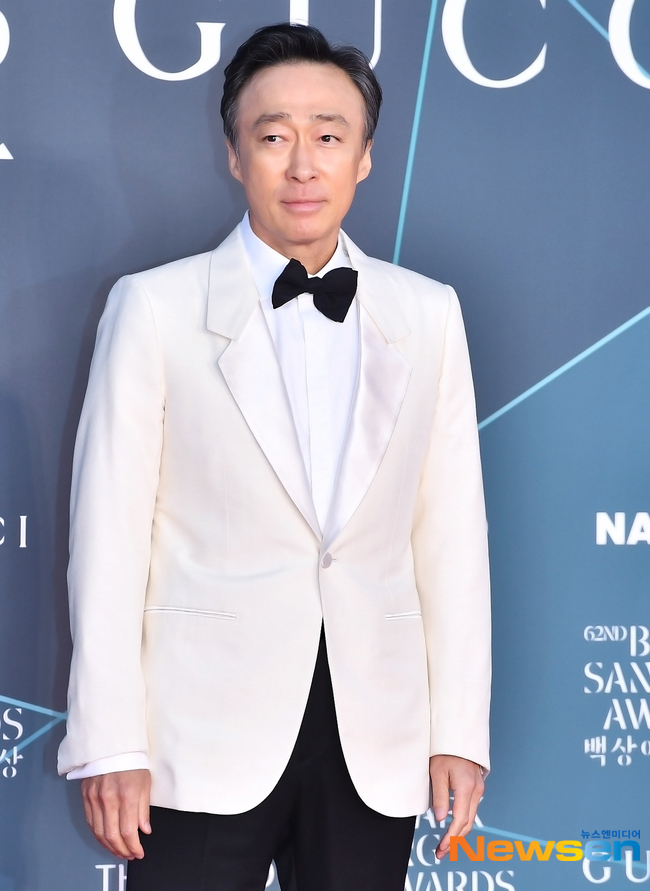

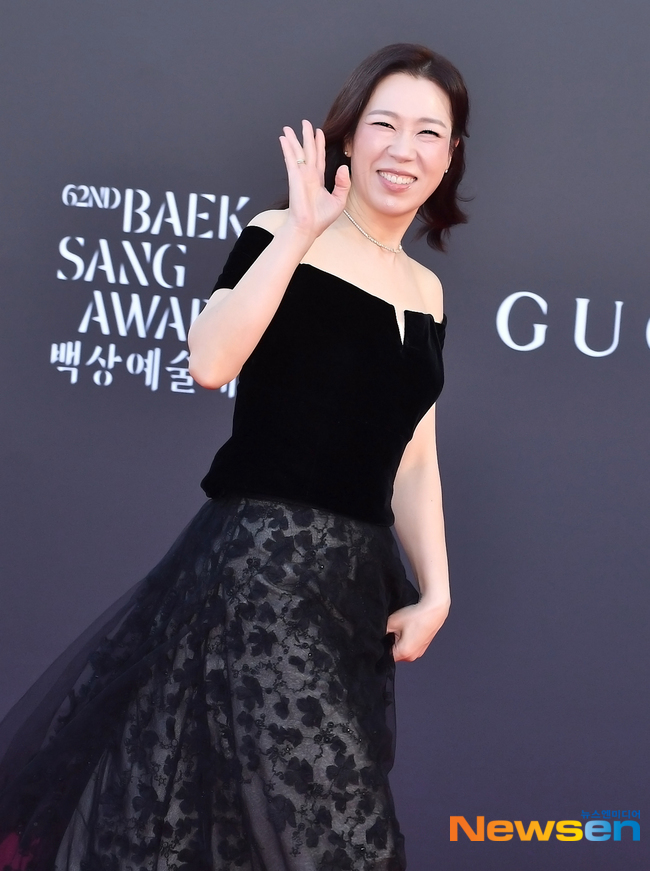
Acceptance speeches are the highlight of any awards ceremony. A few words spoken while holding a trophy on stage can sometimes make the entire event memorable. The 62nd Baeksang Arts Awards, held on the 8th at COEX in Seoul, was no different. More than the glamorous list of winners or the stage production, the comments made by actor Lee Sung-min and Director Park Chan-wook are being widely discussed.
Was it sincere camaraderie, or a slip of the tongue that failed to consider the setting? That boundary has become the core of the current controversy.
■ Stirring Amidst the Applause: The Moment That Sparked the “Rudeness vs. Conviction” Debate
In a surprising turn, the Best Supporting Actress award in the film category went to Shin Se-kyung for her role as Chae Seon-hwa in the movie ‘Humint’. The competition was fierce, with Yeom Hye-ran (‘Can’t Help It’), Shin Hyun-bin (‘Face’), Jang Hye-jin (‘Master of the World’), and Jeon Mi-do (‘The Man Who Lives with the King’) all nominated. Before the ceremony, the general atmosphere suggested Yeom Hye-ran was the frontrunner. However, the result defied predictions, causing a stir in the venue.
The sparks of controversy flew shortly after. Lee Sung-min, who won Best Supporting Actor for the same film ‘Can’t Help It’, took the stage and said, “I can’t tell you how nervous I was when Yeom Hye-ran was nominated. I even cursed inside because she didn’t win.” While likely intended to induce laughter, these words were spoken while Shin Se-kyung was sitting right there.
Following this, Director Park Chan-wook, who received the Best Film award, touched upon the same topic. Starting with, “Looking at the results, I am convinced that a fair judging process took place,” he immediately added, “Yeom Hye-ran might not agree, but please understand. Didn’t Shin Se-kyung do well too?” Reactions to this comment were split. Some saw it as an attempt to smooth over Lee Sung-min’s remark, while others felt he joined in on the pressure by publicly mentioning the issue once more.
■ Different Forms, Same Essence… When ‘Someone’s Best’ Becomes the ‘Winner’s Worst’
Anyone with a slight interest in Hollywood news will naturally recall a specific scene upon hearing about these comments: the 2009 MTV Video Music Awards (VMA). The moment Taylor Swift was giving her speech after winning the Female Artist of the Year award for ‘You Belong With Me’, Kanye West suddenly stormed the stage. His words, as he grabbed the microphone, are still talked about today: “Taylor, I’m happy for you, but Beyoncé’s video was one of the best videos of all time.” Taylor left the stage looking devastated, and the incident escalated, with even President Obama criticizing Kanye.
Even then, there were some who defended Kanye. Given that the Grammy Awards had long carried the stigma of being “White Grammys,” some viewed Kanye’s comment as an expression of conviction representing the Black community. However, the rudeness of stealing the stage during a winner’s speech was difficult to justify with any logic, and Kanye could not avoid widespread criticism.
It is difficult to place Lee Sung-min and Park Chan-wook’s comments on the same level as the Kanye incident. They did not interrupt another’s speech, nor did they use directly aggressive language. However, the sensibility of publicly implying that another nominee should have won while the actual winner is present is similar. The forms differ, but the structure is the same, and that is where the current controversy begins.
■ The Shield of “Camaraderie” vs. The Dagger of “Passing Over the Winner”… A Clear Difference in Temperature
Online reactions are sharply divided. Support came from those saying, “Yeom Hye-ran’s acting was overwhelming, so the result is hard to accept” and “It was a statement of conviction that Lee Sung-min could make as a colleague.” Conversely, critics argued, “It was impolite in front of the winner, Shin Se-kyung” and “It was an indirect expression of dissatisfaction with the result.” Some sharp reactions questioned, “Are you the judge?” and “How do you think Shin Se-kyung felt when you said that while smiling?”
The core argument for those defending Lee Sung-min lies in the “setting.” Their logic is that he didn’t interrupt someone else’s moment but said what he wanted during his own acceptance speech. They see it as a sincere expression of solidarity for a colleague who worked on the same project. Some also believe the words contained the apology and awkwardness he felt for being the only one to hold a trophy.
Furthermore, some interpret this as an extension of speaking one’s mind within the industry. There are precedents of celebrities, both domestically and internationally, publicly sharing their thoughts on award results or industry trends. The question of whether it is problematic for a director and actor to publicly express confidence in their work and colleagues is logically difficult to deny.
Critics start from a different point: Who is the person in the most awkward position in this situation? Shin Se-kyung is the winner who legitimately passed the judging process. Yet, in a place where she should have enjoyed the joy of winning, she had to hear implications that another nominee should have received the award. This is why reactions like “It might be a joke between close colleagues, but there was no consideration for Shin Se-kyung” and “Shouldn’t they have thought about how embarrassed the winner would feel?” are emerging.
An interesting point is Yeom Hye-ran’s own reaction. When she returned to the stage as a presenter for the TV category, she made the audience laugh with a self-deprecating remark: “Hello, I’m Yeom Hye-ran, who just lost.” This comment was praised as the most graceful solution. There is a difference between the party involved processing the situation with humor and a third party expressing disappointment on their behalf. The former is writing one’s own narrative, while the latter does so at the expense of someone else’s discomfort.
Another point of criticism is the ripple effect of the comments. Regardless of the intention, such remarks ultimately result in public criticism focusing on the winner. The moment the nuance that a specific nominee should have won is publicly voiced, the actual winner becomes a target of comparison without a chance to defend themselves. In today’s media environment filled with provocative content, it was predictable how such comments would be consumed. This is why critics say they “lacked caution.”
Unexpected results have happened every year. It is an inherent nature of award ceremonies for a strong favorite to lose and a dark horse to take the trophy. Even if not everyone is satisfied with the result, raising an objection on stage while the winner is present is a different story entirely.
■ Award Ceremonies Are Not the Ending, But a Stage Where Everyone’s Story Should Shine
Director Park Chan-wook’s film ‘Can’t Help It’ drew 2 million viewers domestically, far exceeding its break-even point (1.3 million), and recovered more than its net production cost through pre-sales of overseas rights. It also made a presence on the international stage, being invited to the competition section of the Venice International Film Festival, achieving a 100% freshness index on Rotten Tomatoes, and entering the preliminary list of 15 films for the Academy Award for Best International Feature Film. However, it failed to make the final top 5, and domestic audience ratings remained in the 6-point range. It is a work where critics and public reactions were divided, with some evaluations stating it fell slightly short of the expectations set by Director Park Chan-wook’s reputation.
That context is not entirely unrelated to the current controversy. If this movie had swept all domestic and international awards, the comments from Lee Sung-min and Park Chan-wook would have been consumed with a completely different tone. When evaluations of a work are mixed, the justification for a “statement of conviction” can waver. While some argue that acting awards are given for the performance itself, it is a known fact that judging does not completely exclude the quality and context of the work.
Nevertheless, the fact that this controversy persists is paradoxically evidence of the deep affection for the film and its actors. Regardless of whether Lee Sung-min and Director Park Chan-wook were right or wrong, it is hard to deny that there was sincerity in their words. The problem is that this sincerity was expressed in a way that narrowed someone else’s space. This is because an award ceremony is not a place where one story ends, but a place where many people should shine simultaneously.