Recently, debates over the protection of teacher’s rights and the essence of education have been heating up in society. In fact, the “collapse of teacher’s rights” has become a common topic that many can relate to.
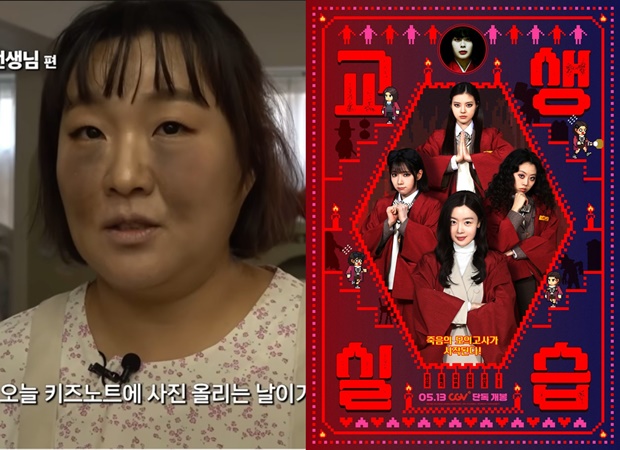
Comedian Lee Su-ji recently grabbed attention through her YouTube channel ‘Hot Issue-ji,’ where she used a fake documentary format to depict the daily life of a teacher struggling with unreasonable complaints from parents. Her sharp satire of real-life cases of teacher’s rights violations resonated deeply with current teachers, leaving them feeling both understood and bittersweet.
Episodes such as parents demanding an apology because their child lost at rock-paper-scissors, or blaming a teacher’s negligence for a mosquito bite, went beyond simple humor to starkly reveal the severity of the situation. The comment sections were filled with testimonies from teachers who have suffered from depression due to unfair complaints or were forced to check CCTV for trivial matters.
As of the 13th, the two released videos have surpassed 10.15 million cumulative views, with about 42,000 comments. Most of these comments were messages of support from active teachers, who expressed deep gratitude to Lee Su-ji for bringing the hardships of the educational field to public attention.
The movie ‘Student Teaching’ also points out the same issue. The film portrays the reality of diminished teacher’s rights through the eyes of someone standing on the boundary between teacher and student. By weaving the historical background of a Joseon Dynasty village school into the narrative, ‘Student Teaching’ emphasizes the essence of education that should not fade regardless of the era.
Director Kim Min-ha explained the reason for producing the work, saying, “I saw teachers crying and saying they felt comforted after watching my film, which was selected as the closing film at a past education film festival. At that time, I felt the reality of the collapsed teacher’s rights, which I had only encountered through articles, and I felt I absolutely had to tell this story.”
Experts, including sociologist Professor Sam Richard, have also offered a bittersweet diagnosis, stating that the Korean education system is losing its original role because it is too preoccupied with the reactions of students and parents. This indicates that the problem has reached a level serious enough to attract academic attention.
These issues, which appeared as themes in media, have also repeated in the daily lives of celebrities, making them an even hotter topic. Recently, singer and actor Lee Ji-hoon and his wife Ayane shared their shock and disappointment as parents who had maintained a “salt-free diet” for their child on SNS, sparking an immediate debate in online communities.
Some netizens criticized their attitude, calling it an “excessive demand” to expect a personal dietary principle to be perfectly followed in an educational institution where children live and learn together. In response, Ayane countered that she didn’t mean all children should have a salt-free diet, but that all parents feel the same way when worrying about their child’s health. She expressed her frustration at being criticized despite her actions not harming anyone.
The online clash is evolving beyond a simple difference in parenting views into a debate over teacher’s rights. As the expectations of parents clash with the reality of teachers, the public is raising fundamental questions about the scope of the roles and responsibilities a teacher should handle.
The long-standing challenge of “protecting teacher’s rights” in the Korean education system is becoming an even heavier burden this year. As conflicts in the educational field influence the world of content, all eyes are on whether this trend will lead to practical discussions for the protection of teacher’s rights.